A spire and its stories
CHURCHES OF MARKS TEY
From the top of St Andrew’s Church tower you get a view that is usually reserved for the birds. Throughout 2025 visitors have been putting on their hard hats and climbing to the base of the spire for just this view. It is an opportunity to see the restoration works up close and to appreciate St Andrew’s Church in its surrounding landscape. Our project researcher goes along to find out about the stories from the spire.
Explore story →
Hard Hat tours
In the early March sunshine people in high viz vests and hard hats assembled at St Andrew’s Church full of anticipation for an unforgettable experience. Since before Christmas the tower had been covered in scaffolding with sheeting obscuring its distinctive structure. This was a chance to get behind the sheeting, climb the ladders to the top and understand what was going on.
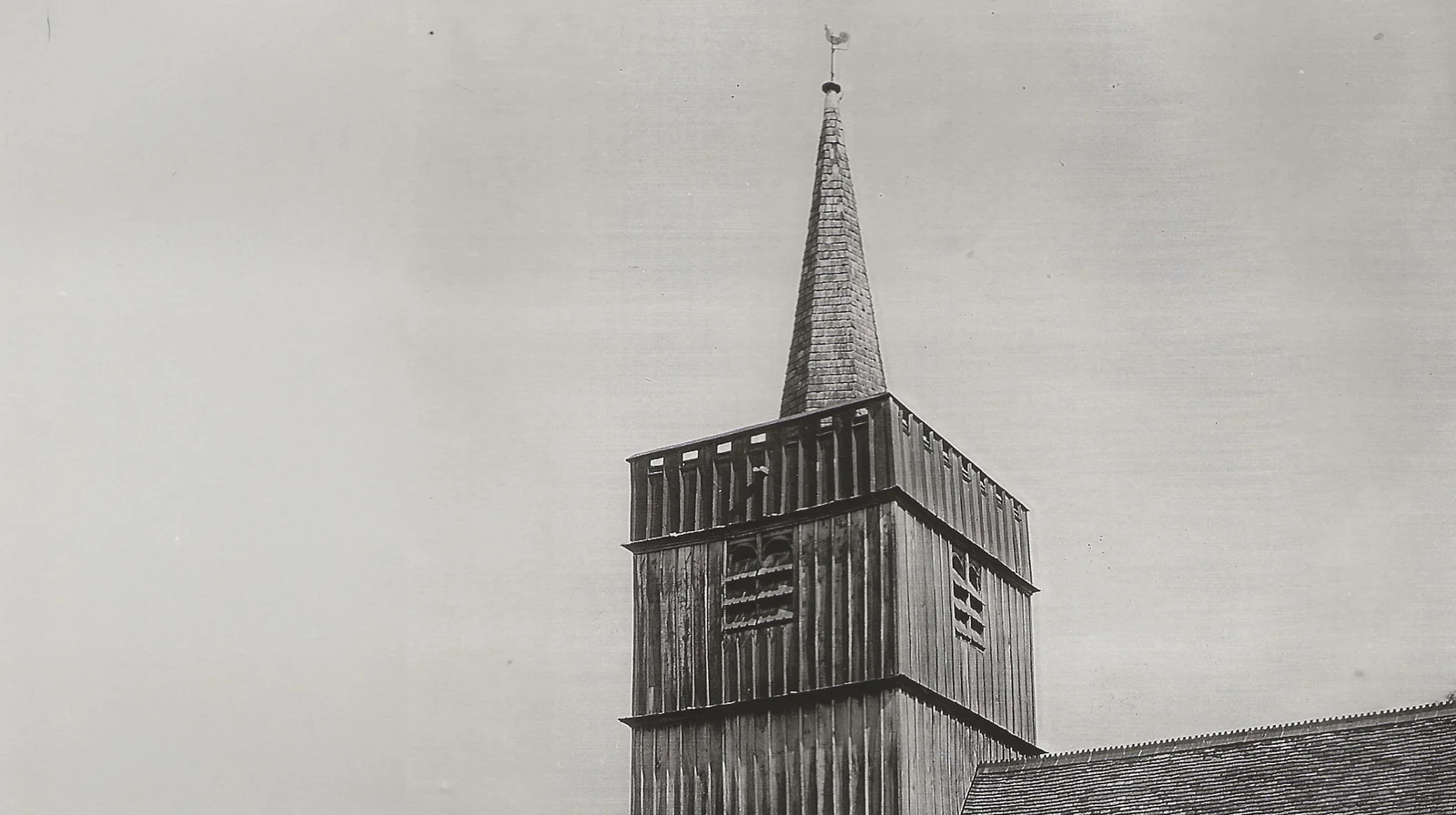
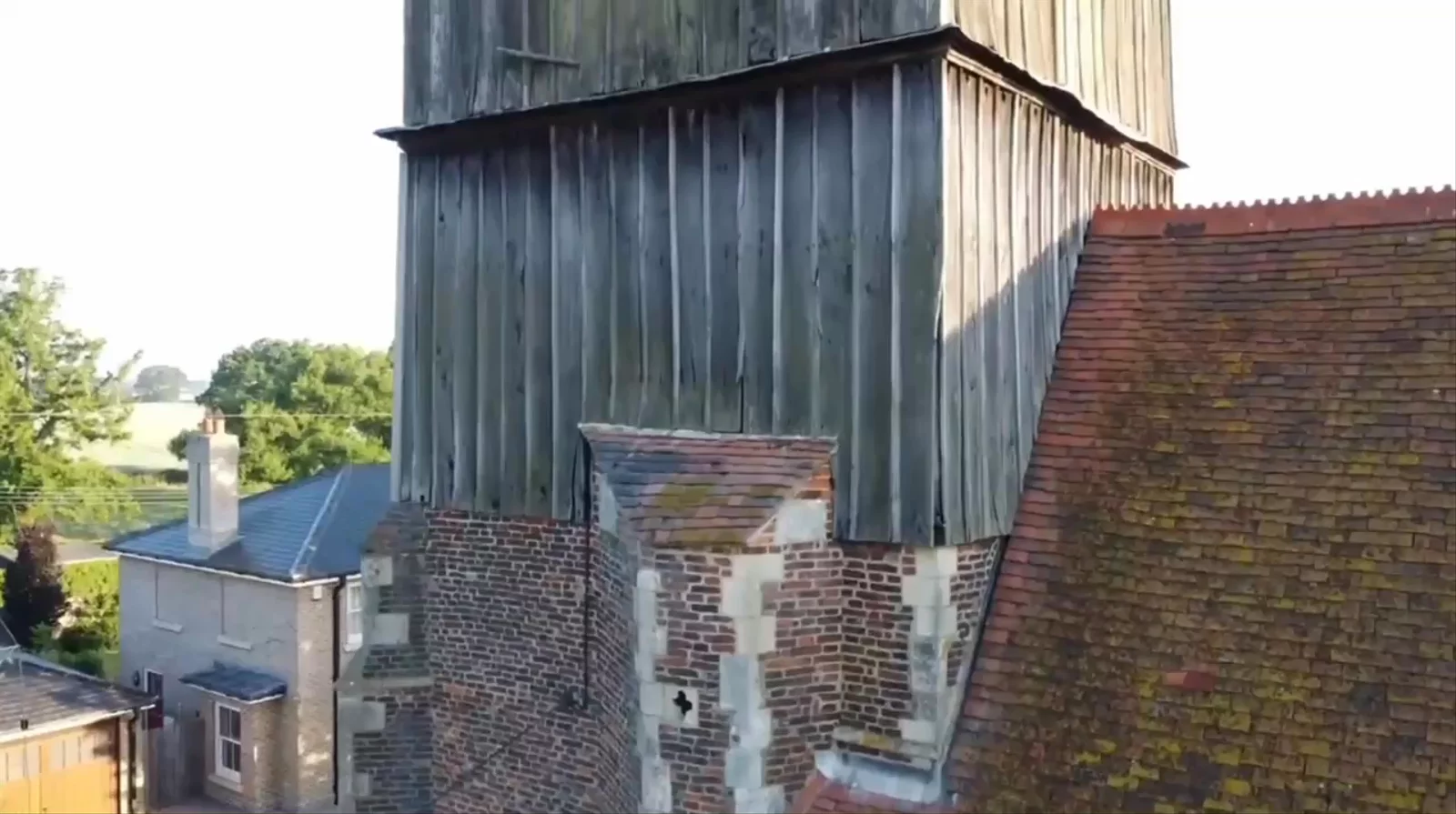
When uncovered, the tower has a fascinating appearance and the chance to look at it up close helps us to understand what is going on. Rubble at the base of the tower gives way to neatly laid bricks, on top of which sit vertically placed wooden planks. A shingled spire tops it off. On the inside, the wooden framework makes an intricate pattern of interlocking timbers some of which are over 300mm square and nine metres long. Here and there are tool marks, carpenter marks and the ends of wooden pegs sticking out from below their joints, all a reminder that is a hand-built structure made from trees we now know were felled in 1493.
At seven metres from the ground you marvel at the skill of the craftsmen involved in this work. The timbers, possibly sourced locally from the Marks Tey Hall estate, would have to be cut and prepared, brought to site then lifted, positioned and pegged, all by hand and using a wooden scaffold, ropes and pullies. The builders used unseasoned oak that was easier to work with hand tools. They were skilled workers, experienced in the planning and construction of timber framed buildings and could use this knowledge locally, or to move around the medieval countryside from job to job, taking new ideas and ways of working with them.
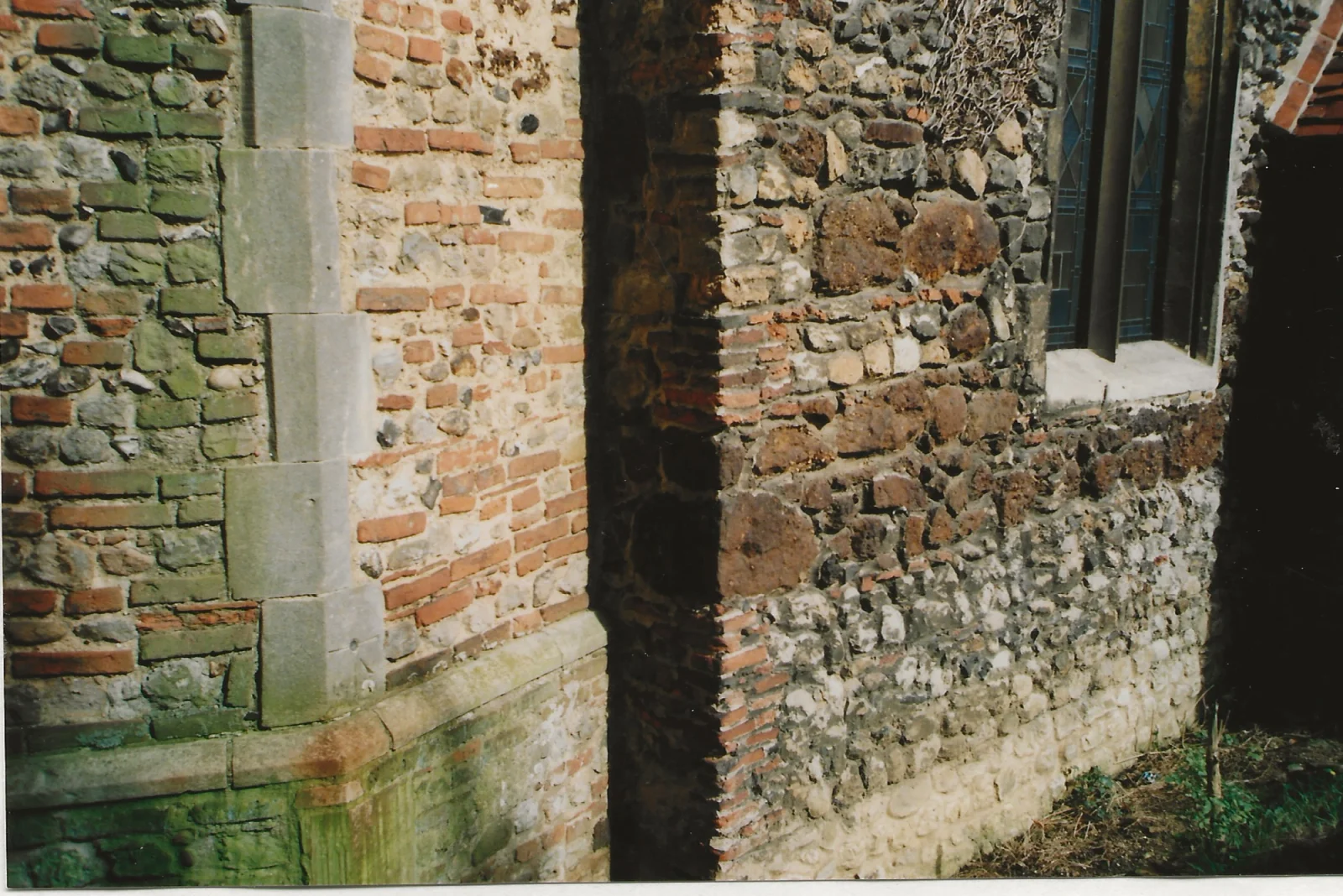
Exterior details at St Andrews Church
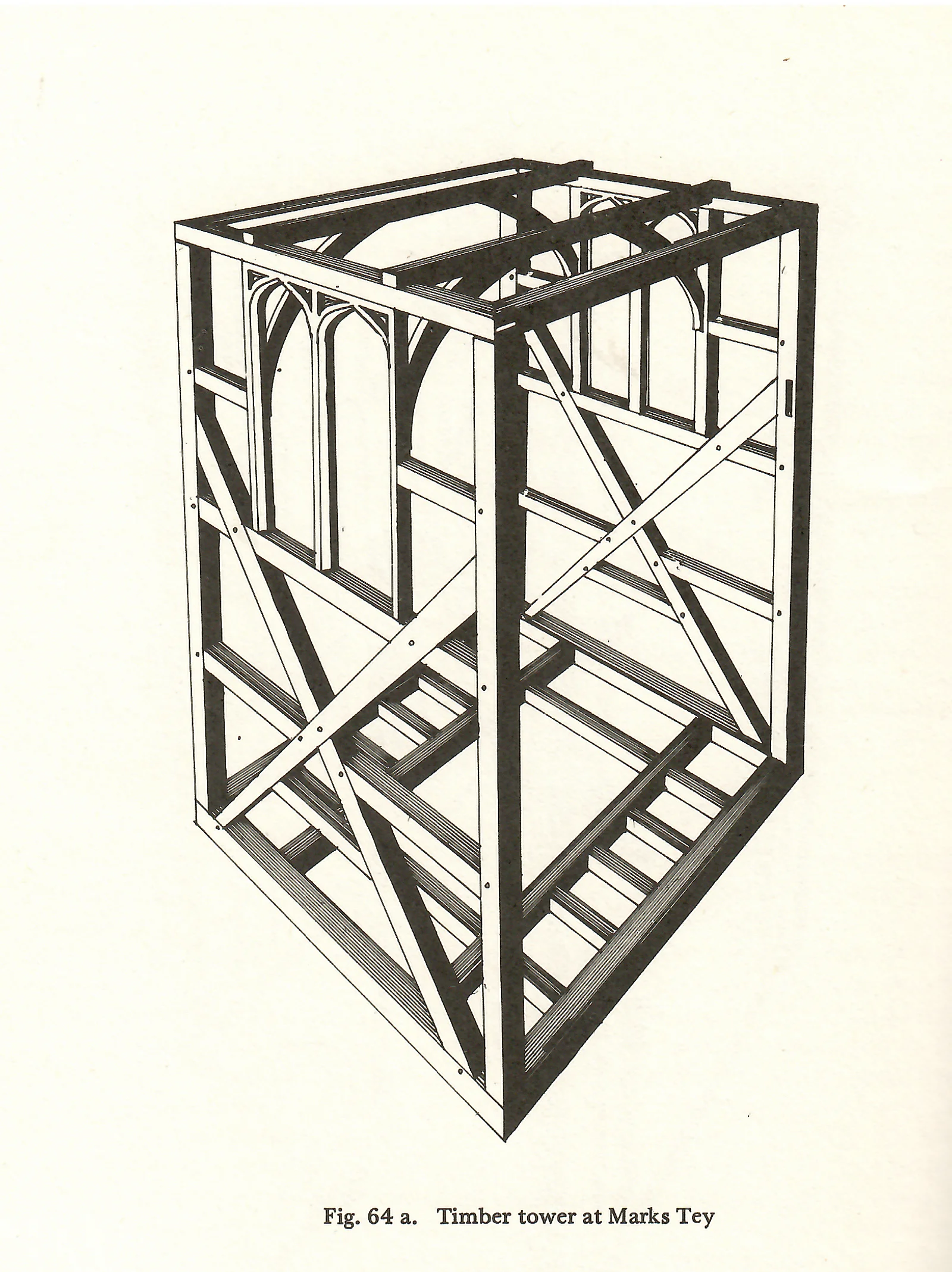
The timber tower at Marks Tey as seen in Hewett’s English Historic Carpentry showing the cross frame and opening for the louvre windows. (M2-11b)
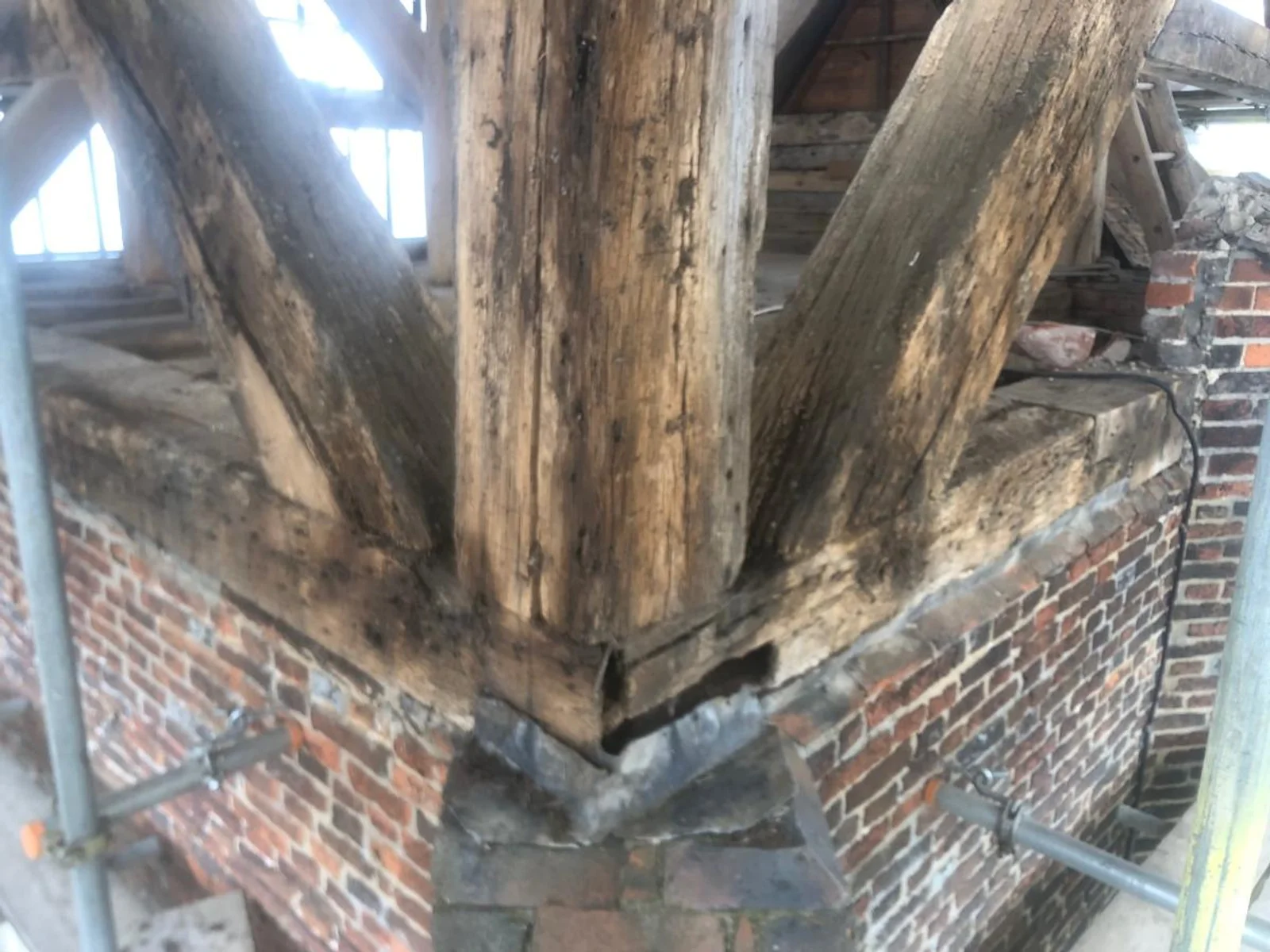
Deterioration of the corner plate and cross beam and new straps to the spire structure.
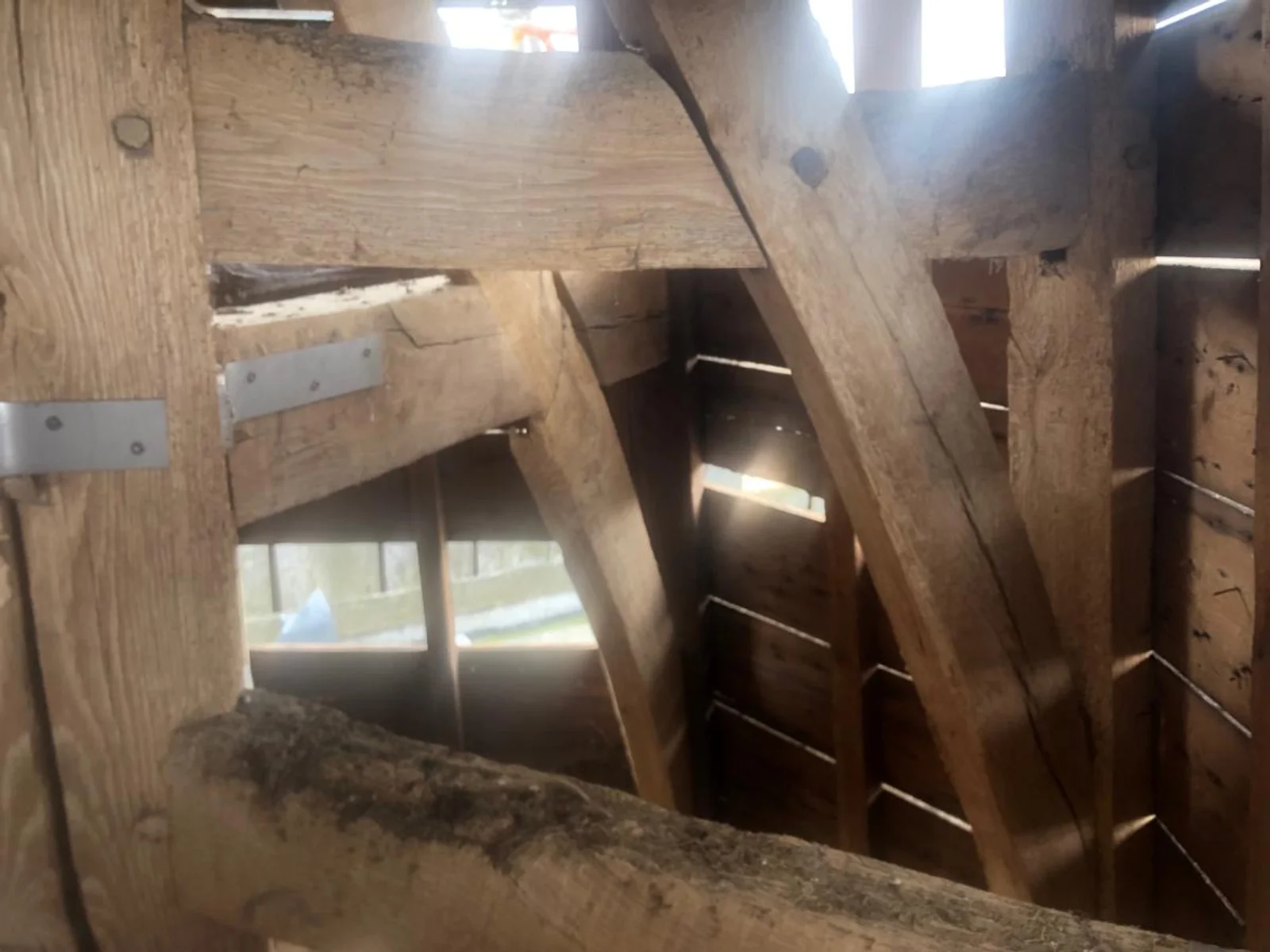
Straps to Spire's curved beams, ,
View from the top
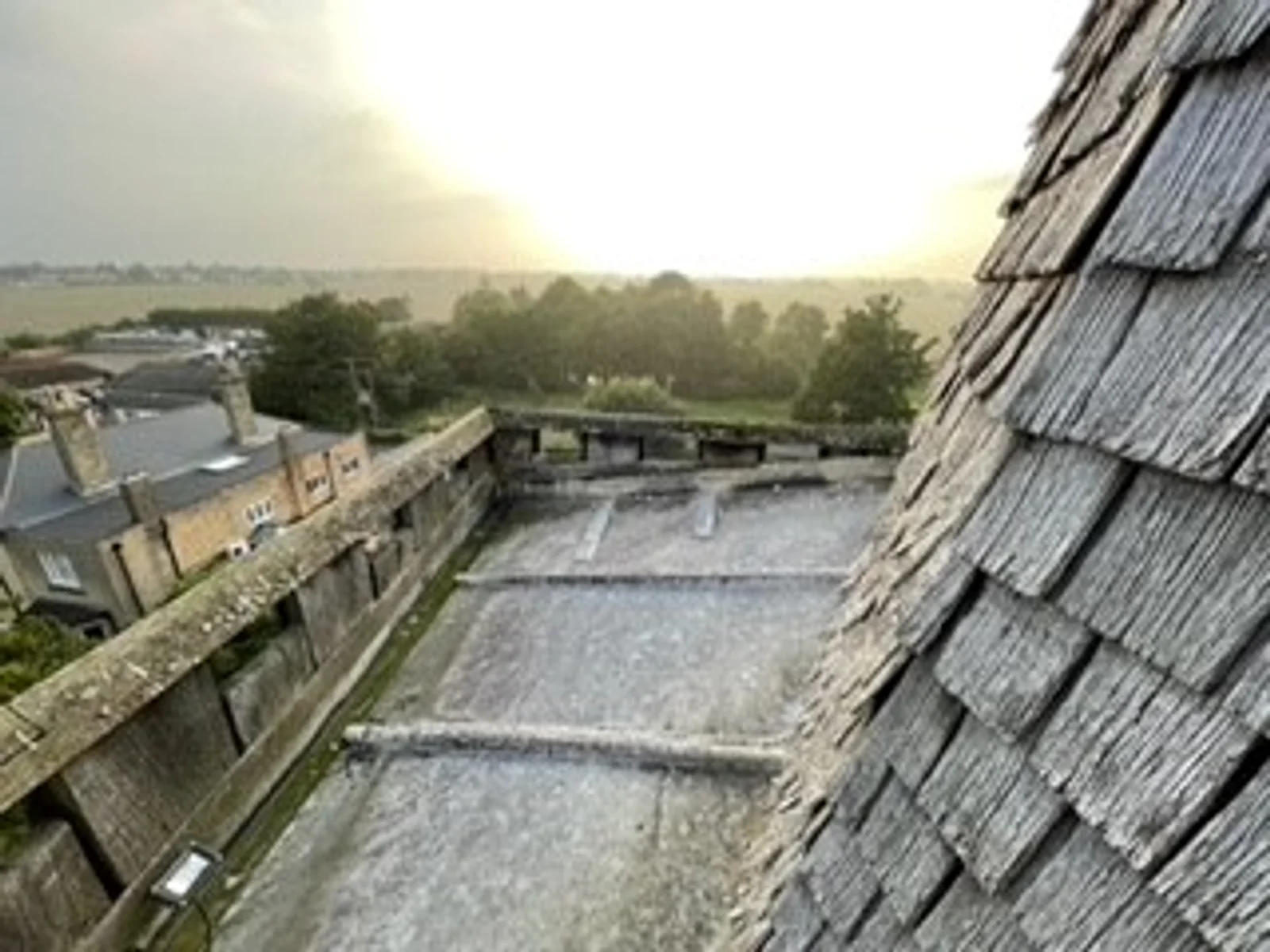
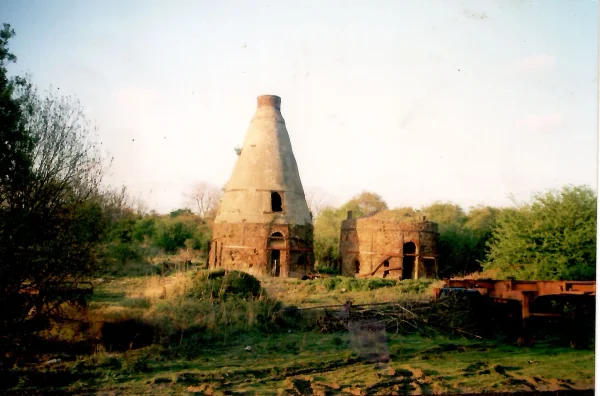
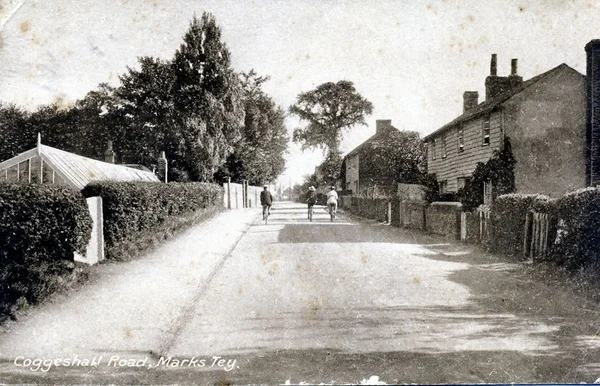
From the platform beneath the spire, the 360-degree view of Marks Tey gives you a different feel for the village to the one you have at ground level. The busy roads and train line are somehow less noticeable giving you a view that turns back time. You can see the buildings along the London Road, spot the bottle kiln and workers’ cottages in nearby Collier’s brick yard and look over the iron bridge on Coggeshall Road to the houses and buildings beyond. There is a sense of the church located at the heart of the community for past generations and of it now as a welcome sight for travellers on their way home.
Material histories
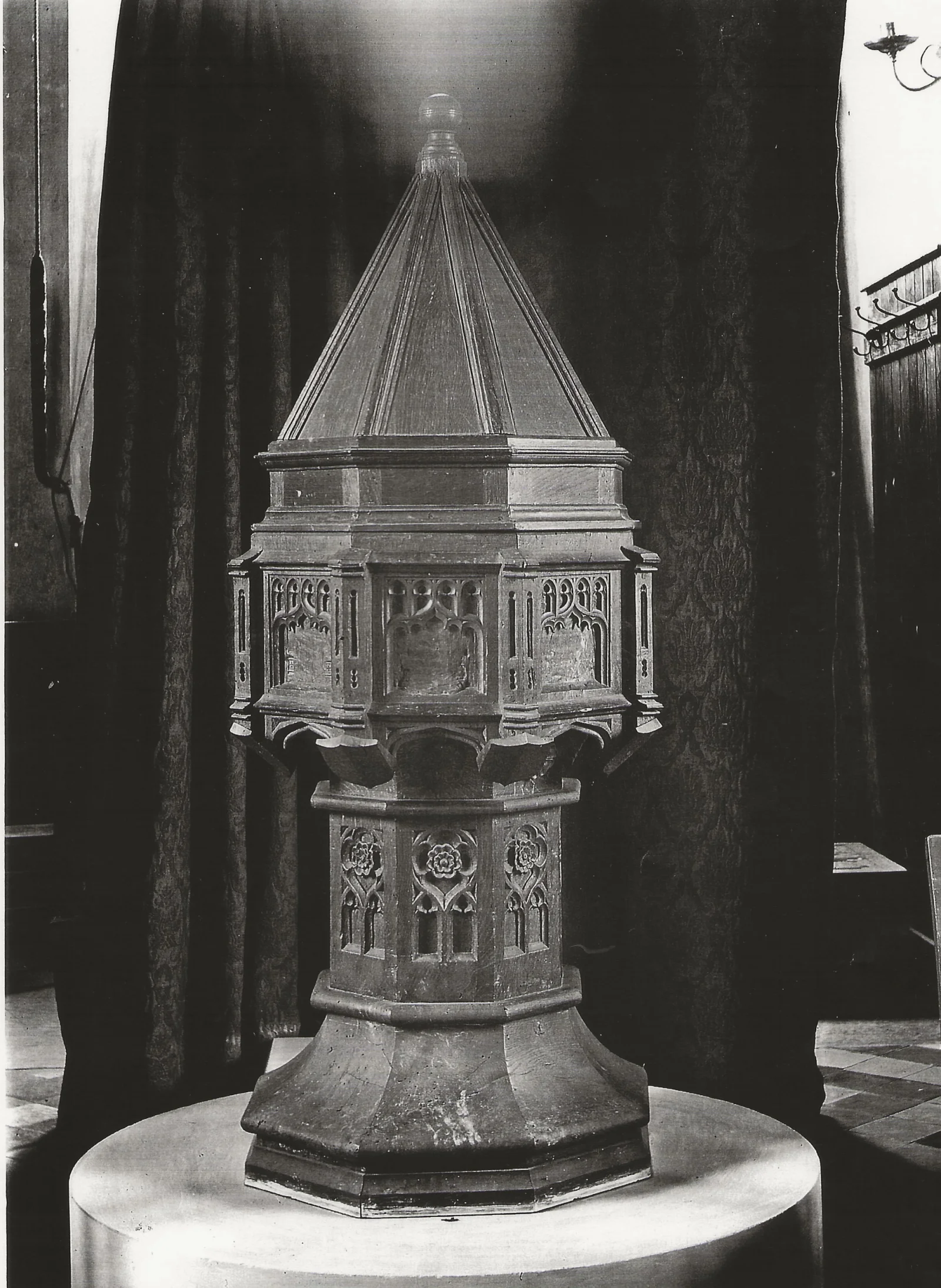
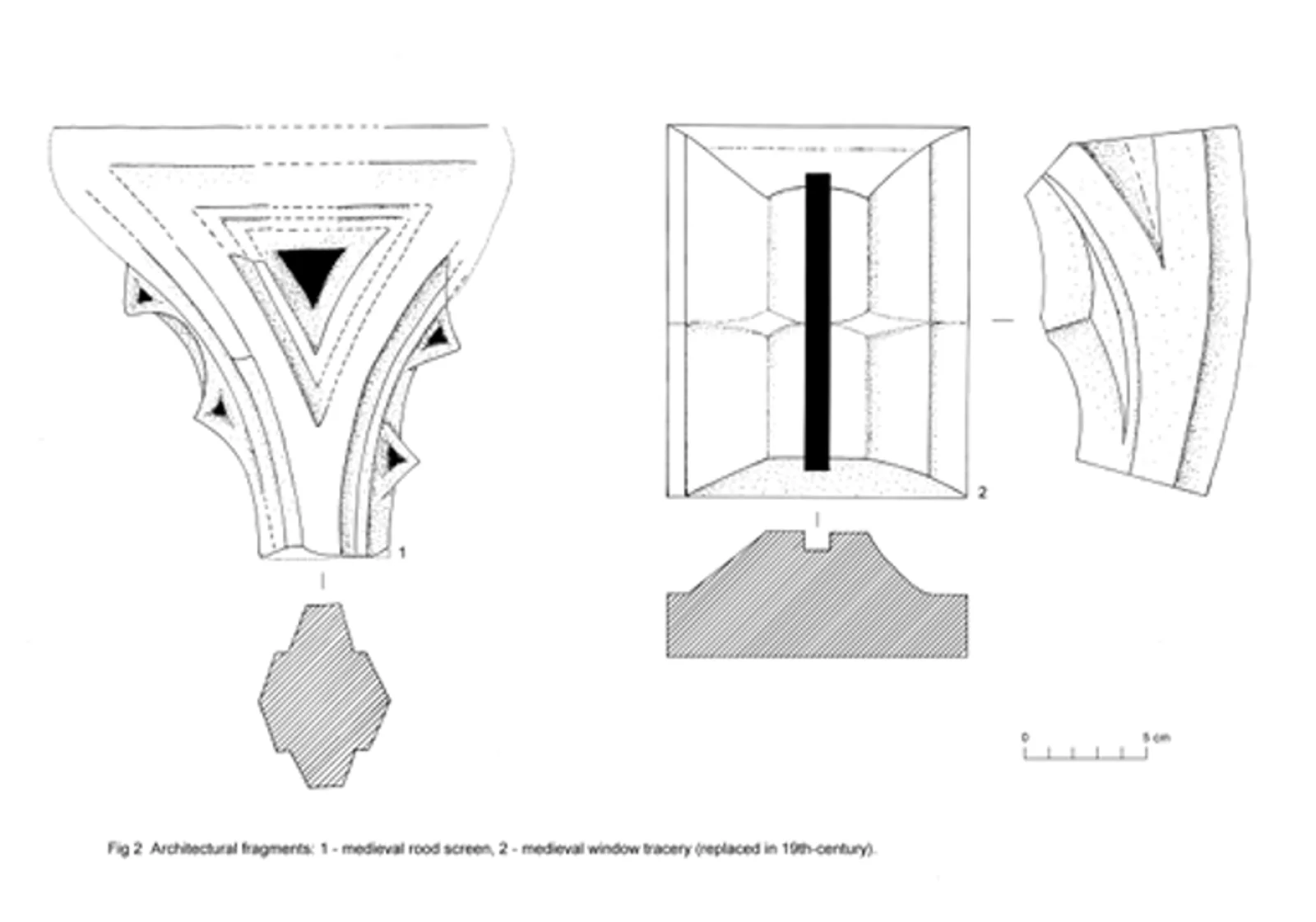
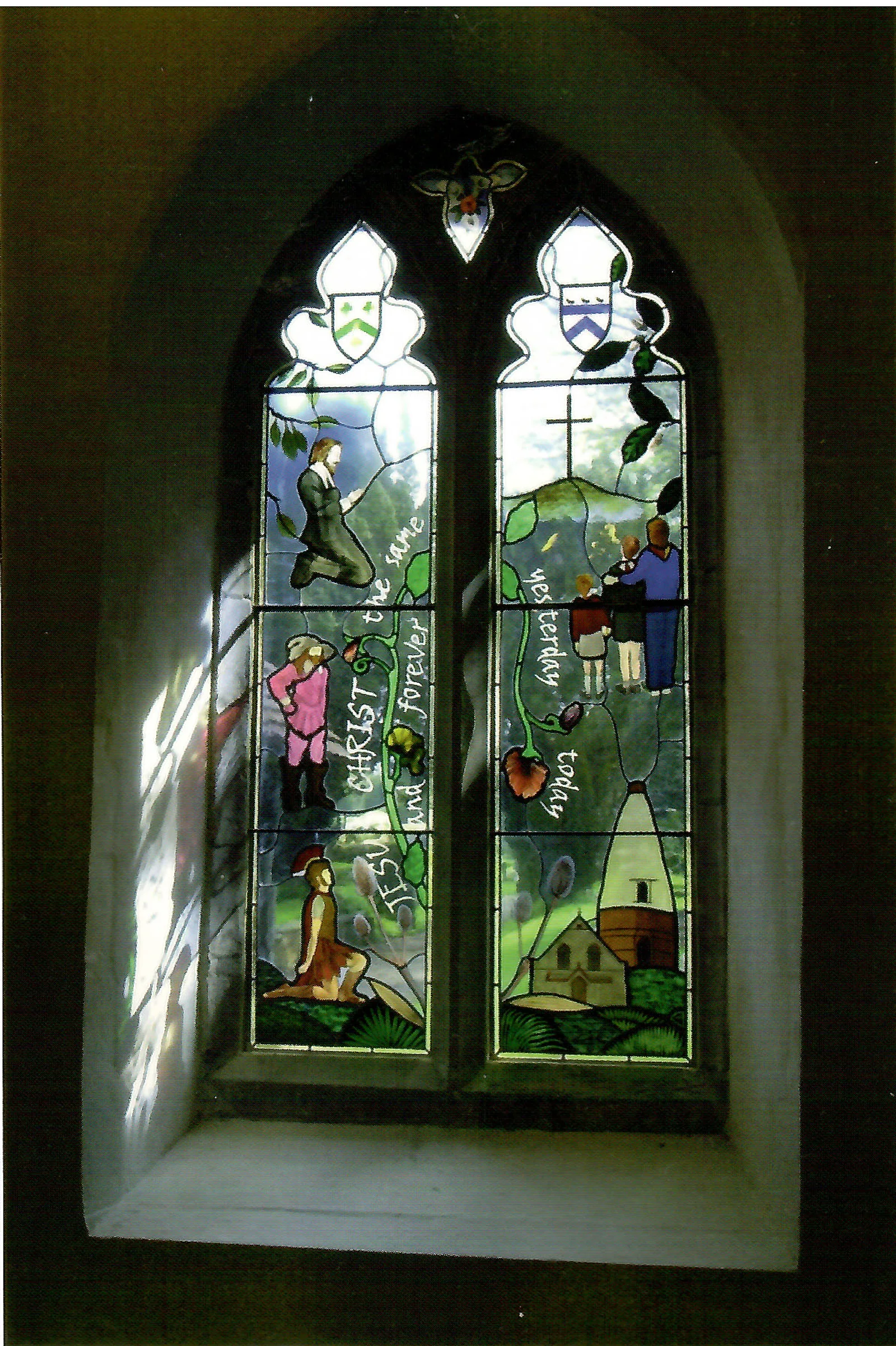
Back down the ladders and into the church, there are clues to the different phases of the building’s life over the years. Built from a mix of materials including Roman brick, puddingstone and rubble, the earliest part of the church, the central nave, is thought to be Norman, although it could be even earlier. The eastern section, the chancel, dates from the 14th century. There is a 15th century octagonal wooden font. Once there would have been a stone rood screen, which is rare in Essex, separating the nave and the chancel, and fragments of this can be seen inside the church today along with parts of window tracery found under the floor in 2007. On the south wall is the Millennium Window, a celebration of the yesterday, today and tomorrow of the village. It was designed by Essex artist Susan McCarthy and shows the Marks and Tey family crests, sweet peas to remember the village’s seed growing history, Colliers’ brick kiln and people from the village through the years.
CONservation over the years
Unsurprisingly, this most recent conservation project is not the only time the church has needed some attention. According to local legend, the top half of the tower had to be rebuilt in the 17th century after being used for gun practice in the Civil War. Repairs were needed by the 1730s which were funded by the Bree family but by 1881 the church had become so dilapidated there was even talk of demolishing it.Reverand William Morgan Jones and architect Edward J Dampier were against ‘any such vandalism’ and planned a comprehensive programme of work to fully restore the building. The work cost £1200 and entirely replaced the oak cladding, shingles and retained every ‘ancient feature’. This was probably the last time the timber frame of the tower was exposed before today’s works although the shingles needed replacing in 1952 when they were damaged by a Second World War bomb.
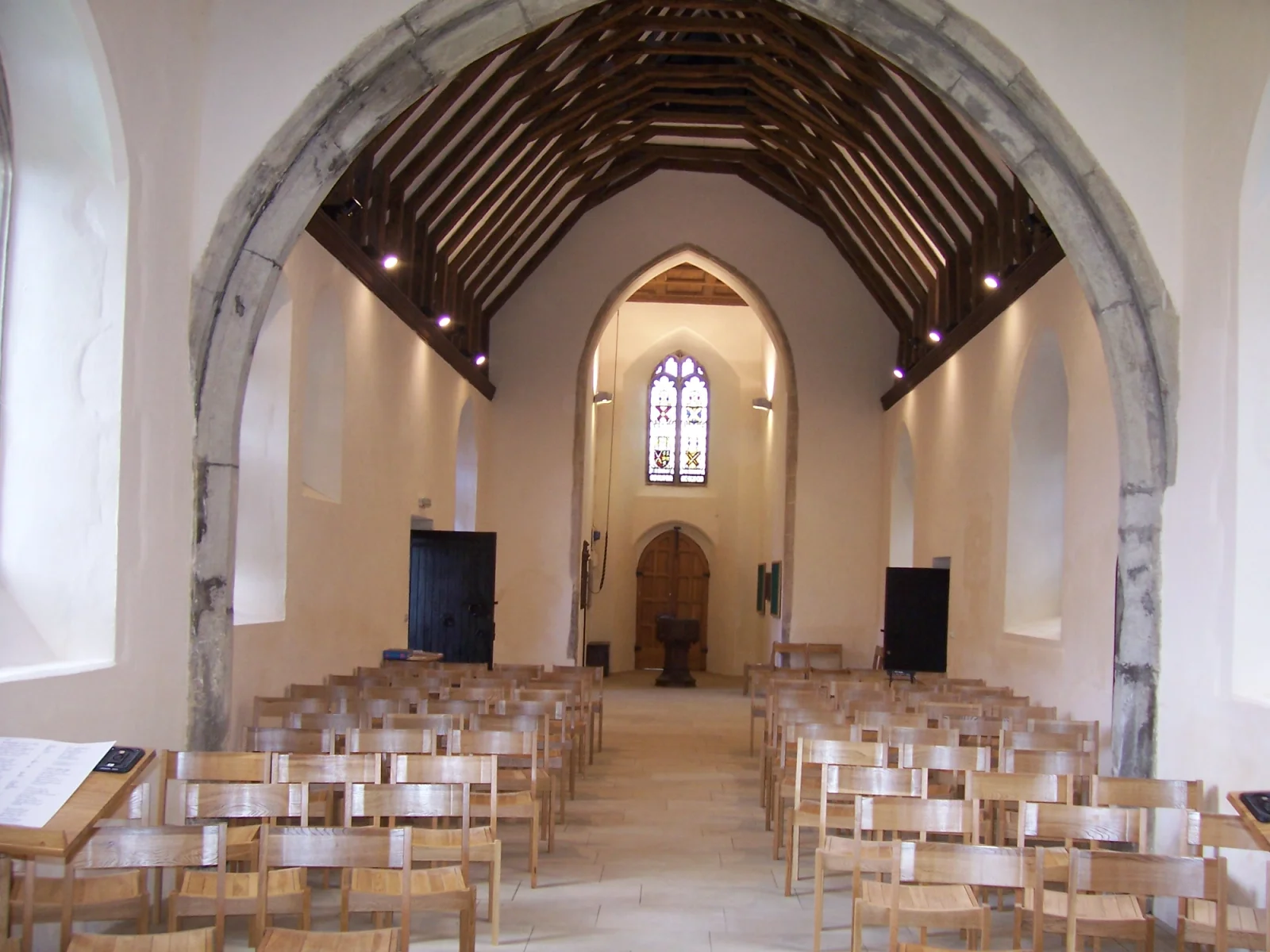
In 2007, the most significant works for over 100 years took place inside the church.The Victorian styling was removed and the church interior was modernised and opened up.As the floor was levelled and re-laid, secrets of the building emerged such as the rediscovery of Robert de Teye and wife Katherine’s tomb stone, dated 1360. Luckily the inscription had been recorded in 1748 as for many years the stone itself was thought to be lost.
‘Robert de Teye et Katerine, sa femme, gisent icy Dieu de lour Almes eit m’ci qu decederent le 7 jours d’October, l’an de grace, 1360.
(Robert de Tey and his wife Katherine lie here. May God have mercy on their souls that died 7th October in the Year of our Grace 1360).
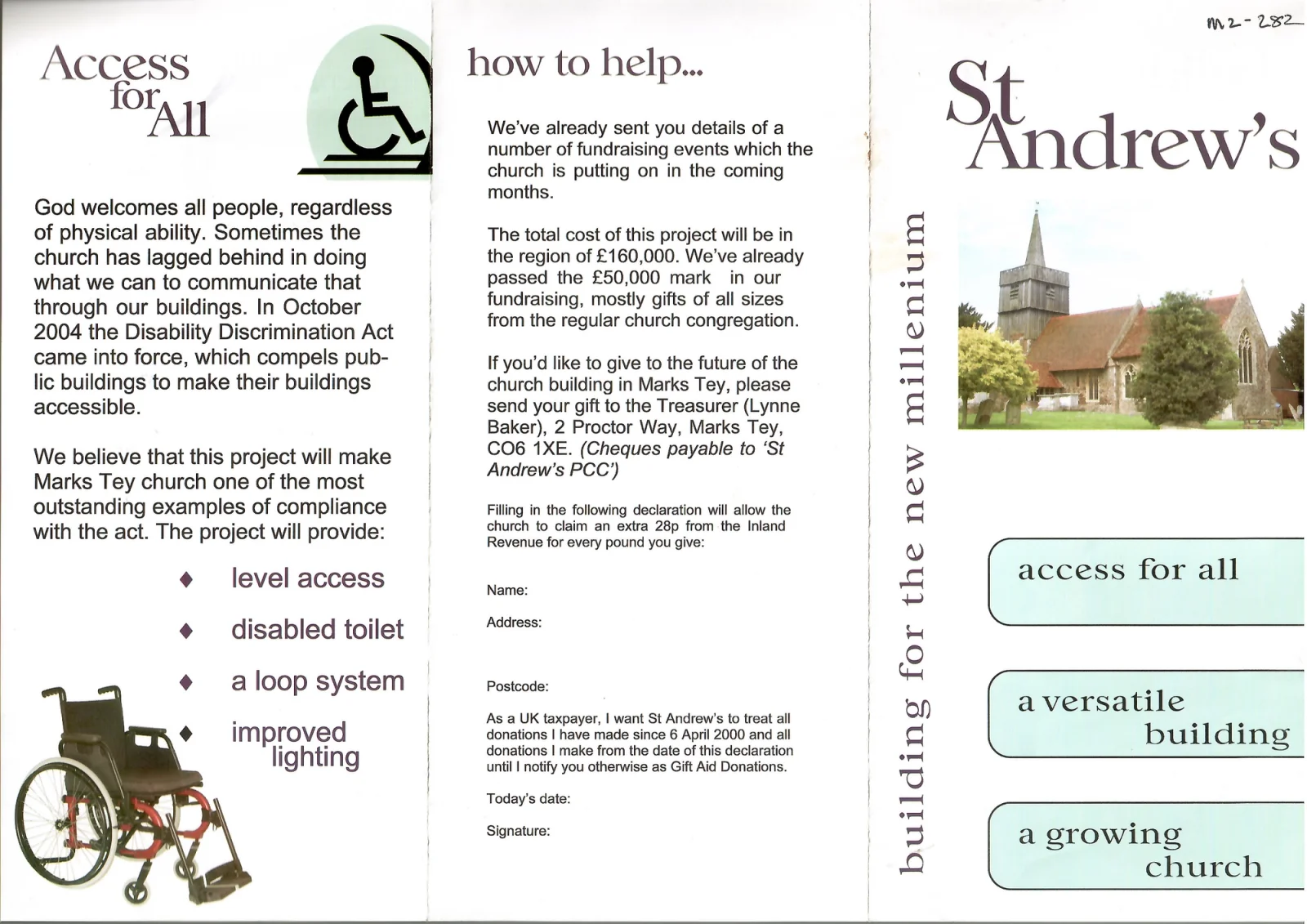
Church re-ordering leaflet, 2000, [MTHP.1.3.1.5.165]
‘The old Tower is handed over in practically the state in which it left the builders hands’
- Essex County Standard, 6 March 1886
Find out more
Marks Tey Heritage Project is bringing together the history of Marks Tey in one place. If you’re interested in knowing more about St Andrew’s Church, about Mark Tey’s other churches - the Methodist and Baptist Churches - or about St James the Less in Little Tey, take a look at these suggestions.
Archive results related to A spire and its stories
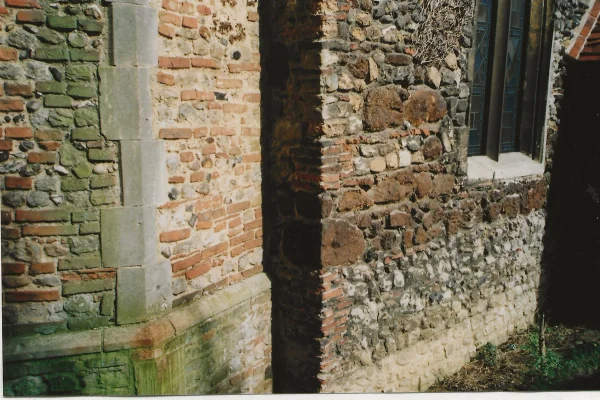
Exterior details St Andrews Church, Marks Tey
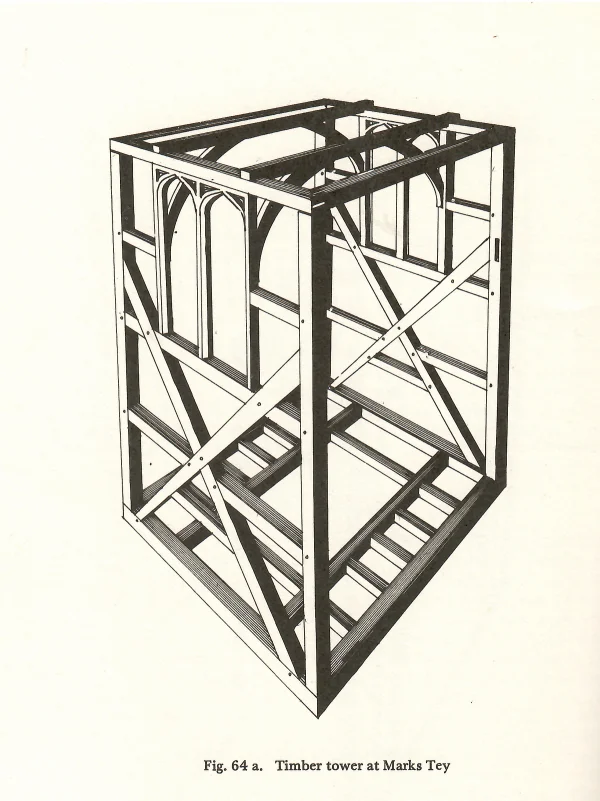
St Andrews Church tower frame
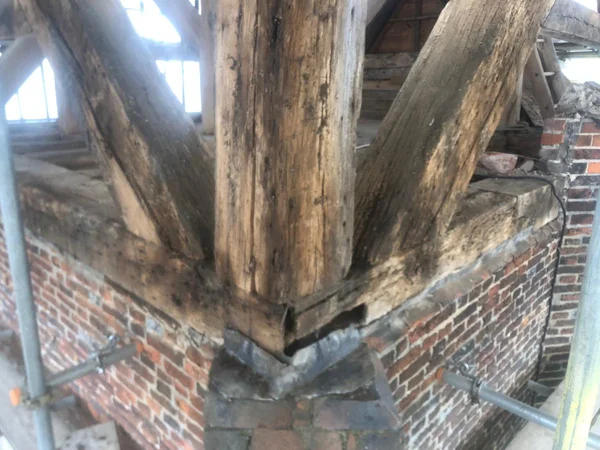
St Andrews Church spire South corner
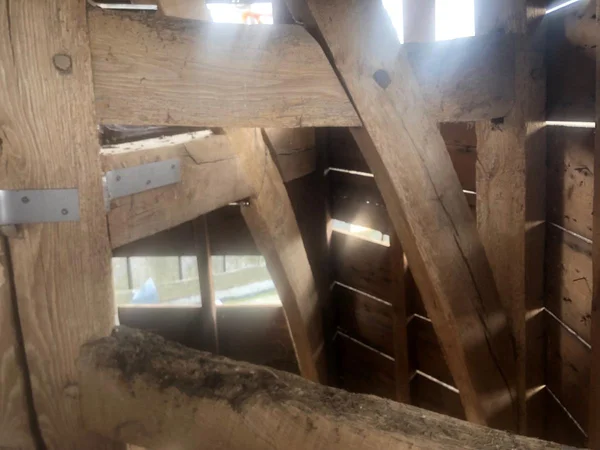
Straps to Spire's curved beams
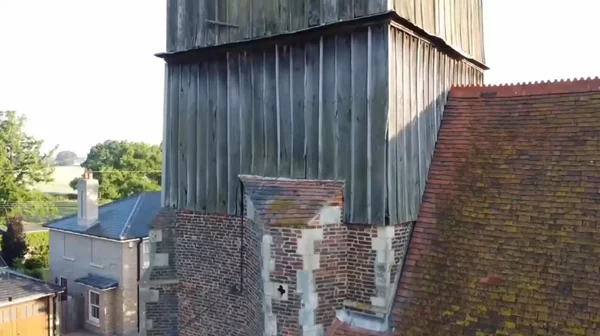
Drone footage of St Andrews Church tower and spire
2025
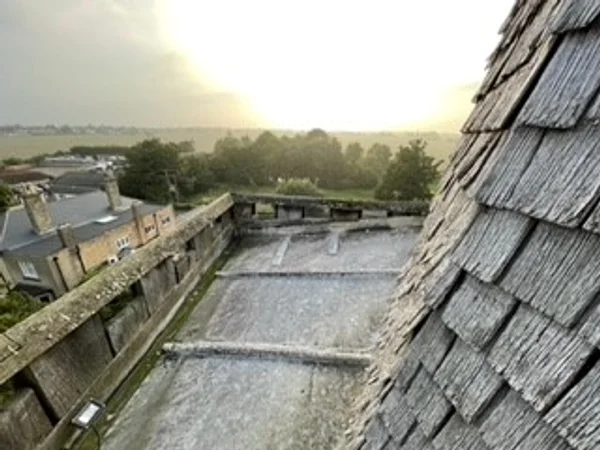
The wooden shingles covering the spire
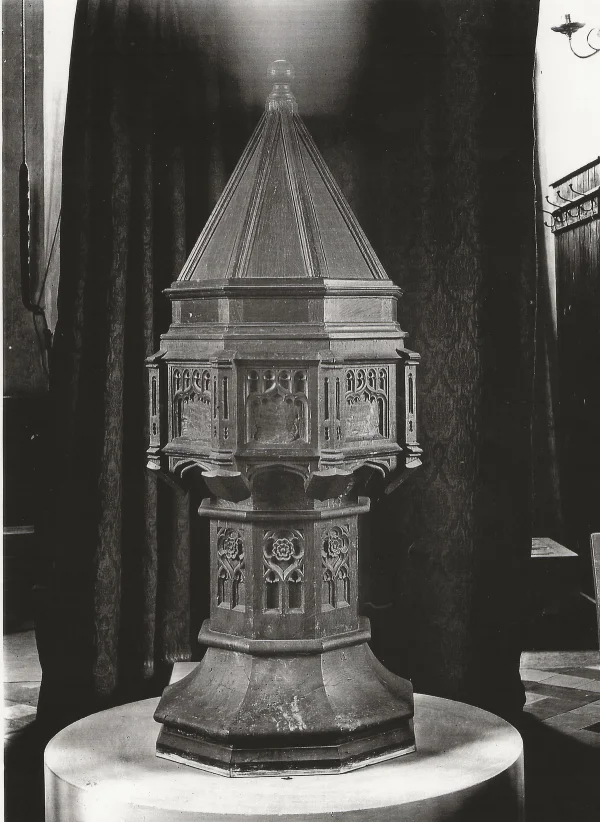
St Andrews unusual 15th century wooden font
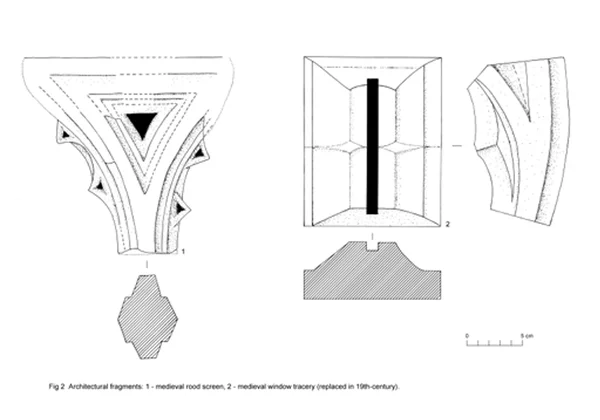
Architectural Fragments at St Andrews Church
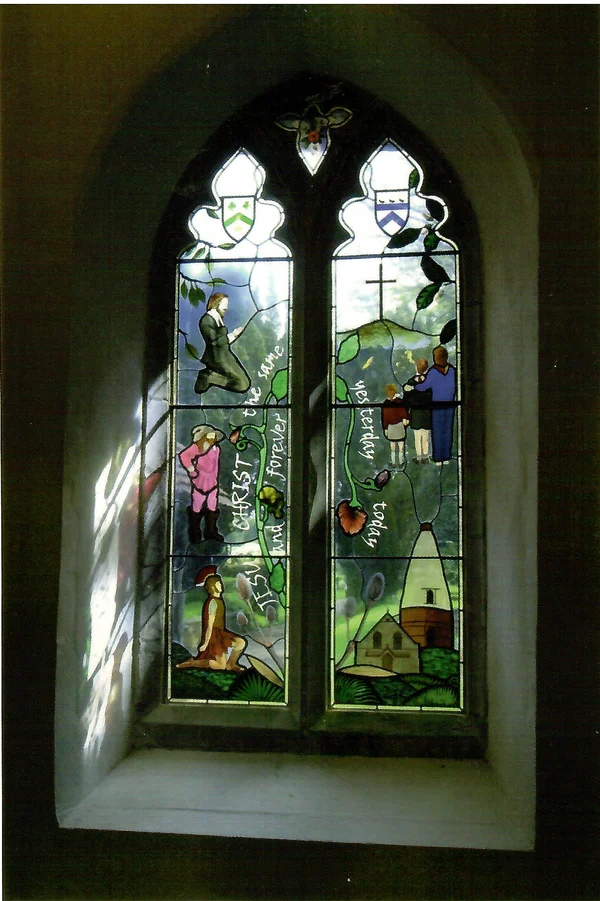
Millenium Window
2000
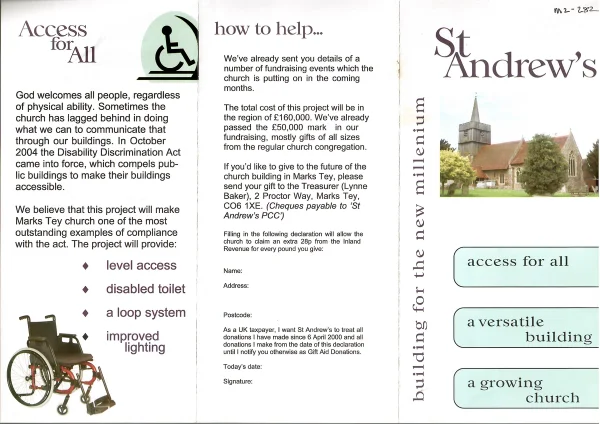
Church re-ordering leaflet
2000
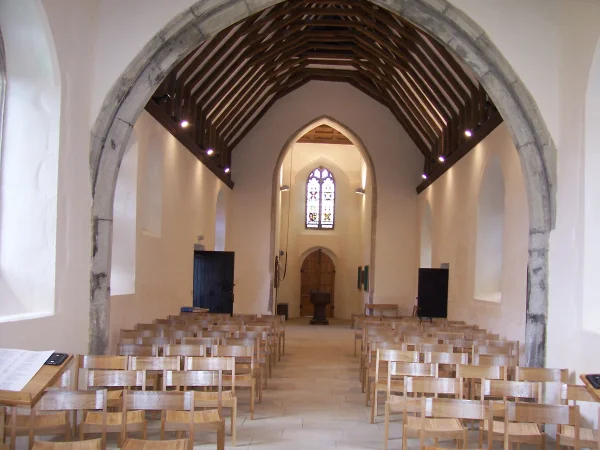
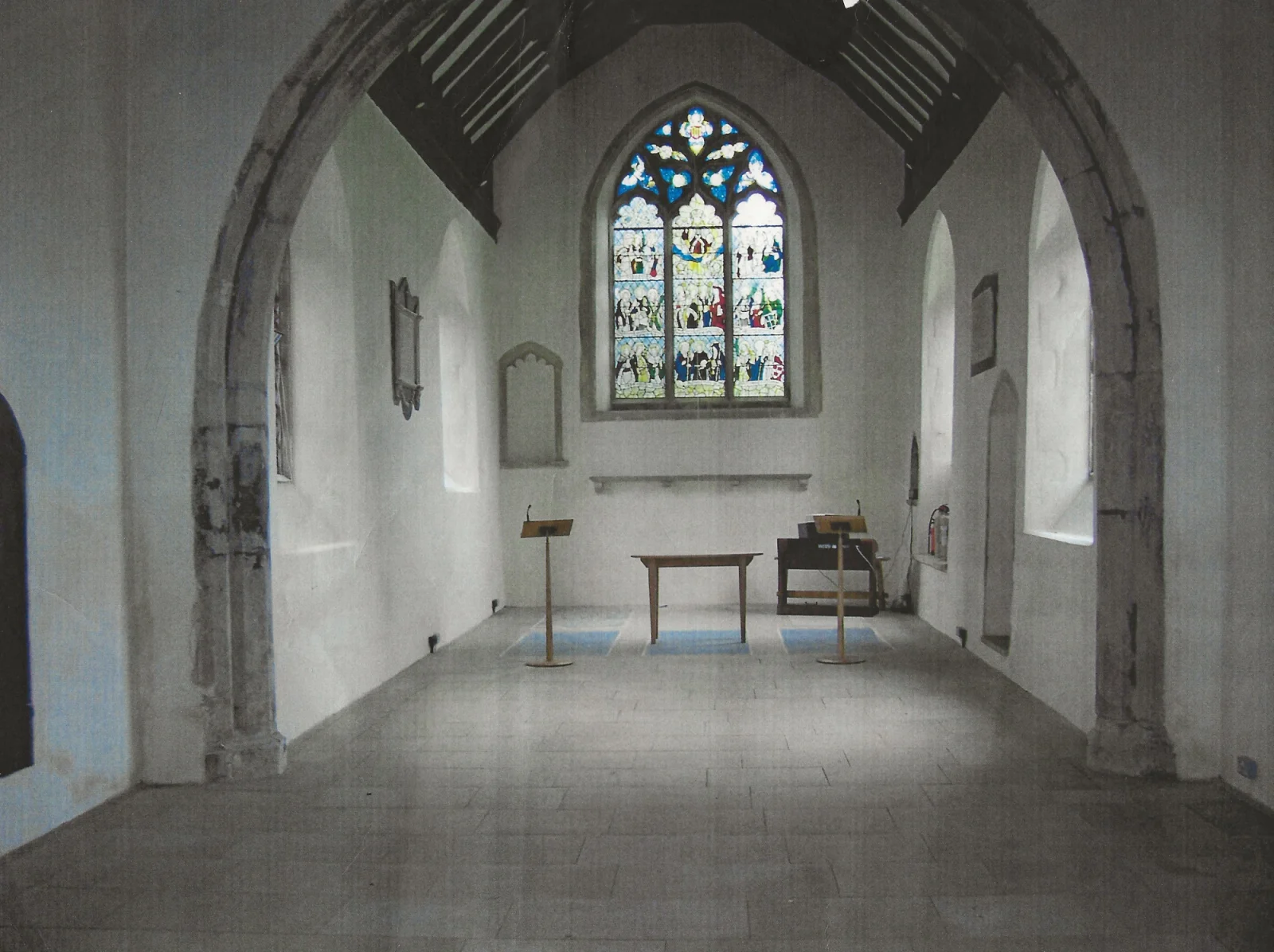
St Andrews Church interior, 2007
2007
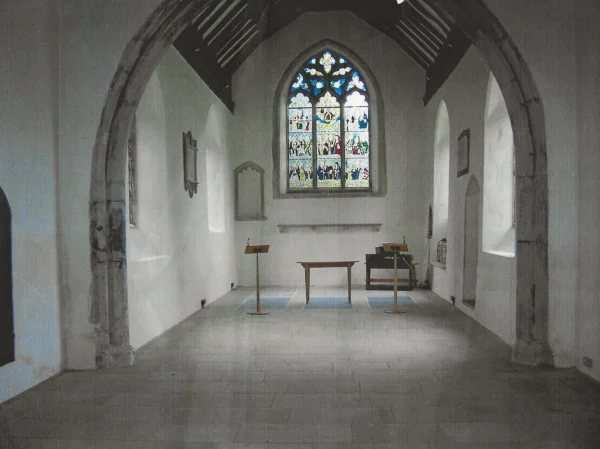
Empty church after reordering
2007
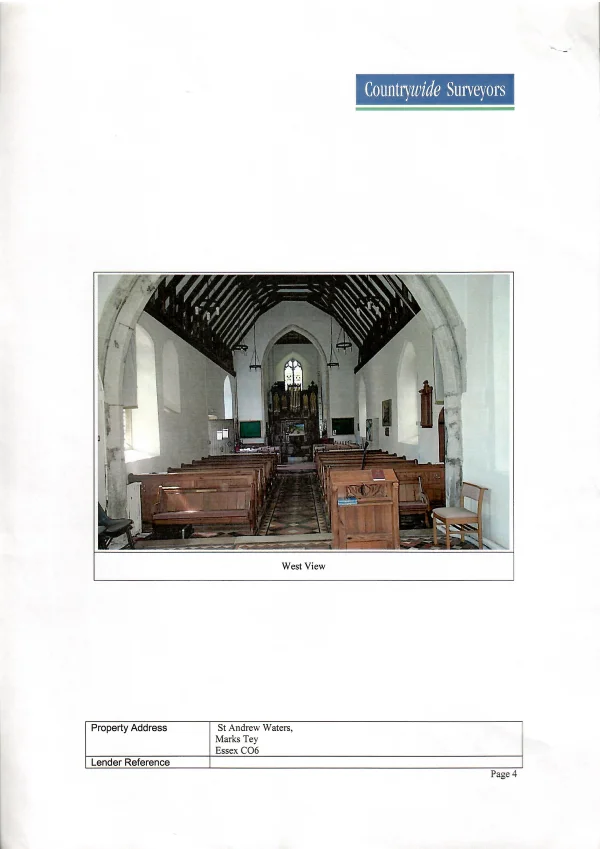
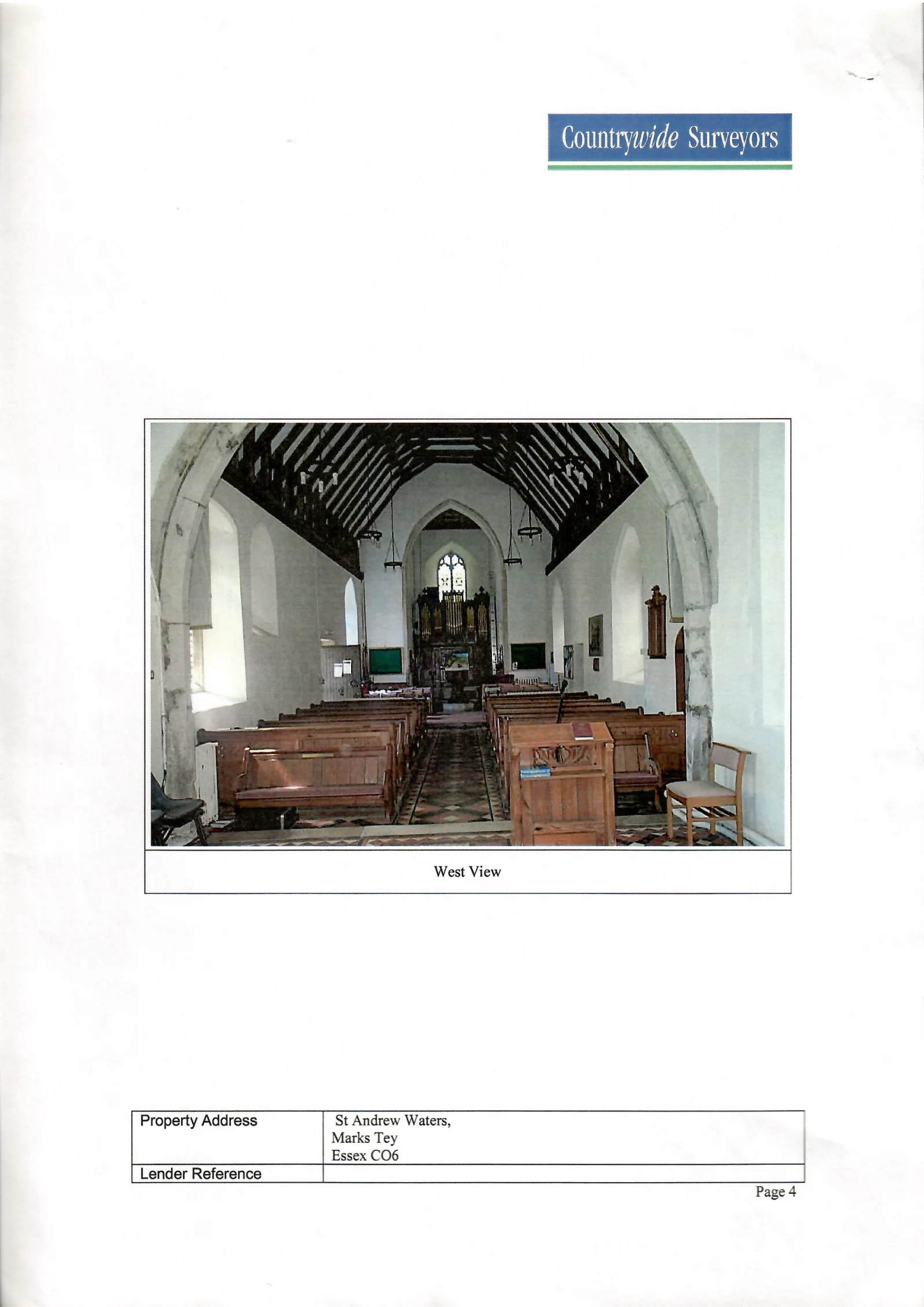
Internal view of St Andrew's Church before reordering
2005
Explore more stories
INDUSTRIES OF MARKS TEY
Flowers & seeds

BRICKMAKING IN MARKS TEY
Brick is beautiful
TRANSPORT
Getting around Marks Tey
Marks Tey Carnival in the 1970s
Blooming Marvellous!
A SCHOOL FOR MARKS TEY
Marks Tey school days
BRENDA WILBY'S WALK
A walk around Marks Tey in the 1920s
World War comes to Marks Tey
Wartime Marks Tey
LIVING HISTORY TALKS
Origins
Places names in marks tey
Tey at Elms & other names
LIVING HISTORY TALKS
Building of the Church

LIVING HISTORY TALKS
Marks Tey Cricket Club
LIVING HISTORY TALKS
Impact of the Railway
LIVING HISTORY TALKS
The Famous Case of William Steel
LIVING HISTORY TALKS
1944