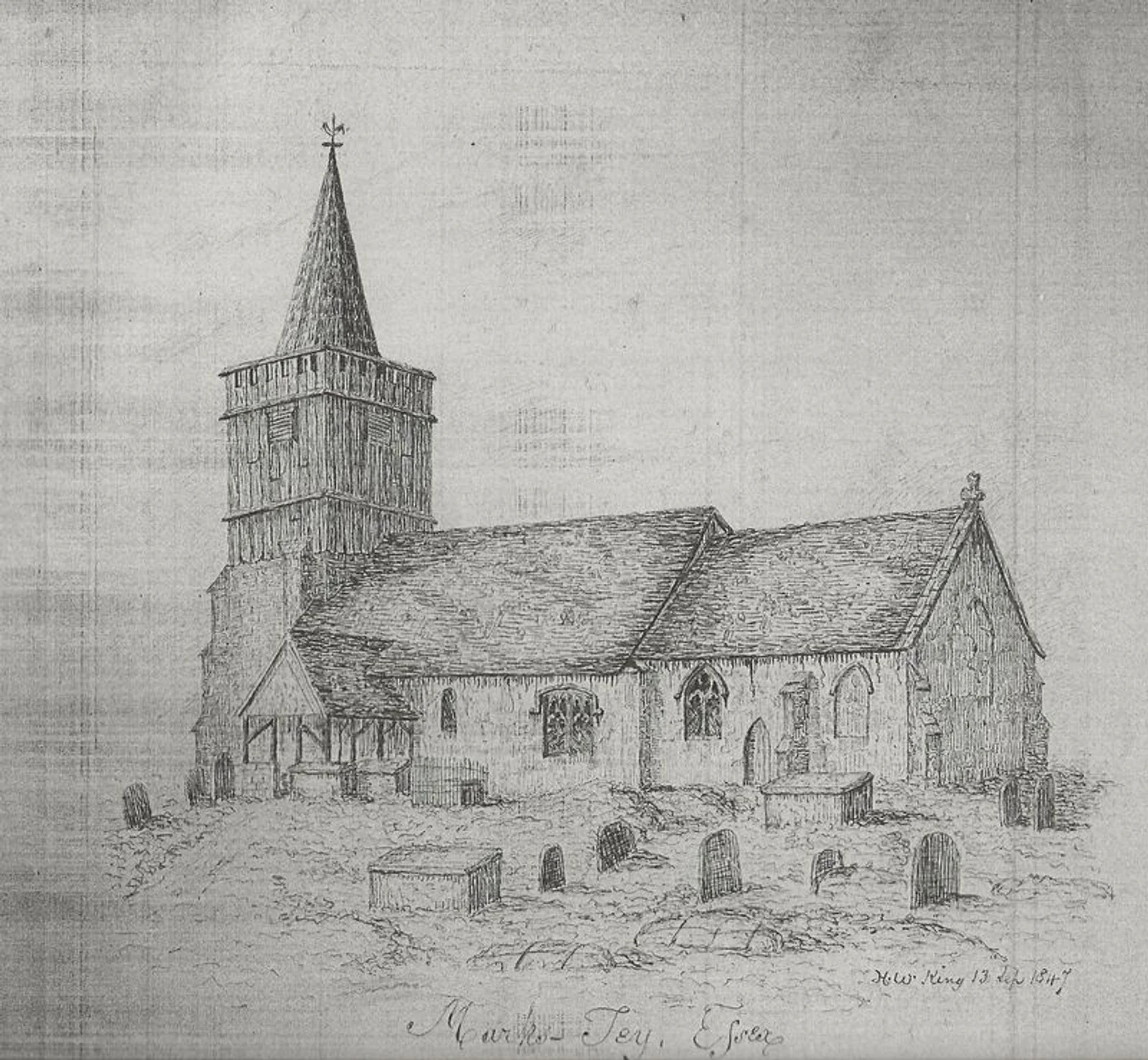
Building of the Church
LIVING HISTORY TALKS
Lord Magnaville decided his manor should have a solid building for God and he recruited experienced builders from Birch to take on the task.
This short story was originally shared as a talk by Andrew Waters at the Living History event in St Andrews Church, November 2025, as part of the Marks Tey Heritage Project.
Explore story →
A SOLID BUILDING FOR GOD
In the reign of Henry Beauchamp there was a great burst of building of churches in the area. So Lord Magnaville decided his manor should have a solid building for God and he recruited experienced builders from Birch to take on the task.
Serfs and even freemen were obliged to join in as labourers under the direction of the overseers. Like elsewhere the ruins of a Roman building were chosen giving a source of building material. Men collected up purple pebbly rocks that had impeded the ploughs. From rafts on the small river coastal mud stones were brought up for the rubble walls.
The walls took more than one season to build and included narrow slit openings but were covered with cow hides to keep out the wind and rain as glass was rare and too expensive. The outside was plastered and painted white. A rounded end faced east towards Jerusalem. Trees from the manor were felled and used for the roof. Will the thatcher covered the roof with straw and reed.
A GROWING CHURCH
Over a hundred years later, when the Black Prince had fame from battle victories our Lord John de Tey wanted the church of his manor to be larger and more impressive to signify his growing wealth. So the church was lengthened and the building of a tower started. The internal walls were painted using bright vivid colours
However, a great pestilence arrived. So many of the villagers succumbed including John de Tey and his wife Catherine.
COMPLETING THE TOWER
More than 100 years later in the reign of another Henry — Henry Tudor — The Lord of the Manor thought it was time to complete the tower. He engaged some men from the Tilkey at Coggeshall. They found suitable clay by the pond the Romans had dug and made bricks in clamps. The work was slow and expensive so our impatient Lord, looking at some of the great manorial tithe barns, decided to complete the task in timber.
Oak was again felled from the manor's lands. Experienced carpenters were recruited. The timber was laid on the ground, joints cut and fitted together, timbers marked.
The following year a great framework was built around the base of the tower and extended upwards. Bullocks were brought in to help lift the heavy oak pieces up off the ground using ropes and wheels. It was a mammoth effort. Positioning the central post of the spire was particularly difficult. The master craftsmen carving delicate unseen details for the Glory of God.
FIND OUT MORE
The Church still stands despite challenges from puritans whitewashing over the wall paintings and removing carved angels off the font, neglect and exploding doodlebugs.
Marks Tey Heritage Project is bringing together the history of Marks Tey in one place. To take a look at our other stories from the Living History evening to find out more about our village.
Archive results related to Building of the Church

Explore more stories
INDUSTRIES OF MARKS TEY
Flowers & seeds
BRICKMAKING IN MARKS TEY
Brick is beautiful
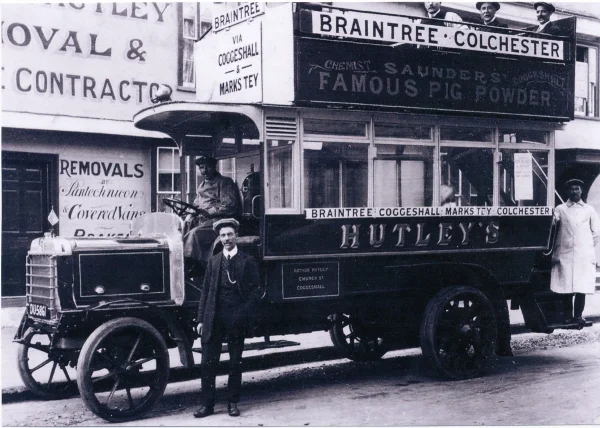
TRANSPORT
Getting around Marks Tey
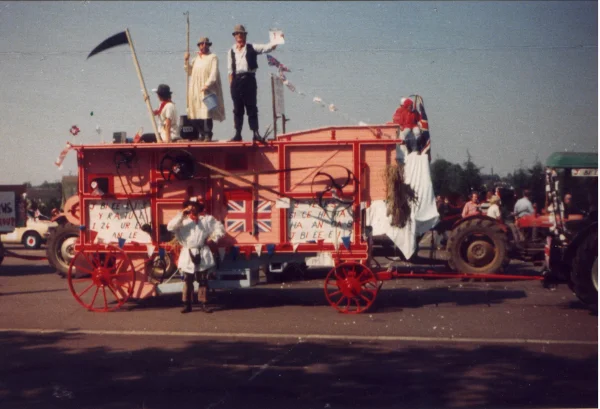
Marks Tey Carnival in the 1970s
Blooming Marvellous!
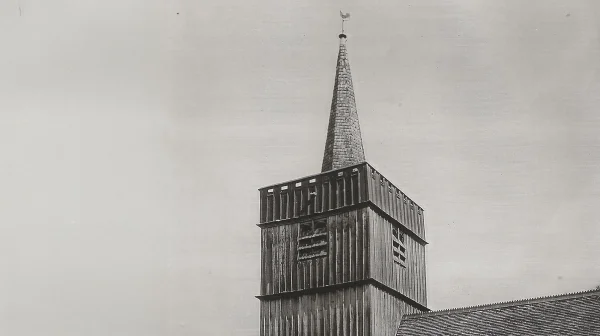
CHURCHES OF MARKS TEY
A spire and its stories
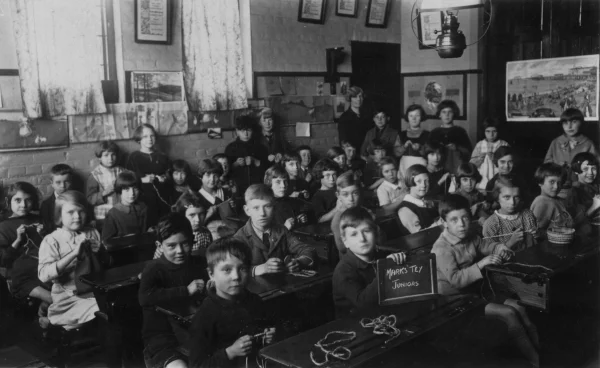
A SCHOOL FOR MARKS TEY
Marks Tey school days
BRENDA WILBY'S WALK
A walk around Marks Tey in the 1920s
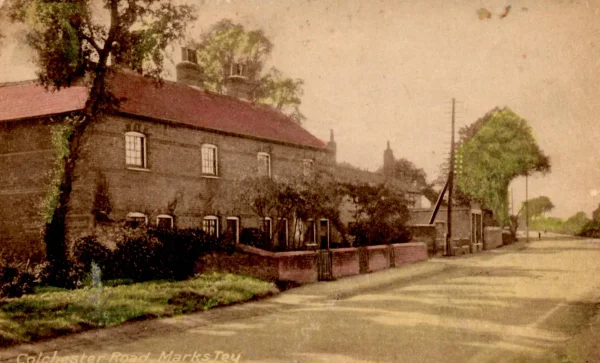
World War comes to Marks Tey
Wartime Marks Tey
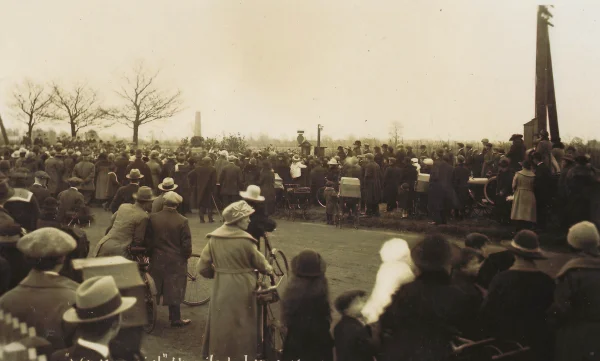
LIVING HISTORY TALKS
Origins
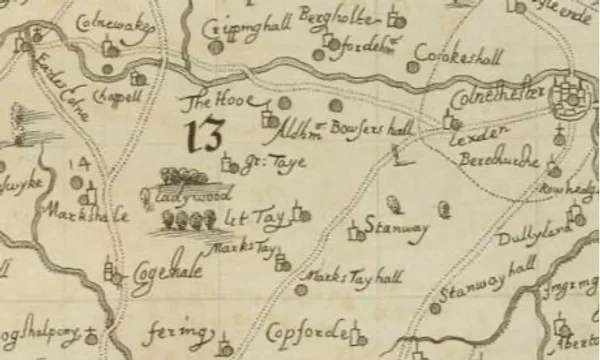
Places names in marks tey
Tey at Elms & other names
LIVING HISTORY TALKS
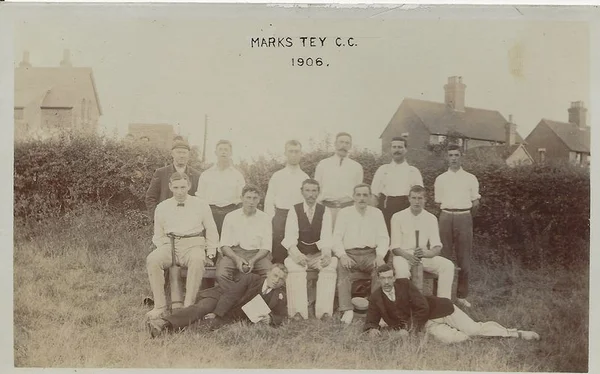
Marks Tey Cricket Club
LIVING HISTORY TALKS
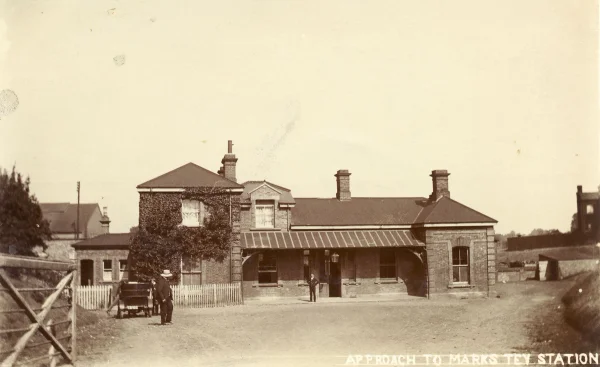
Impact of the Railway
LIVING HISTORY TALKS
The Famous Case of William Steel
LIVING HISTORY TALKS
1944