Brick is beautiful
BRICKMAKING IN MARKS TEY
Essex has a long history of brickmaking with brickyards in the past scattered about wherever the pockets of clay existed. The oldest known brickworks in the county are from the 1200s in Little Coggeshall but the Romans were making and using bricks hundreds of years before that. Here in Marks Tey, brickmaking was underway at least 160 years ago. Our project researcher ‘digs’ around some more.
Explore story →
The start of brick making in Marks Tey
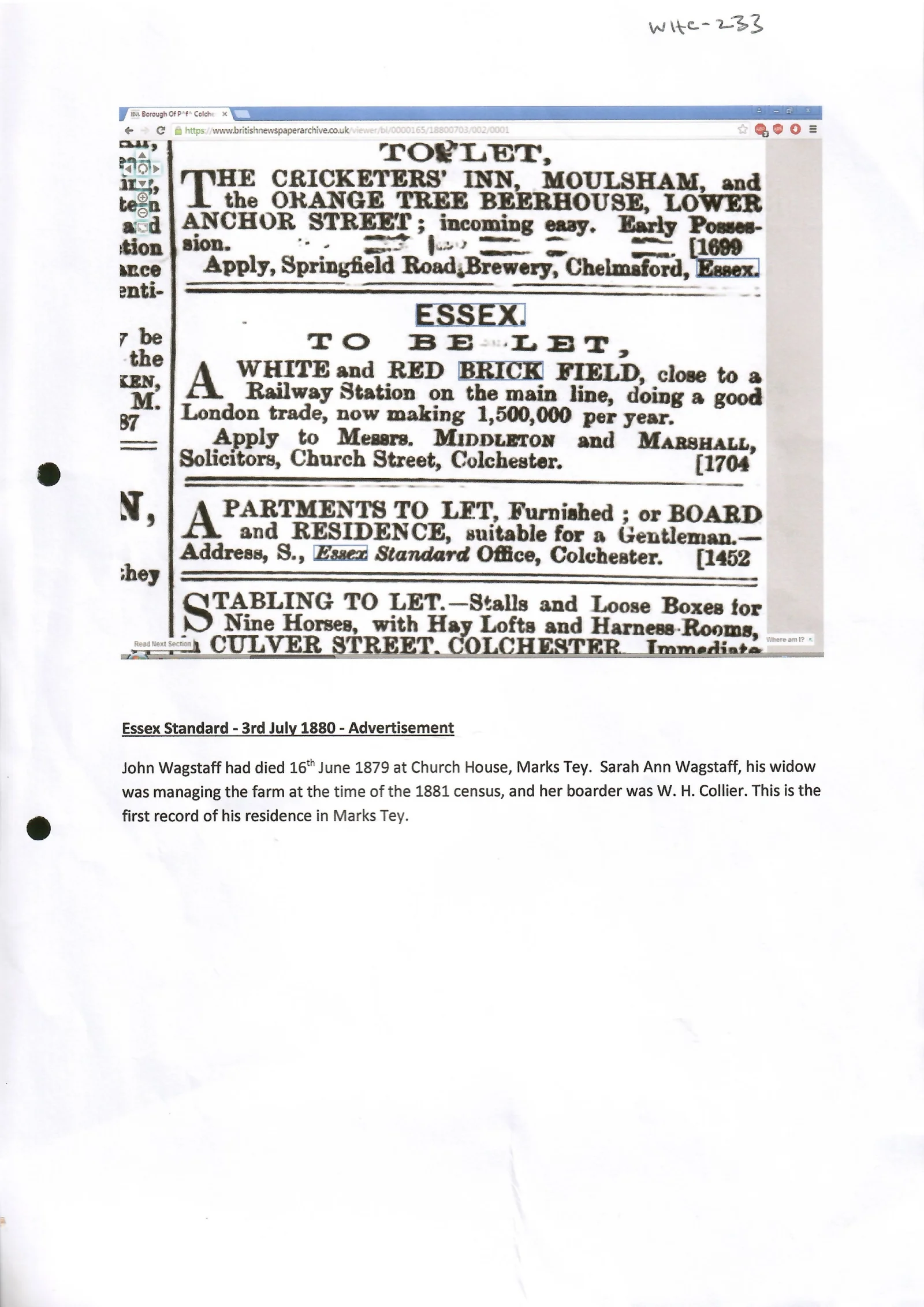
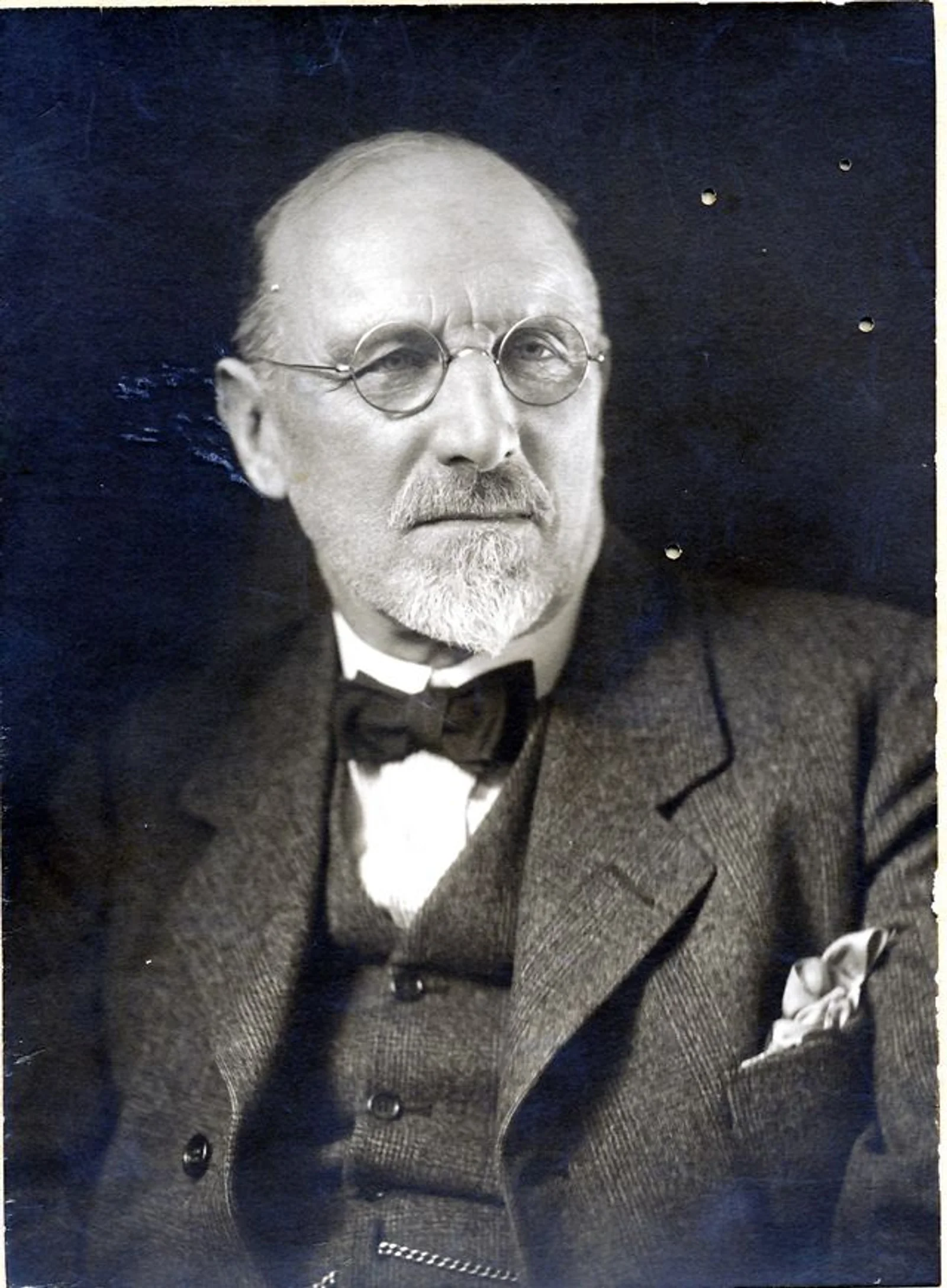
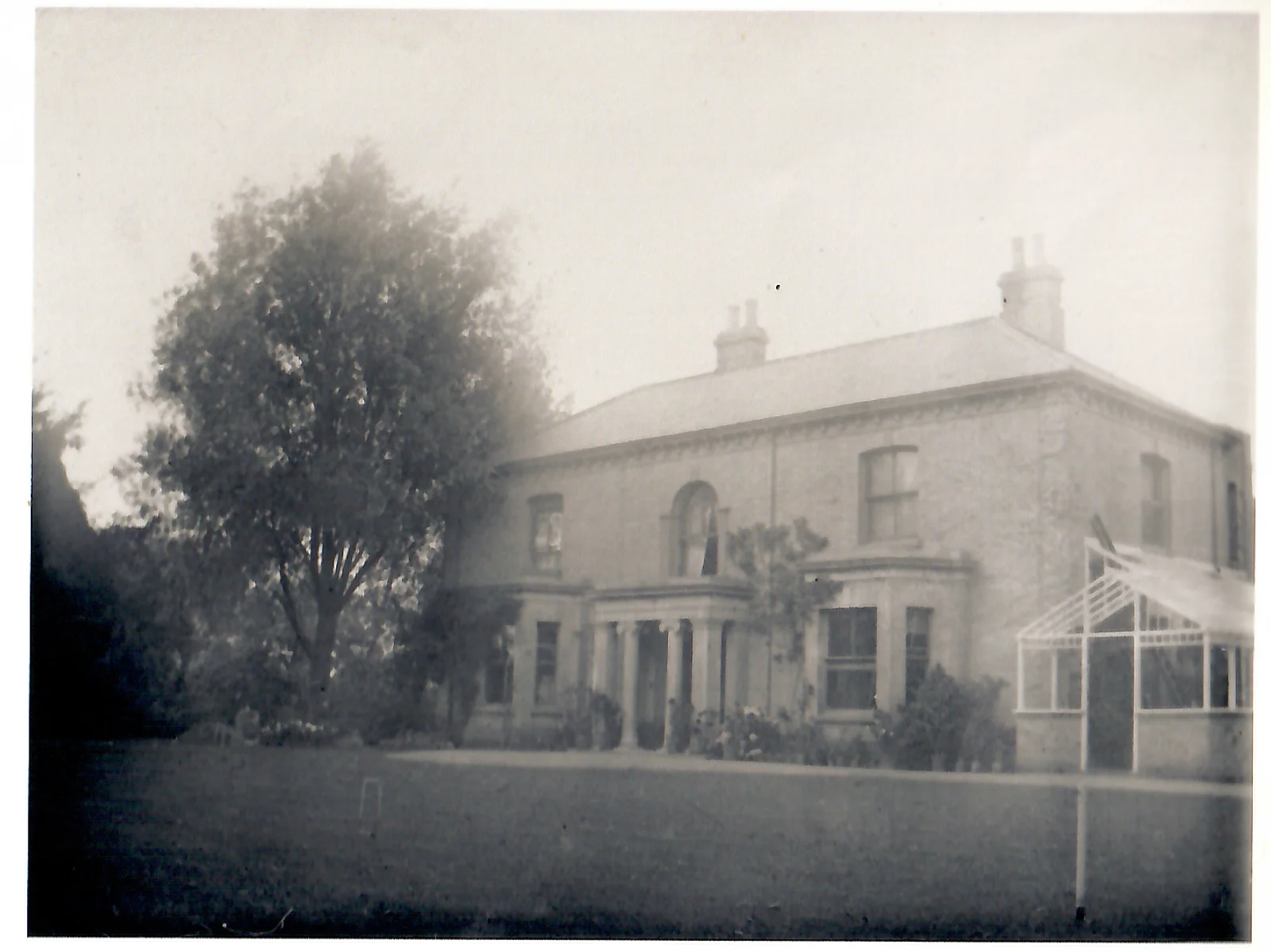
We know there were brickmakers living in Marks Tey in the 1840s, before the brickyard we know today was established. In 1863, John Wagstaff started a brick and tile business on his land at Church Farm and a new industry in the area was born. When John died his widow Sarah and their daughters took over the farm and the brick business, but shortly afterwards an advert appeared in the Essex Standard offering a brickyard in the area to let. It’s not certain that this is the Wagstaff business but it is a possibility as by April 1881, William Hy Collier was known to be boarding with Sarah Wagstaff and employing 10 men in brickmaking.
Soon after this the Wagstaff family built a new house at Church Farm and the Collier family – William and Jessie - took over the brickfield business renaming it W H Collier, and the old farmhouse renaming it ‘Coley’.
Pots, pipes and primrose yellows
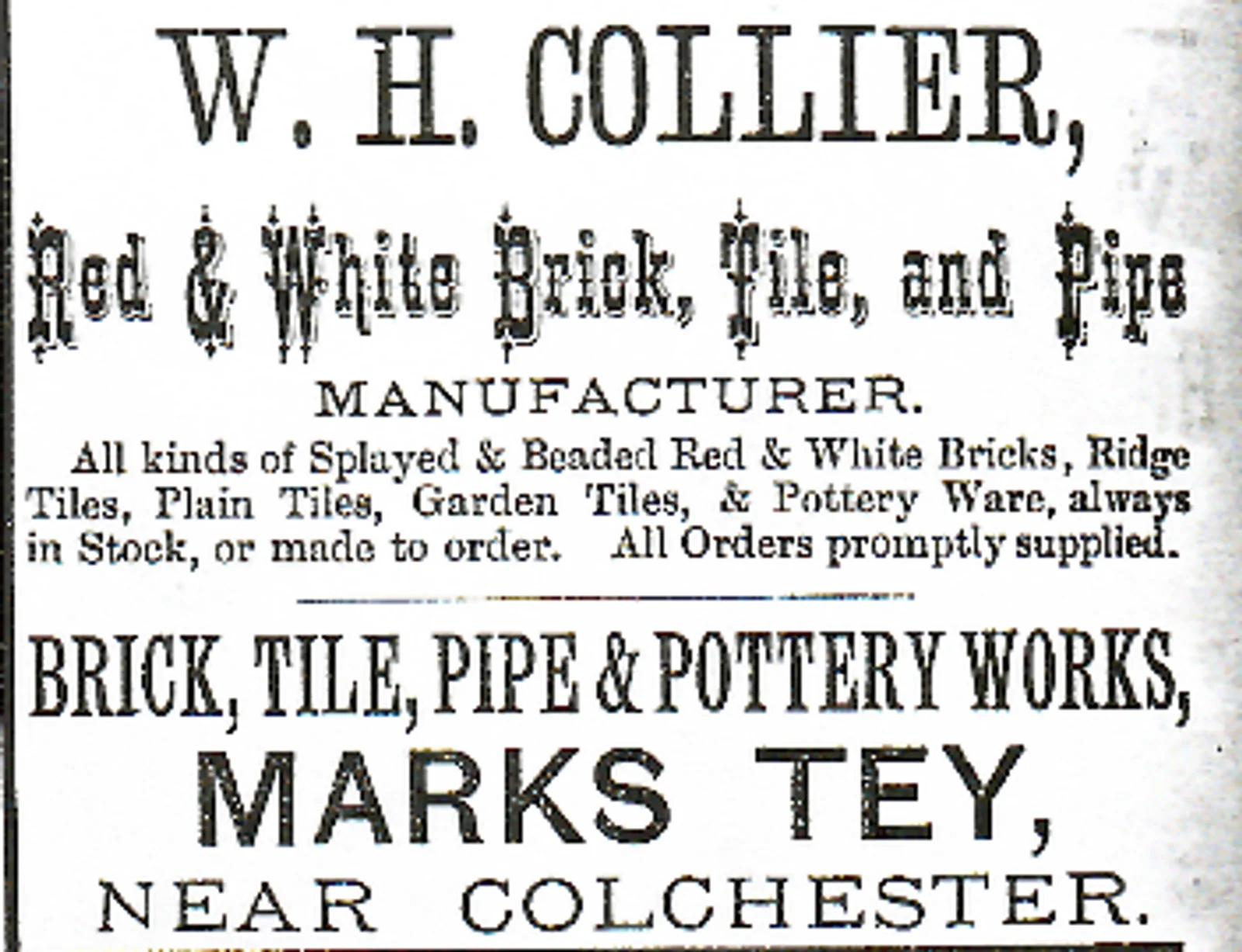
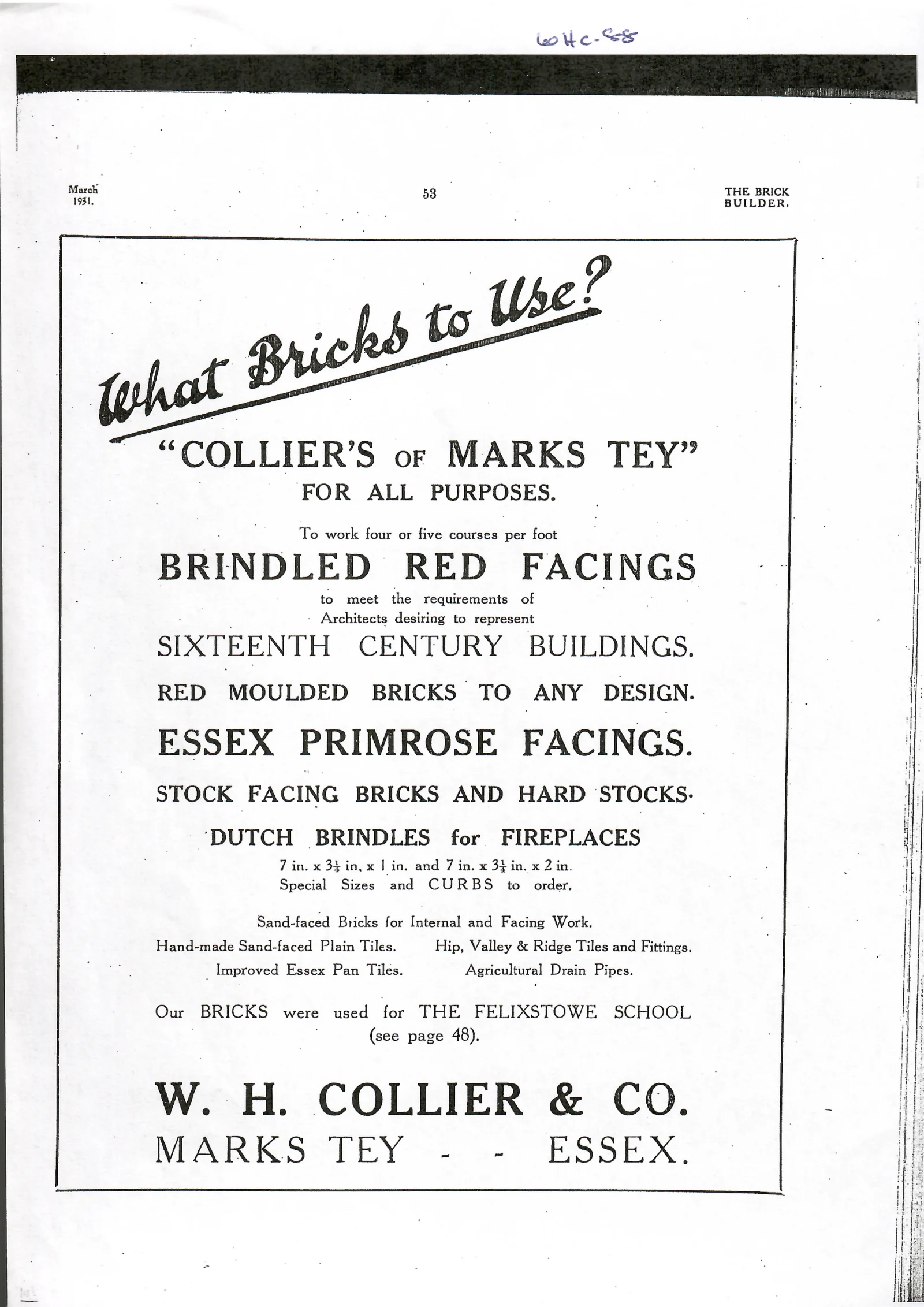
The W H Collier business developed an extensive range of bricks and tiles. In the early days, they produced white and red facing bricks, tiles and pipes, but this range was soon joined by the Essex Primrose, multi-coloured brindle, stock bricks, flower pots, garden tiles and moulded tiles. The business employed up to 100 men and paid the Wagstaff family a royalty on all the bricks it sold into the 1920s.
Adverts for the business showcase some of the modern buildings using bricks from the Marks Tey site, including the Shepherds Bush Pavillion, Felsted School, the new Crittall’s factory in Witham and Clacton Town Hall and Municipal Offices.
When William Collier died in 1934, the business passed to his son Ernest and then to his grandson Jim. Four generations later it passed to his great grandson, Roger.
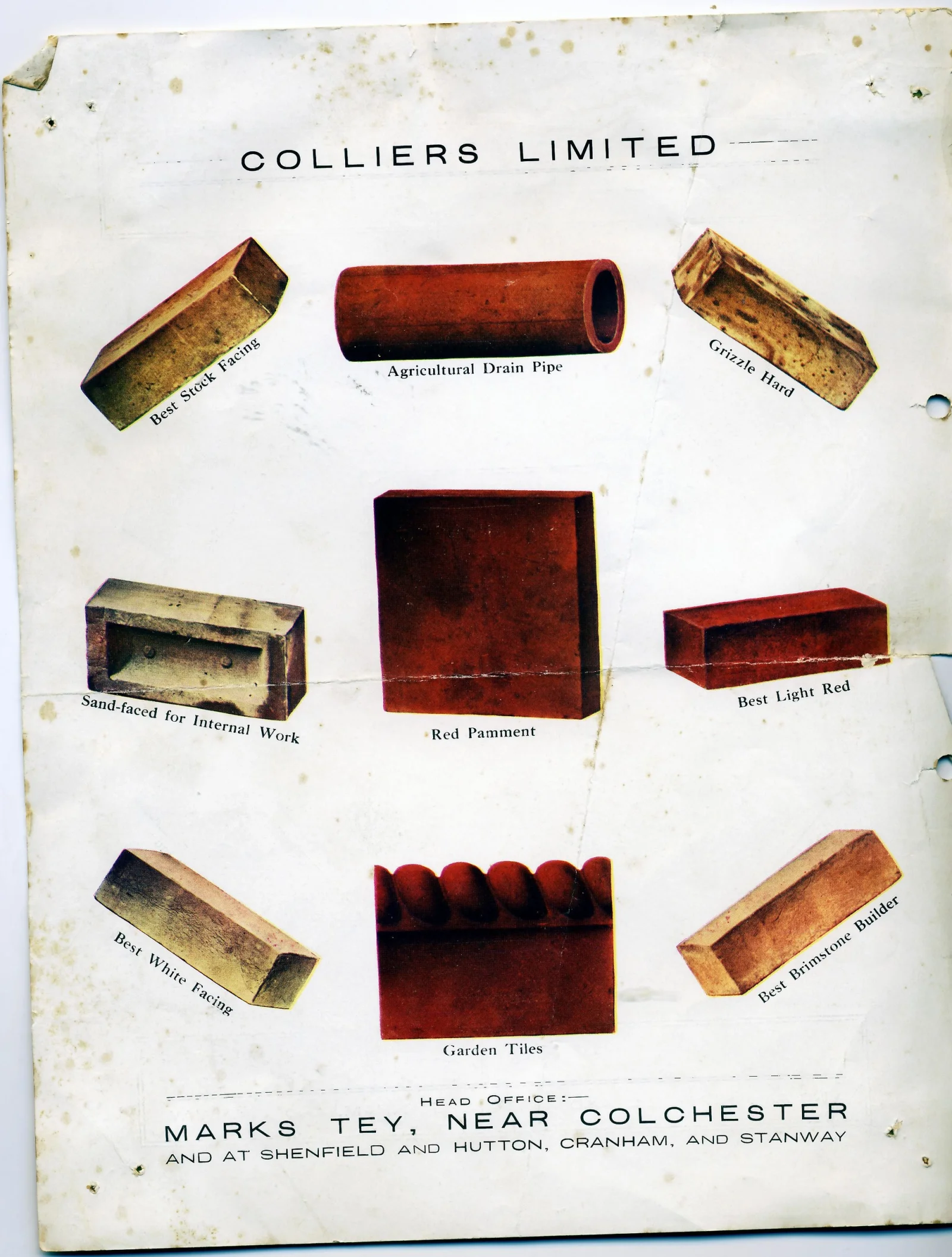
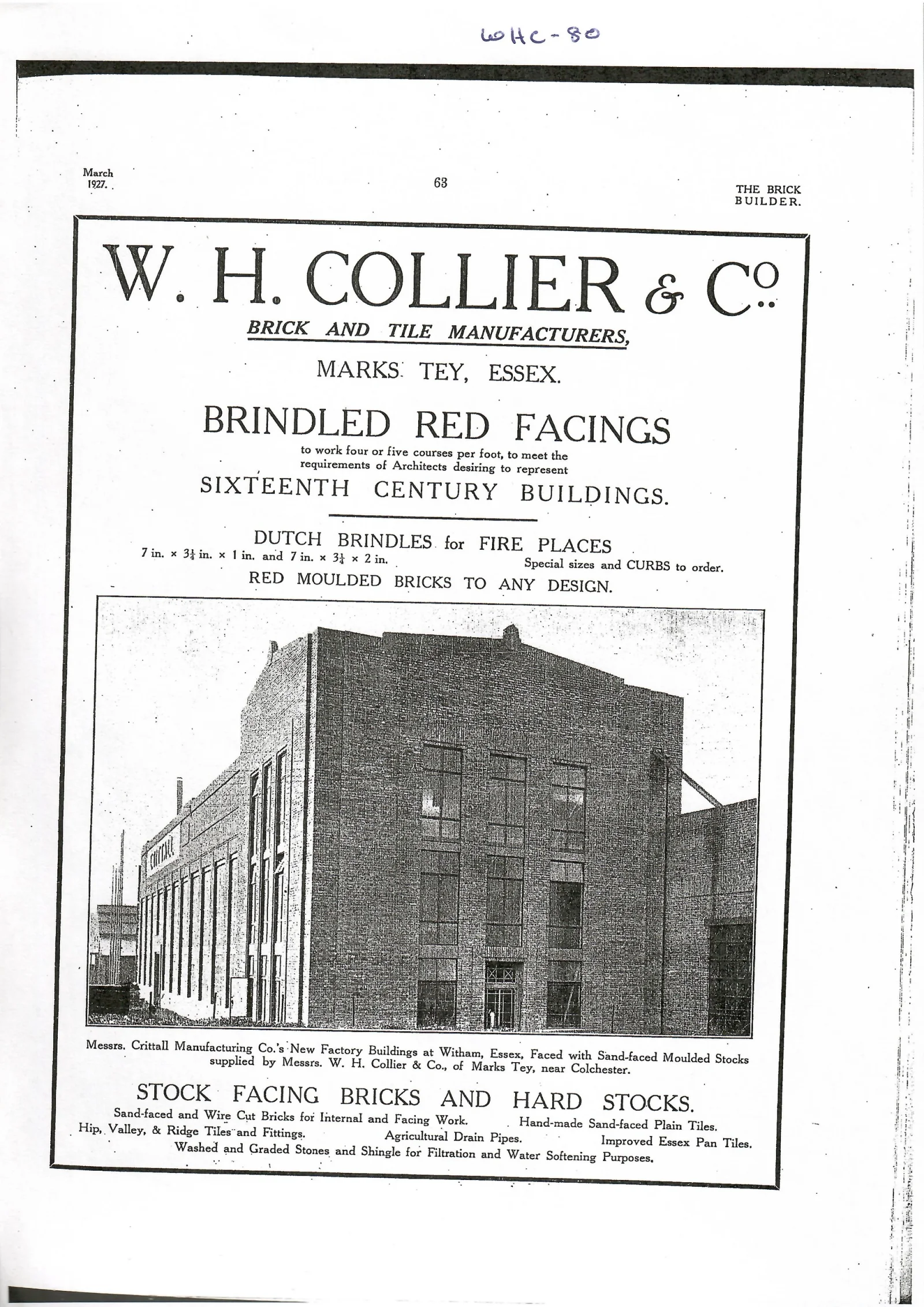
Making bricks at WH Collier Ltd
Brickmaking at Collier’s was very much a handmade industry and little has changed in the process except the introduction of new machinery to extract and transport the clay. In the early days workmen had to extract the clay by hand from the ‘Blue Hole’ – the name given to the clay pit on the Colliers’ site because of the colour of the clay when it is first dug. Workers used long shovels to dig the clay, then loaded up waggons that were first pulled by horse and then later were winched to the making sheds. Today this process is done by machine from the same blue hole.
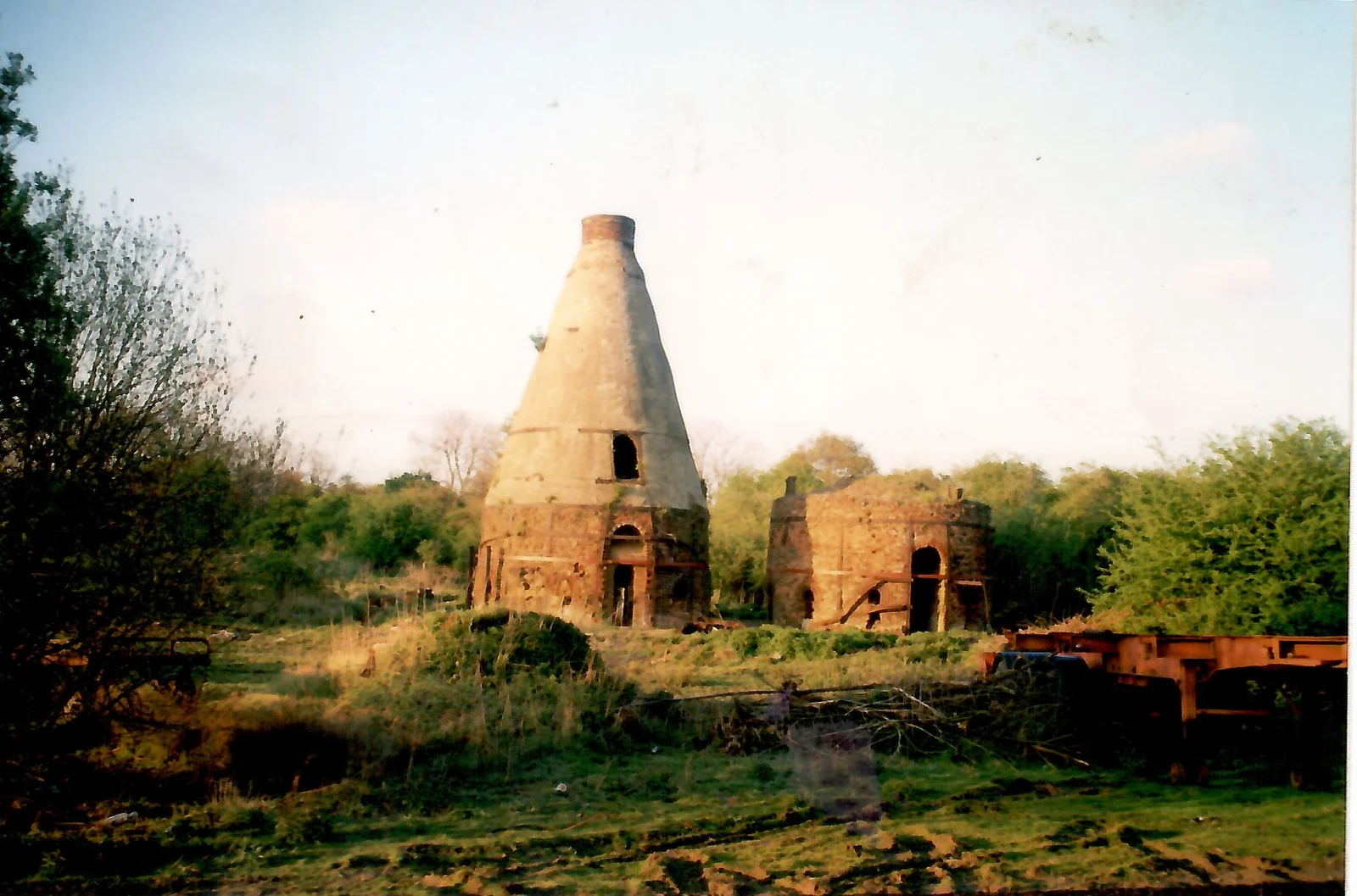
Once at the works, the clay moves through the processes on a conveyor until it is ready to be thrown by hand into wooden brick moulds, making three bricks at a time. They are then left to dry for over a week. This removes approx. 900g or 2lbs of water for each brick. The ‘green’ bricks are then ready for firing. At first this was done in clamps, stacking unfired bricks on top of each other and building fires among or underneath them. In 1880, bottle shaped kilns were built that can still be seen on the site along with their brick-floored working area, flues and the chimney.
In 1910 the bottle kilns were replaced by a Hoffman kiln that remained in use until the 1950s when it was replaced by a tunnel kiln. The Hoffman kiln was a large oval shaped structure with chambers where the bricks could be loaded, fired and unloaded in rotation, keeping the kiln in constant use. It is said that Colliers was spelt out in brick on the roof and that local people planned their day by the steam whistle on its chimney.
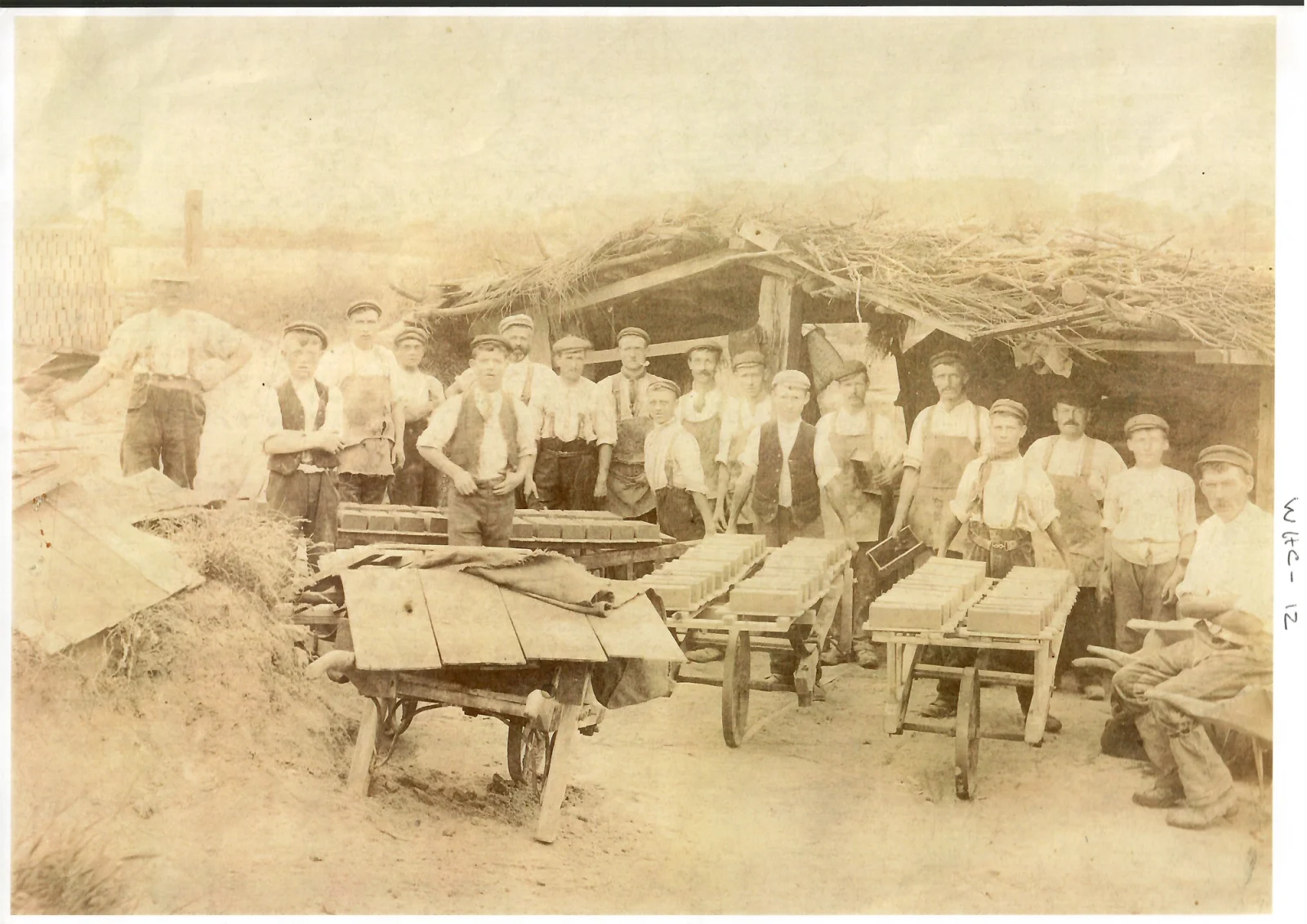
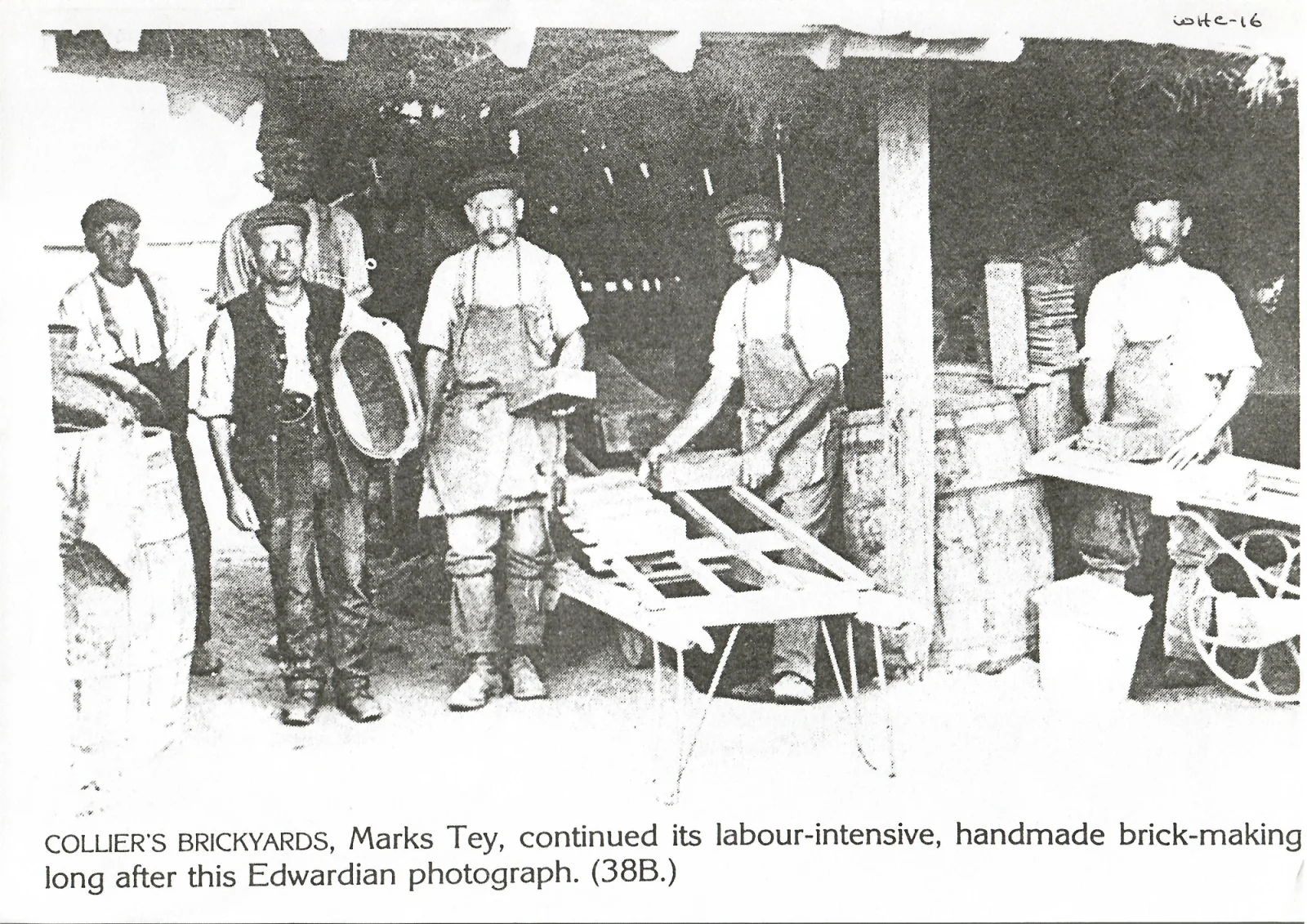
Trouble in threes, 1907
1907 was an unlucky year for W.H. Collier Ltd. In June, traction engine driver George Potter was fined £1 and 4s costs at the Lexden and Winstree court sessions. He had been stopped in Stanway for pulling four waggons behind his Collier’s owned engine - one more than he was allowed. Although he knew he had one more waggon than he was meant to, he said it was not his fault!
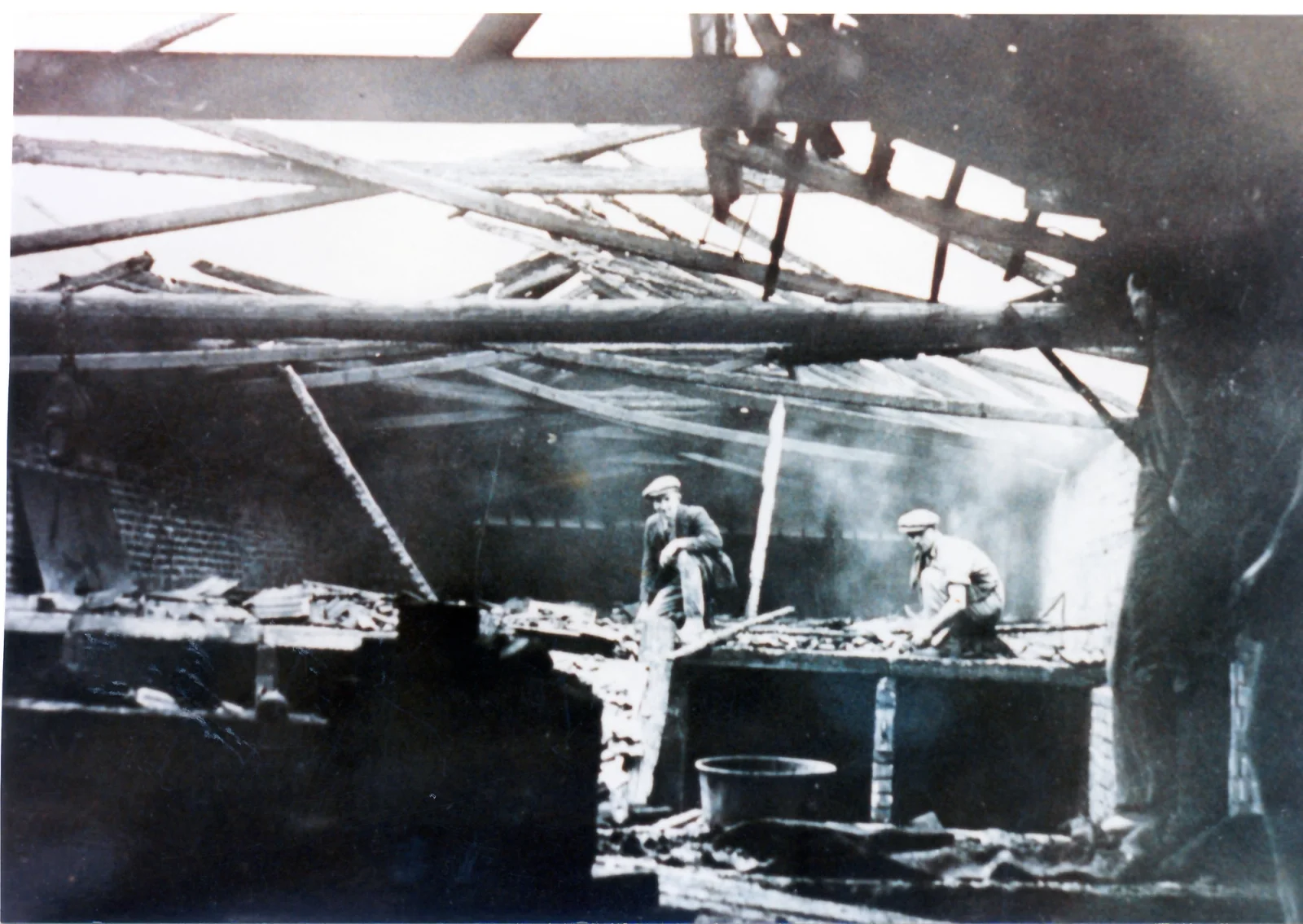
Then a few months later in August, brick burners Hudson and Kettle discovered a fire in the drying shed at 6.30am. William Collier, his sons, workers and several men from the nearby Great Eastern Railway tackled the blaze but it wasn’t brought under control until the Kelvedon Fire Brigade arrived. Hundreds of pounds of damage was done to the drying area.
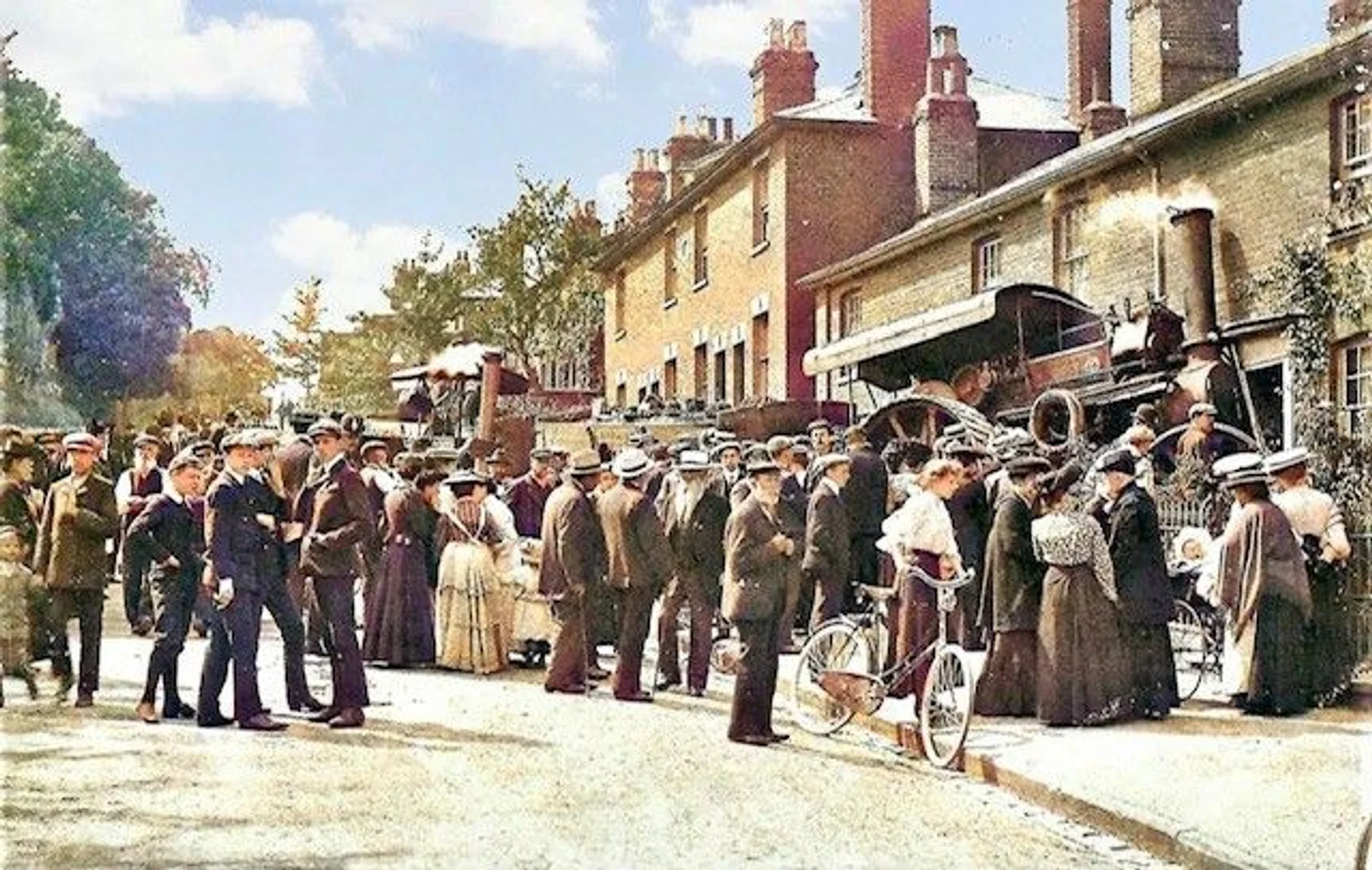
Another disaster struck when one of Collier’s traction engines lost control heading down Balkerne Hill in Colchester and crashed into the front gardens of the houses there. This time a photographer was on hand to capture the accident, and the image was quickly made into a postcard. Luckily the houses were not damaged and remained standing until 1976 when they were demolished to make the road wider.
Women in the brickfields
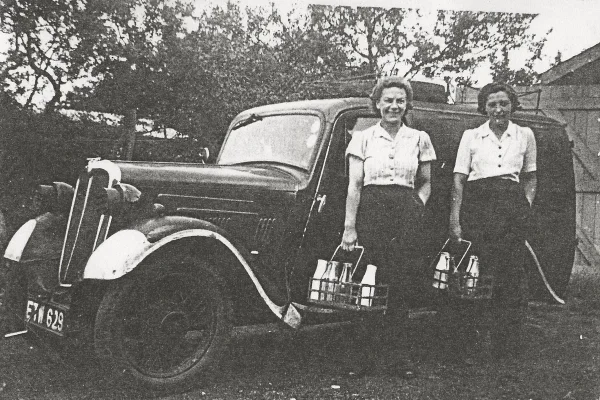
In 1994 Colchester Recalled oral history group interviewed Harold and Edith Norfolk about their brickmaking memories at W H Collier Ltd. Edith worked there during World War Two, along with two other women, but she left when she got married at the end of the war. In her interview, Edie describes the hard work heaving clay and making pipes, and then going home to wash, cook and clean her house on Jays Lane for her father. She was paid 9d an hour.
In 1937 the Home Office issued Safety Pamphlet no.16, that advised on safe lifting and carrying and included guidance for maximum loads for men and women. The leaflet shows a woman carrying bricks using a straw and sacking ‘bustle’ worn around the waist to assist her to carry up to eight bricks at a time.
W H Collier Ltd timeline
1863
John Wagstaff starts a brickworks at Church Farm.
1879
John Wagstaff dies.
c.1880–81
Sarah Wagstaff continues farming at Church Farm and leases the brickmaking to William Homan Collier.
1884
William and Jessie Collier move to Marks Tey from Reading. They rename the house at Church Farm ‘Coley’.
c.1910
The Hoffman kiln is constructed. The kiln remains in use until the 1950s and is only demolished in 1989.
1926-1934
Collier’s bricks are used in buildings at Crittall’s new factory in Witham, University buildings in Cambridge, Felixstowe School, Clacton Town Hall, Felsted School, Grays School, Colchester Gas Company and new homes in Gidea Park.
1934
W H Collier dies.
1939-1945
World War Two interrupts but doesn’t stop production.
1949-1950s
Improvements to the works are made under Ernest and Jim Collier (W H Collier’s son and grandson). Everything is planned to be as labour and fuel saving as possible including a new tunnel kiln.
1956-1962
Collier’s bricks are used in buildings such as the Headquarters of British Electricity Authority in London (1956), the Great Yarmouth power station that uses 2.5 million bricks (1958) and Chelmsford Civic Centre extension (opened in 1962).
1960s
A difficult decade as Jim Collier dies in 1963 and his father Ernest dies in 1966. There is a building depression and bricks are left unsold in the yard. A large amount of water has to be pumped from the clay pit. Peter Catchpole steps in as director with Roger Collier as co-director (W H Collier’s great grandson). Gradually things turned around.
1970s
Collier’s bricks are used for the new Mercury Theatre and Colchester Leisure World.
1988
W H Collier Ltd sold to Christian Salveson
2004
Sold to Wienerberger Group
2005
Management buyout led by Maurice Page
FIND OUT MORE
The Marks Tey Heritage Project is bringing together the history of Marks Tey in one place. To find out more about W H Collier Ltd or other business and industries in Marks Tey take a closer look at the collection.
Archive results related to Brick is beautiful
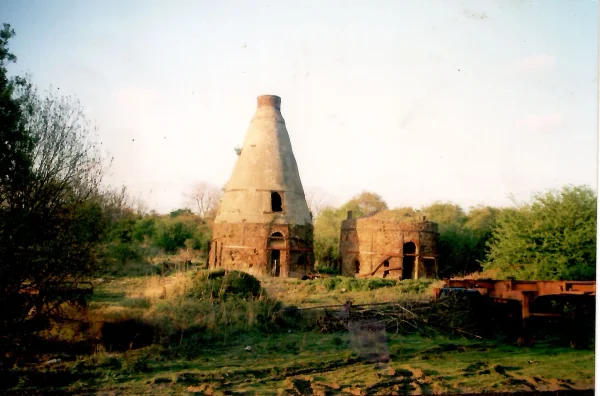
Bottle Kilns 1998
1998
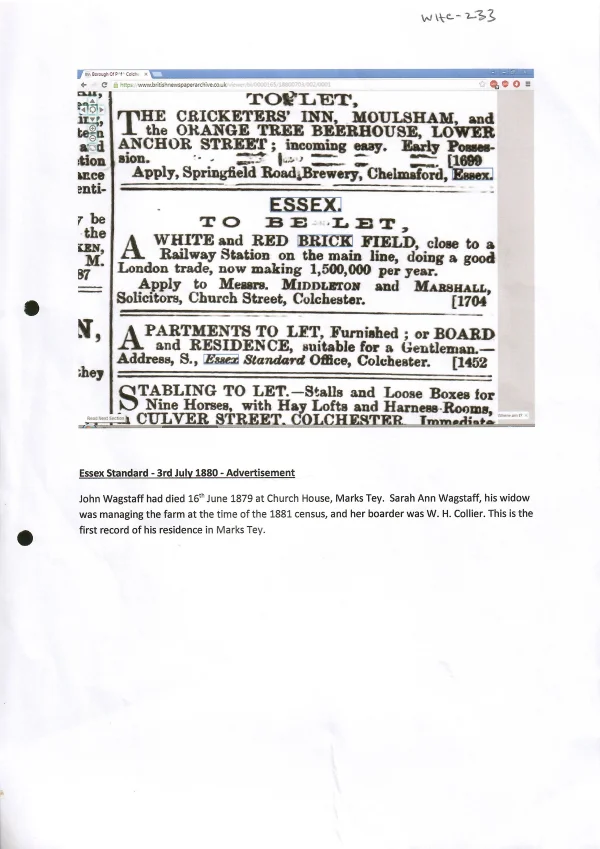
Advert for the Brickworks, 1880
1880
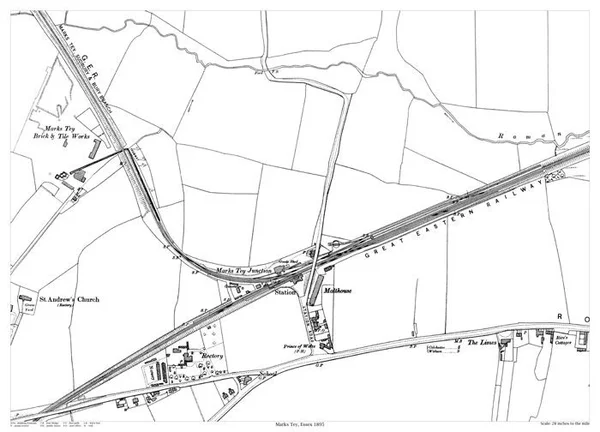
Marks Tey 1895
1895
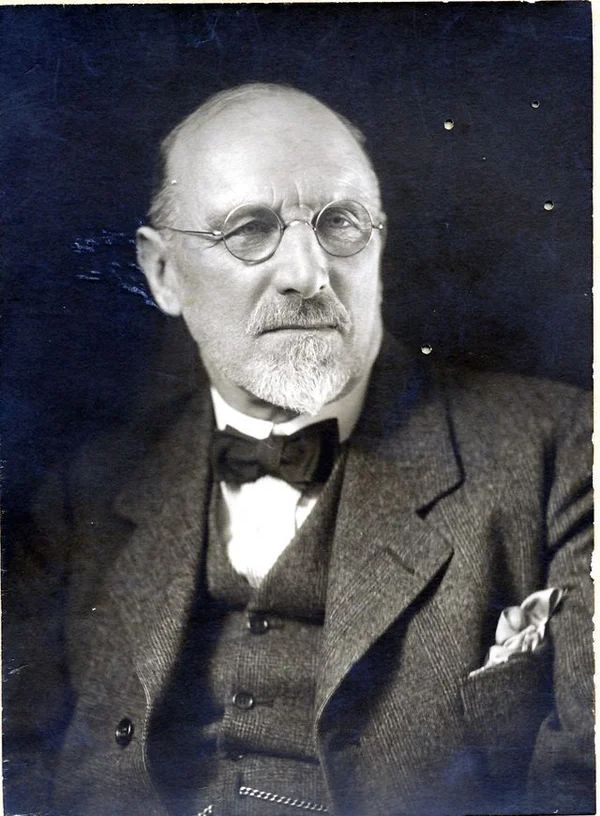
William H Collier, photo 1
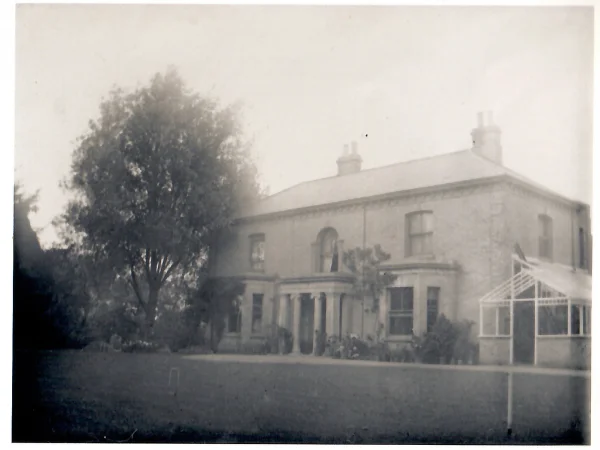
Coley, the Collier's house
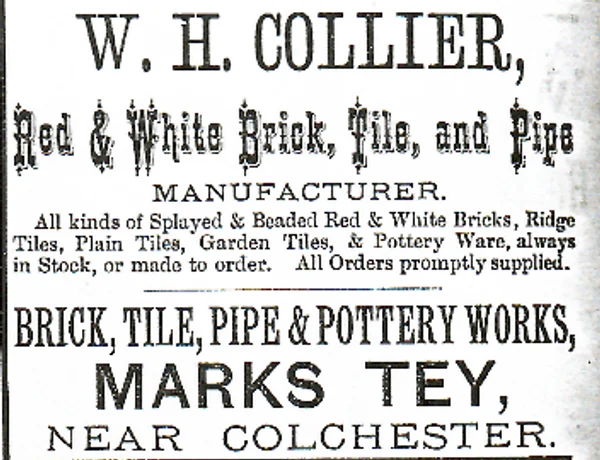
Red and white brick, tile and pipe
1886
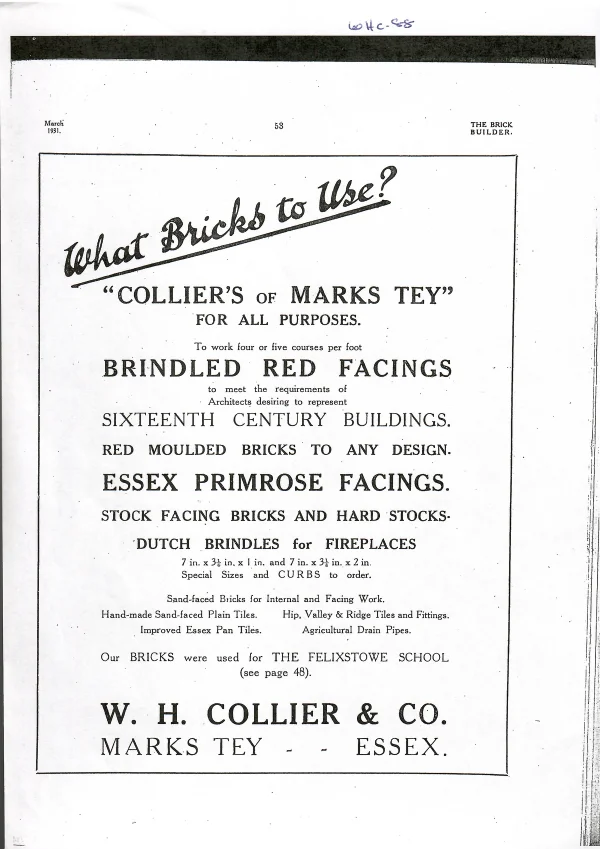
What bricks to use?
1931
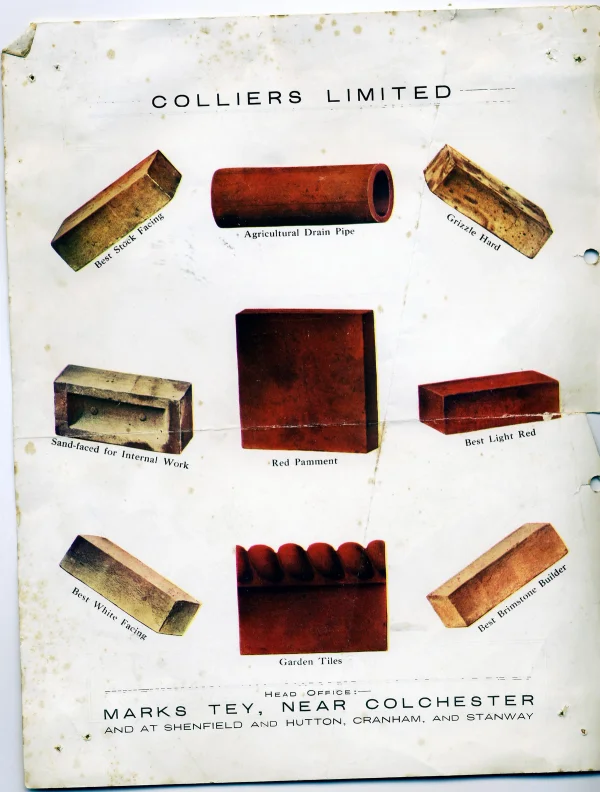
Leaflet 1 - Colliers Limited Products
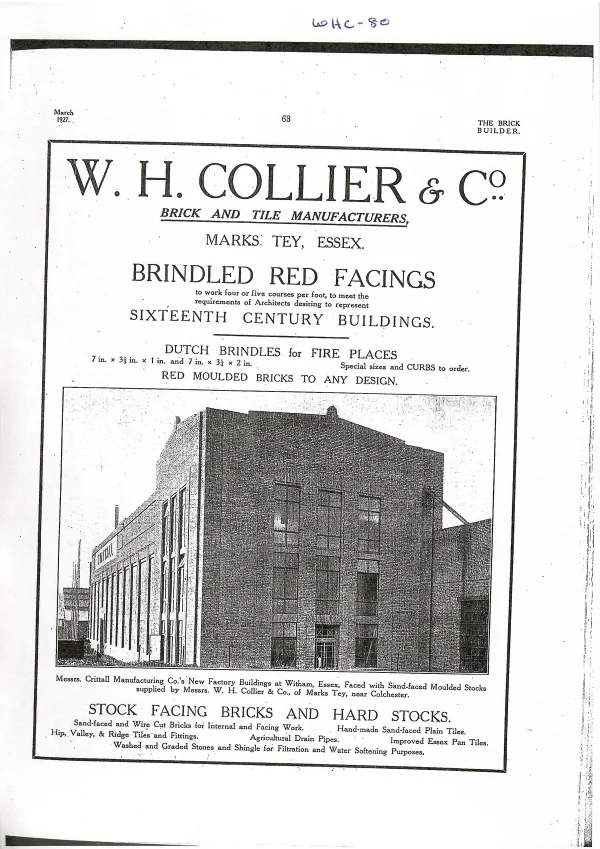
W. H Collier Brindled Red Facings Advert
1927
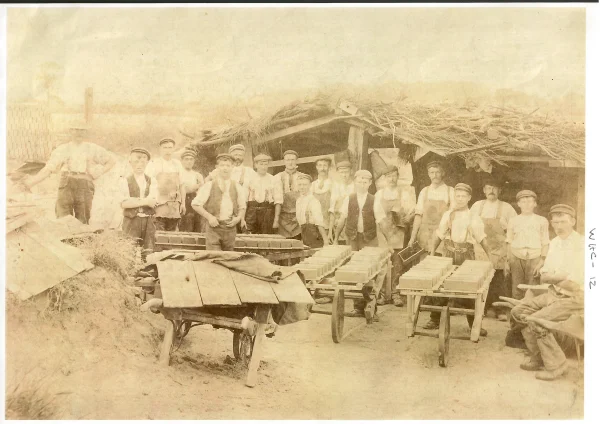
Photograph of Early Brickmakers
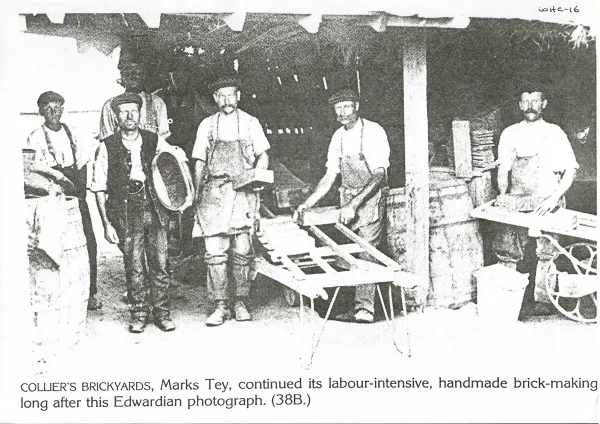
Photograph of Early Brickmakers
1901-1919
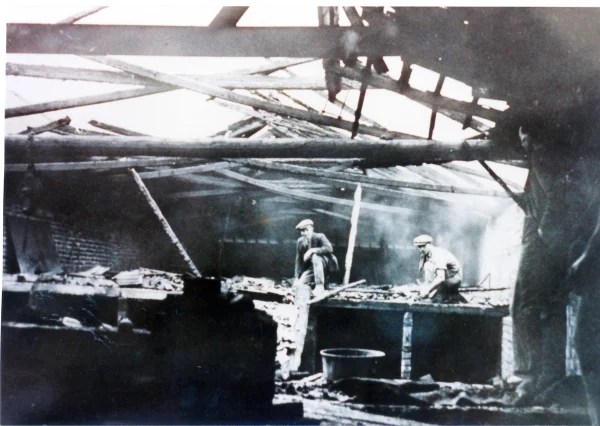
Photographs of 1907 Fire Damage
1907
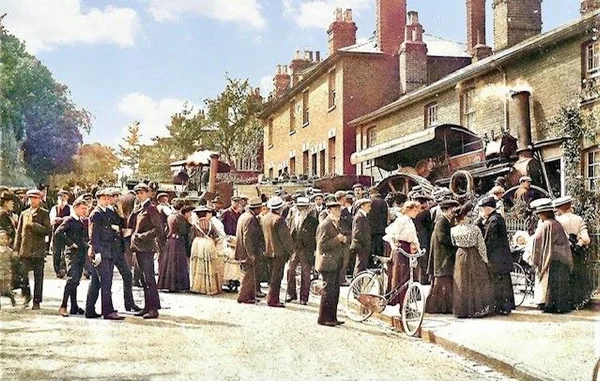
Collier's Traction Engine Crash, colourised photo
1907
Explore more stories
INDUSTRIES OF MARKS TEY
Flowers & seeds

TRANSPORT
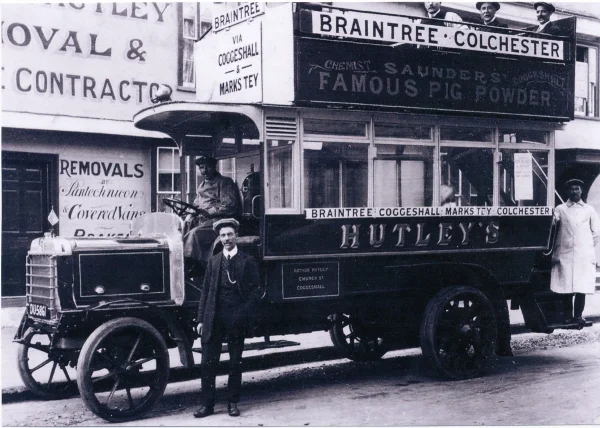
Getting around Marks Tey
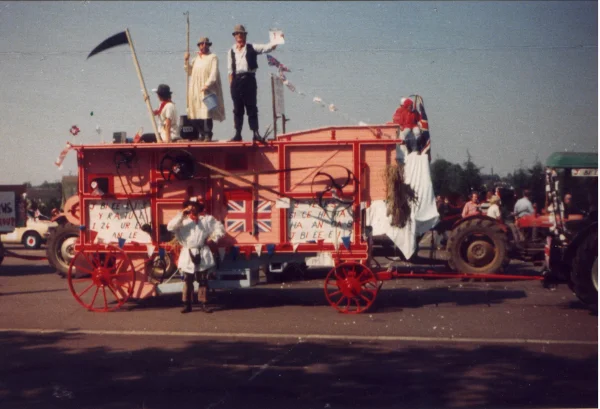
Marks Tey Carnival in the 1970s
Blooming Marvellous!
CHURCHES OF MARKS TEY
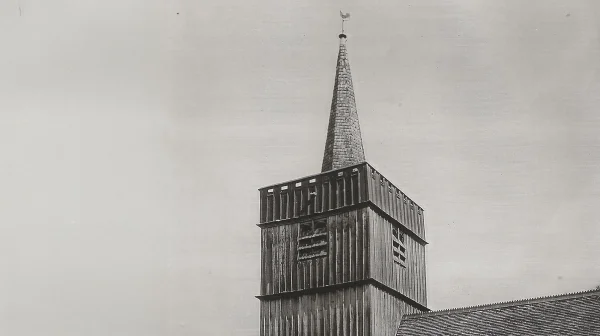
A spire and its stories
A SCHOOL FOR MARKS TEY
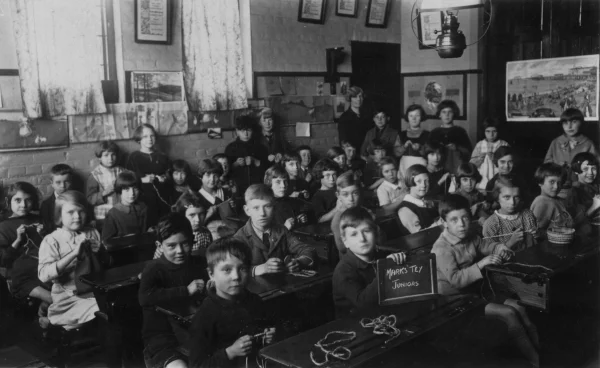
Marks Tey school days
BRENDA WILBY'S WALK
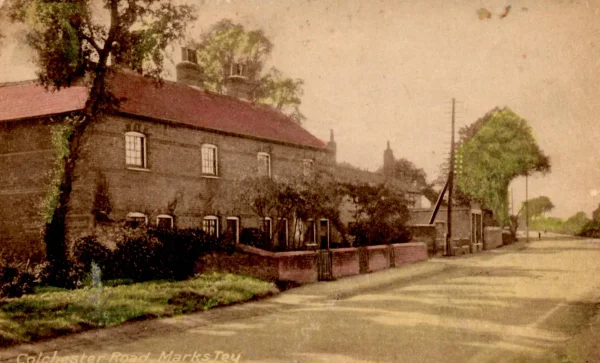
A walk around Marks Tey in the 1920s
World War comes to Marks Tey
Wartime Marks Tey
LIVING HISTORY TALKS
Origins
Places names in marks tey
Tey at Elms & other names
LIVING HISTORY TALKS
Building of the Church

LIVING HISTORY TALKS
Marks Tey Cricket Club
LIVING HISTORY TALKS
Impact of the Railway
LIVING HISTORY TALKS
The Famous Case of William Steel
LIVING HISTORY TALKS
1944