Marks Tey Cricket Club
LIVING HISTORY TALKS
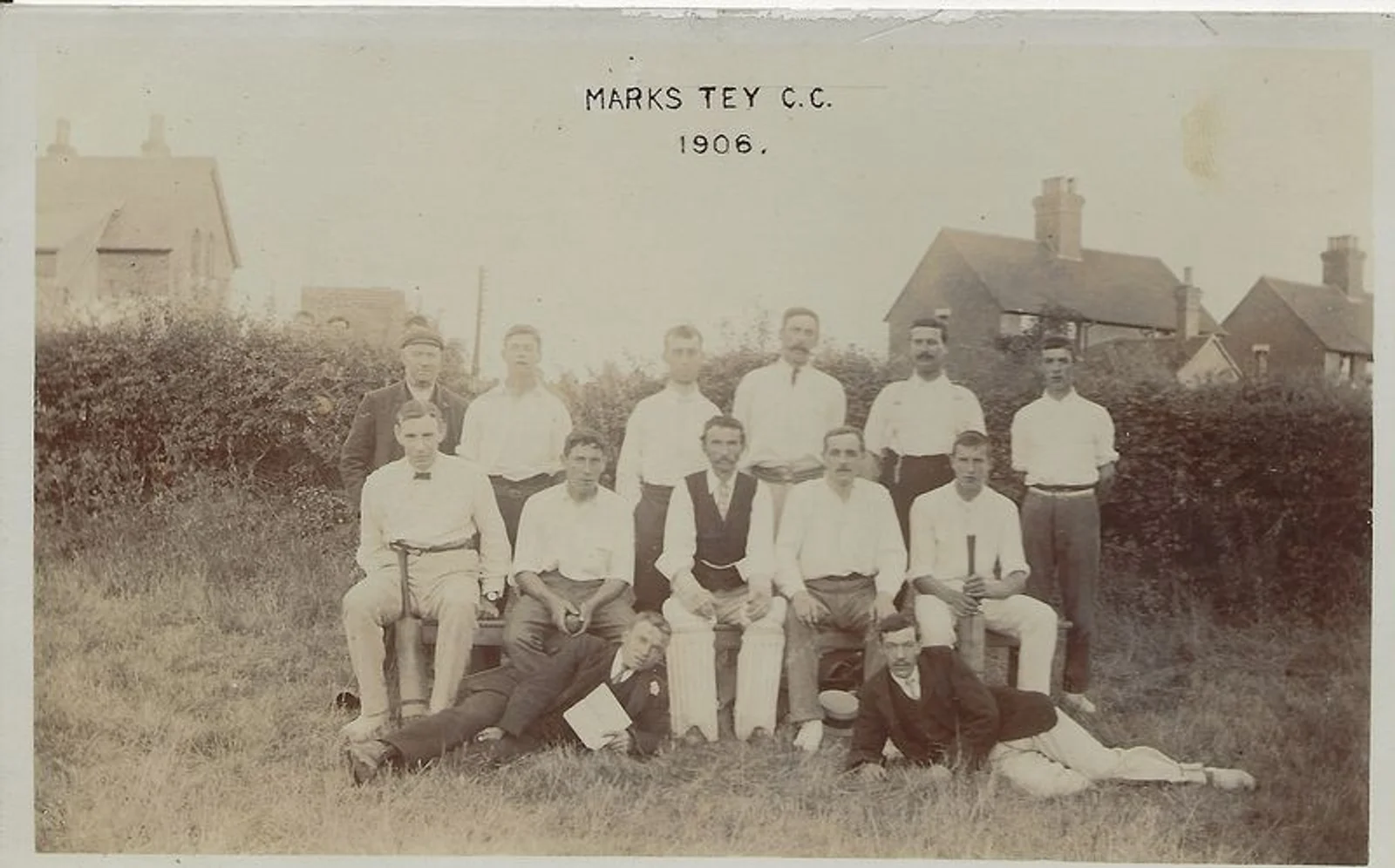
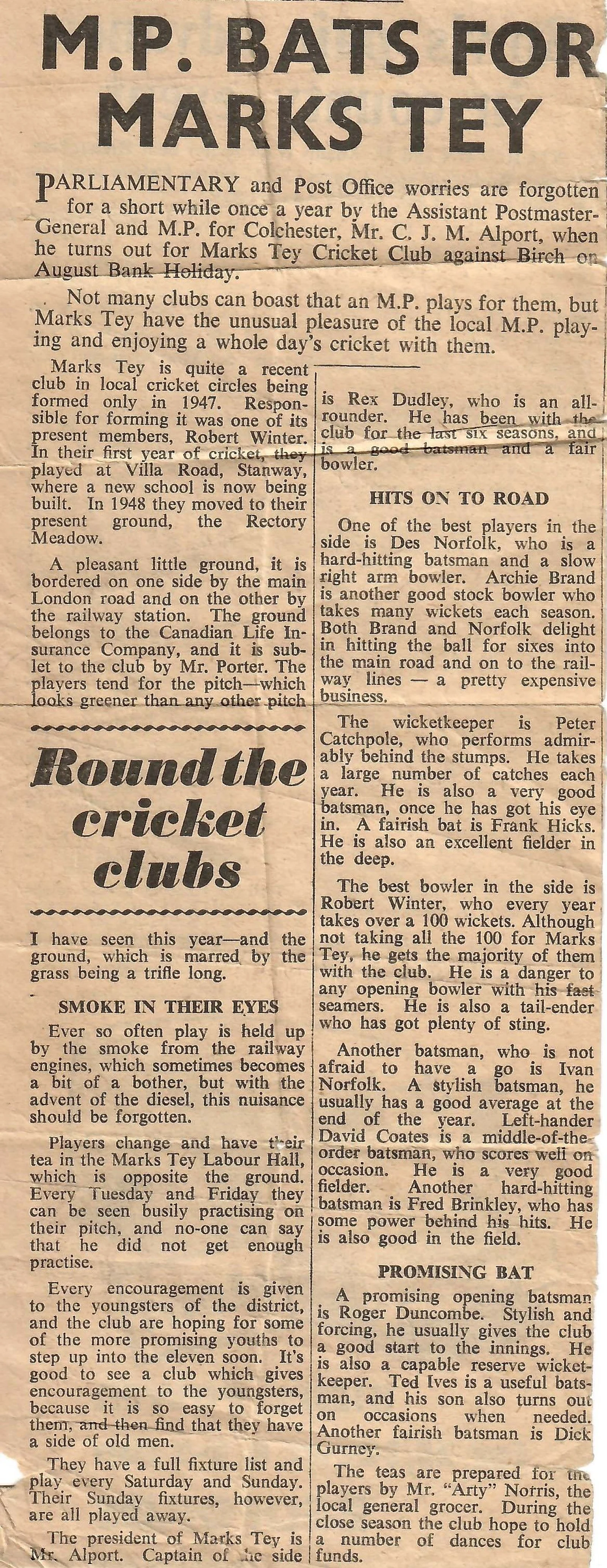
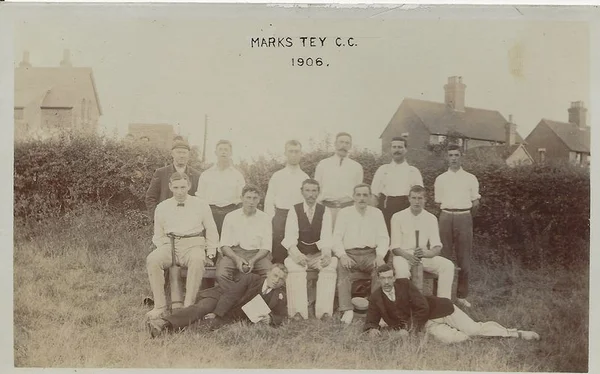
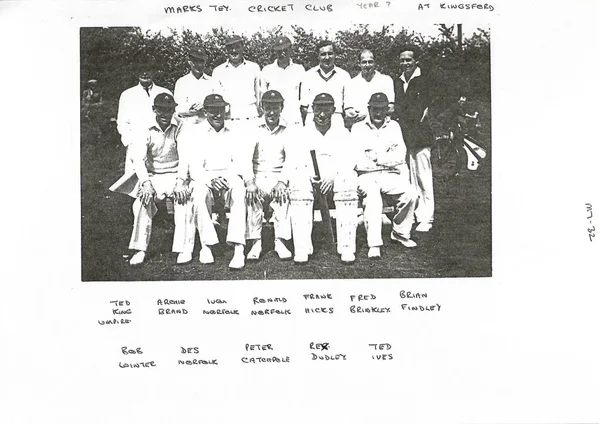
There is a 1906 photo of the Marks Tey Cricket Club — but the early club folded, and was re-founded in 1947. The following details are based on a newspaper report of the Colchester Gazette on 10 July 1956 and memories of Peter Catchpole in his book A mixed bag.
This short story was originally shared as a talk by Andrew Waters at the Living History event in St Andrews Church, November 2025, as part of the Marks Tey Heritage Project.
Explore story →
COW PATS ON THE PITCH
Robert Winter was responsible for the forming of the Club and in their first year it played at Villa Road, Stanway. In 1948 they moved to Rectory Meadow which lay between London Road and the Railway Station.
The ground belonged to the Canadian Life Insurance and was sub-let to the Porter family as pasture for their cattle. The Porters were not co-operative and had no interest in cricket. As a consequence there was a problem with cowpats and damage to the fence around the square. On one occasion the cattle scratched cars.
Another problem was the close proximity to the station so when the wind was in a north-easterly direction play would be held up by smoke and smut from steam engines arriving or leaving the station. Consideration was given to moving the pitch. The problem eased with the later introduction of diesel engines.
The players looked after the pitch and the newspaper reporter noted that 'it was greener than any other pitch he had seen that year – and the ground is marred by the grass being a trifle long.'
The Marks Tey Labour Hall (to the left side of Trident Motors) opposite the ground was used for changing and for teas.
Practice was on Tuesday and Friday evenings and with local youngsters to join. There was a full fixture list with games on Saturday and Sunday. Sunday were all away matches possibly because of traffic issues
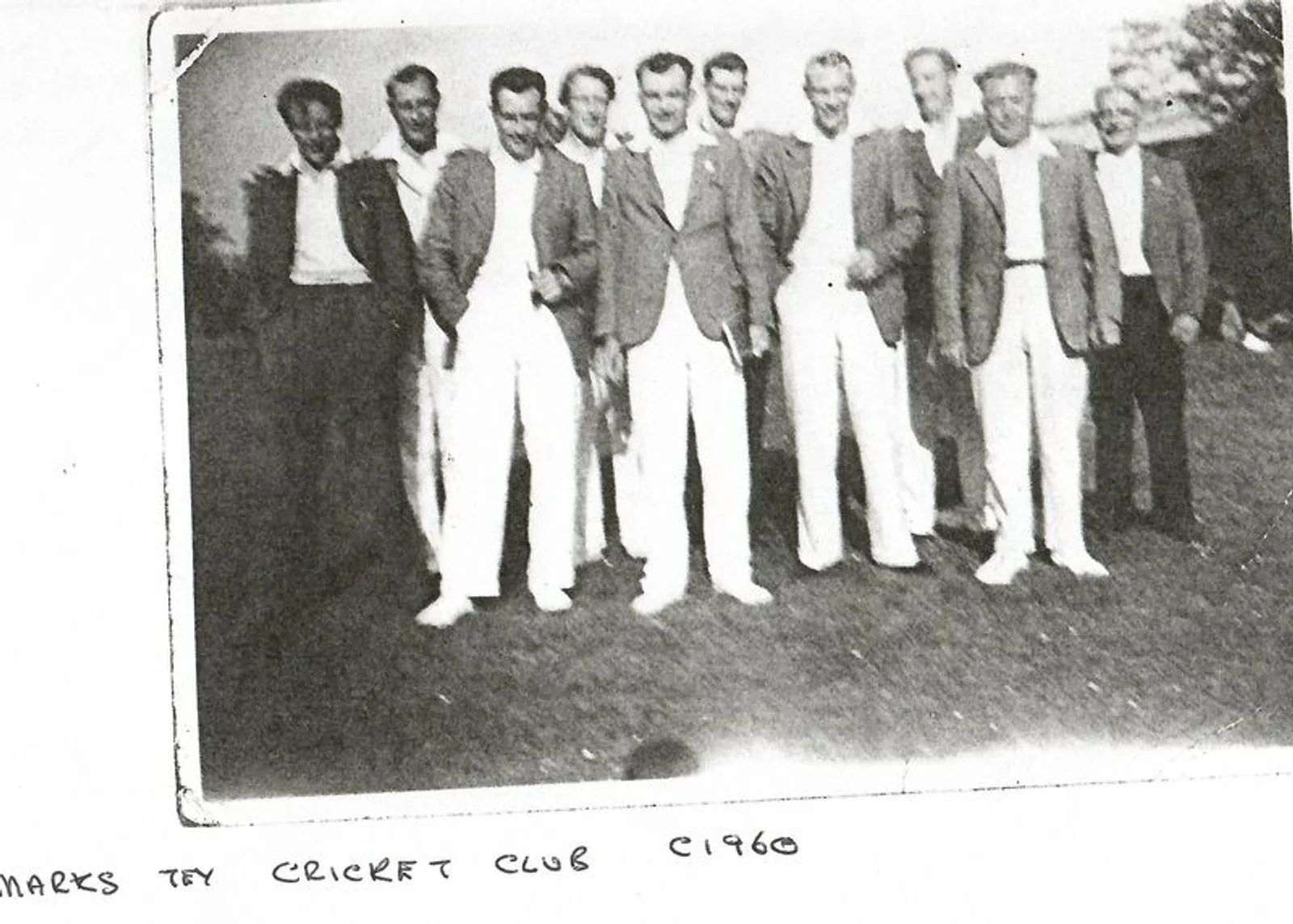
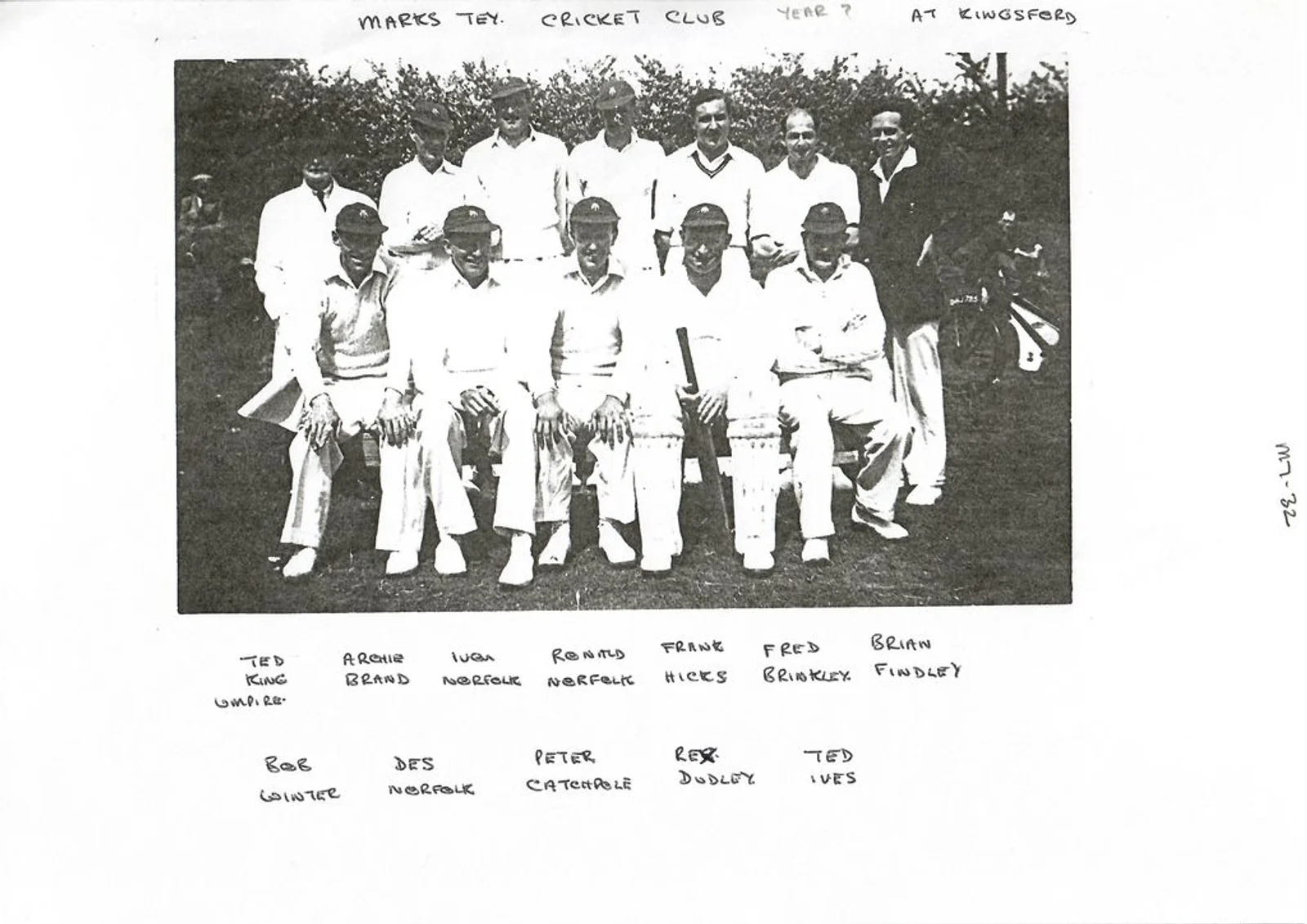
The 1956 team
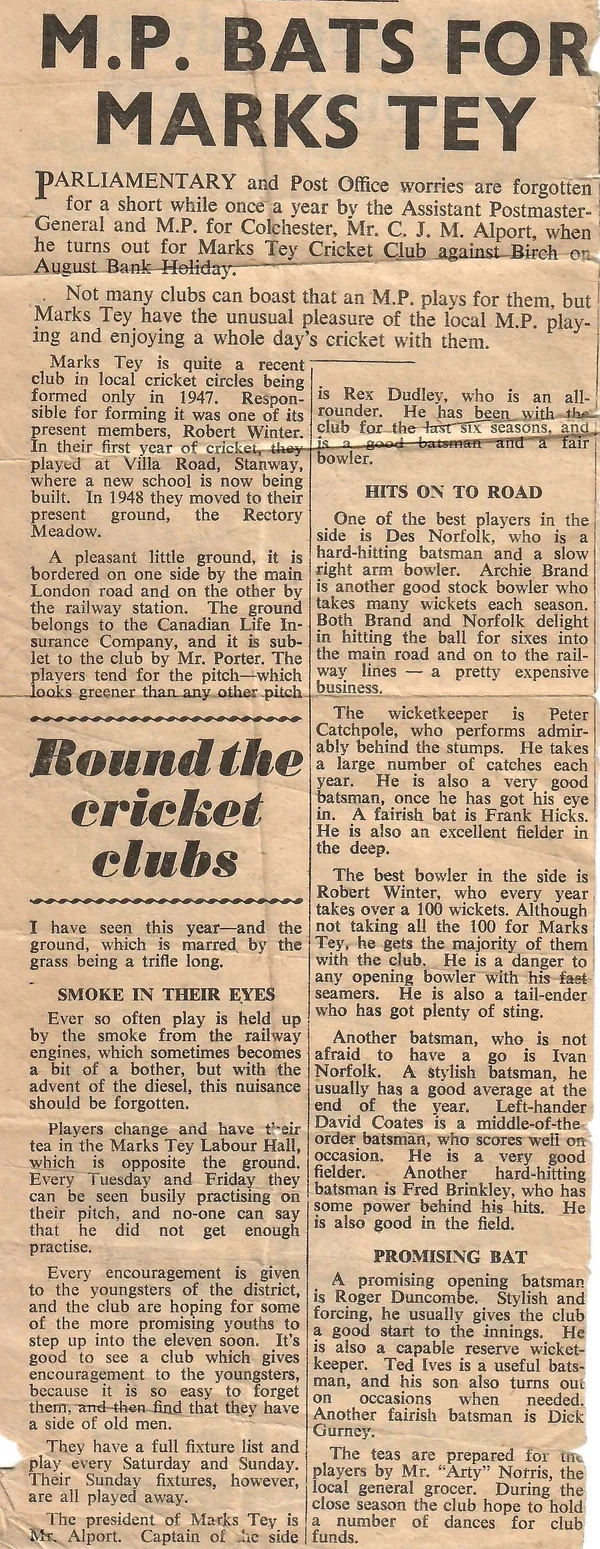
The newspaper report of 1956 gives the following information.
Club President was the local MP and government minister Mr Alport who played occasionally.
Captain was Rex Dudley described as a good batsman and a fair bowler.
Des Norfolk – a hard hitting batsman and a slow right arm bowler.
Archie Brand – a good stock bowler. Both Des and Archie taking 'delight in hitting the ball for sixes into the main road and on to the railway line – a pretty expensive business.'
Peter Catchpole a wicket keeper batsman.
Frank Hicks a fairish bat and an excellent fielder in the deep
Robert Winter is the best bowler who will take a 100 wickets in a season – not all with the club
Ivan Norfolk a stylish bat with a good average
David Coates a left handed middle order
Fred Brinkley who hits hard and good in the field
Roger Duncombe a promising youngster and opening bat who usually gives the club a good start.
Ted Ives a useful bat whose son turns out occasionally
Dick Gurney a fairish batsman
Local grocer 'Arty' Norris prepared the teas and the club were hoping to raise funds from holding a number of dances.
SCOREBOARD
Peter in his book recalled when he asked his employer Jim Collier if the works could make a scoreboard that instructions were given to Les Moss to make one bigger and heavier than the team imagined. 'It was the best in the area but didn't help us win any more matches'
Marks Tey were blessed by having some coaching from former Warwickshire batsman wicketkeeper Alan Pritchard who also acted as an umpire. Some umpires were far from impartial and in a two innings match against old rivals Birch on their ground Alan was so upset he later wrote a poem. Peter's book has some of the verses.
WHO'D BE AN UMPIRE
Who'd be an umpire? By Alan Pritchard
It was long ago in August, the year was fifty-seven
The sun shone in a brazen sky, I went with my eleven
To Birch, for in the park there Marks Tey was due to play
To meet the mighty men of Birch at cricket on that day
There was Peter the skipper and Frank who chewed his usual cud
Right from the start it was plain they were out to get our blood
There was Rex that poorly kindly man, who nobody could rile
And dear old Des that innocent with winning baby smile
There was Archie too whose bat was broad and bowled a cunning ball
And Lady Pat and Master Neil had come to see them all
The day was hot; the sun shone in almost cloudless heaven
We walked out on the pitch to start just after eleven
They batted first, out came their man and then took up his stand
To face our Archie, Pride of Tey, You've heard of Archie Brand
They batted first and scored a few, just fift and five
Our chaps were really wonderful, their fielding was alive,
To get those runs was naught they said, at that stage they were right
But in the second over they had a ghastly fright
The ball came down, a shout ''How's that'' the fat mans finger raised
And Rex was out walking back, we all were most amazed
''That's one for none'', the Birch chaps said, but how they roared with glee
When only two balls later, the board read none for three
There are nine ways of getting out in that noble game
The Chap at Birch had found a tenth, not right though, all the same
I sighed, not one was out, not any one, least that's what our chaps swear
And that was patent unto me and all the Tey folk there
But in those famed and glorious days no cricketer would whine
Umpires were of a lordly race and no one called them swine
Then in came Archie of the Brand, will willow bat so fine
And off the next four balls or five, he took the score to nine
Suffice the men of Tey on the first innings got
A lead of fifty runs or so, more than the other lot
The second innings came, to the other end I went
And very low behind the stumps my youthful bacvk I bent
''How's that'', shouts he. ''The one I said had taken three for none''
''Not out'', said I. ''Ridiculous, why he's our number one''
He shouts again ''Not Out'', I said and do you think my son
I've come a hundred miles or more not to see justice done
I broke, his heart, he faded out and not a ball that day
Although he hurled them down apace, worried the men of Tey
We won the match quite easily and that's not often done
When one side stands at fifty-five and the other at three for none
Though pride is very natural and it's not easy for me to say
The times I didn't lift my hand, I remember to this day
For give a good man out I won't, NOT WHEN HE PLAYS FOR TEY
GROUND LOST
Bob Winter's daughter Yvonne kept some newspaper cuttings recording when her father Bob had in 3 matches taken 23 wickets for 84 runs. Her cuttings record: Against Kelvedon A 7-39, against Tollesbury 7-18, against West Bergholt A 8-17, and against Great Totham 8-21.
A report in 1950 of a match between Great Braxted and Marks Tey had Marks Tey scoring thanks to 33 from Ron Norfolk and 28 from Ivan Norfolk. In reply Great Braxted made just 35 with Robert Winter taking 6 wickets for 19.
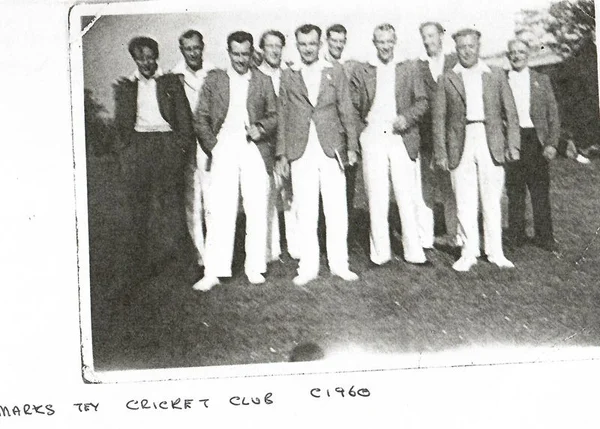
The ground was lost when the A12 cut through the village. Several of the players joined a new club at Copford formed in 1969 which was captained by Robert Winter.
FIND OUT MORE
Marks Tey Heritage Project is bringing together the history of Marks Tey in one place. To take a look at our other stories from the Living History evening to find out more about our village.
Archive results related to Marks Tey Cricket Club
Explore more stories
INDUSTRIES OF MARKS TEY
Flowers & seeds

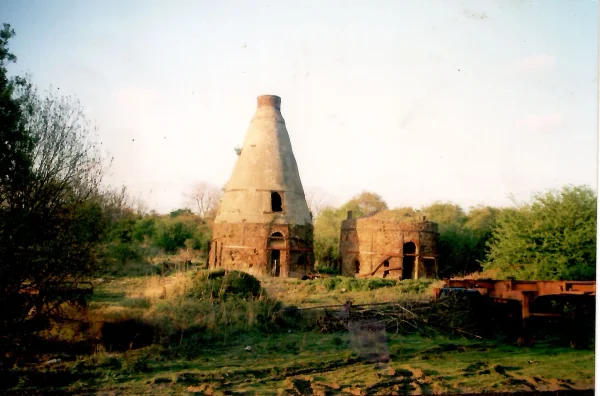
BRICKMAKING IN MARKS TEY
Brick is beautiful
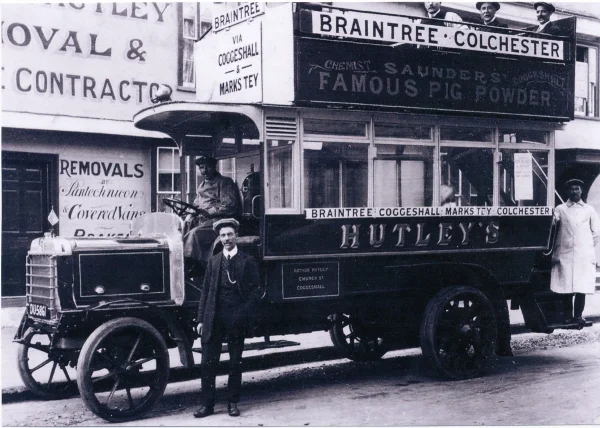
TRANSPORT
Getting around Marks Tey
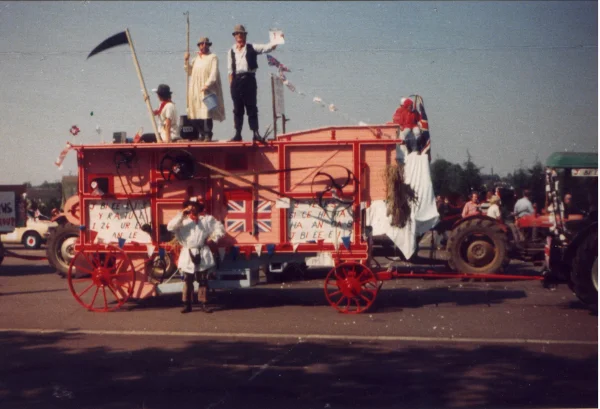
Marks Tey Carnival in the 1970s
Blooming Marvellous!
CHURCHES OF MARKS TEY
A spire and its stories
A SCHOOL FOR MARKS TEY
Marks Tey school days
BRENDA WILBY'S WALK
A walk around Marks Tey in the 1920s
World War comes to Marks Tey
Wartime Marks Tey
LIVING HISTORY TALKS
Origins
Places names in marks tey
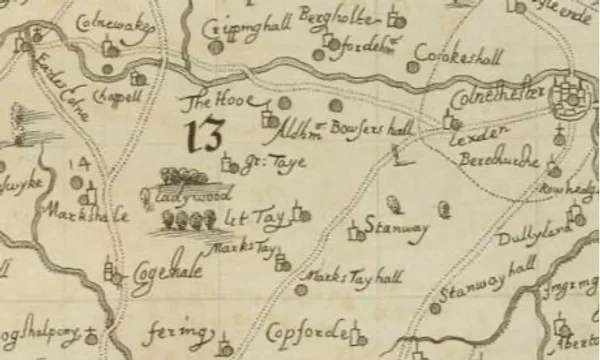
Tey at Elms & other names
LIVING HISTORY TALKS
Building of the Church

LIVING HISTORY TALKS
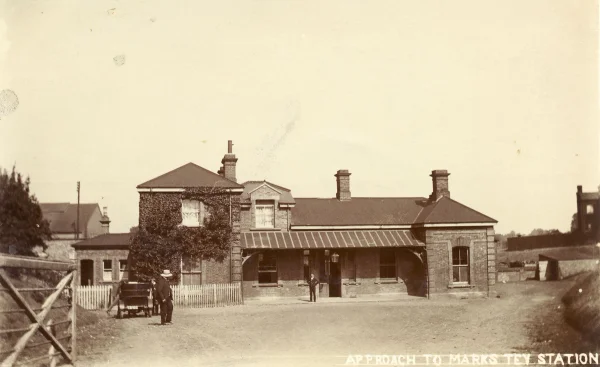
Impact of the Railway
LIVING HISTORY TALKS
The Famous Case of William Steel
LIVING HISTORY TALKS
1944