Flowers & seeds
INDUSTRIES OF MARKS TEY
‘If colour is desired it will be found in great abundance in the great seed and bulb growing district by Kelvedon, where for miles nothing can be seen but the variegated hues of countless varieties of flowers – a landscape comparable with the world-famous bulb growing area of Holland.’
— Harold Shelton, Lovely Britain, 1947
The fertile soils and climate of this part of Essex have long been recognised as well suited for growing flowers, whether as flowers for cutting or for their seeds. With an eye to promoting their wares, Essex farmers claimed that seeds produced here were more likely to germinate than those from any other part of country and in the mid-20th century there were 17 flower and seed growers in Marks Tey alone. Our project researcher introduces a few of them here.
Explore story →
Coriander, caraway and teasels
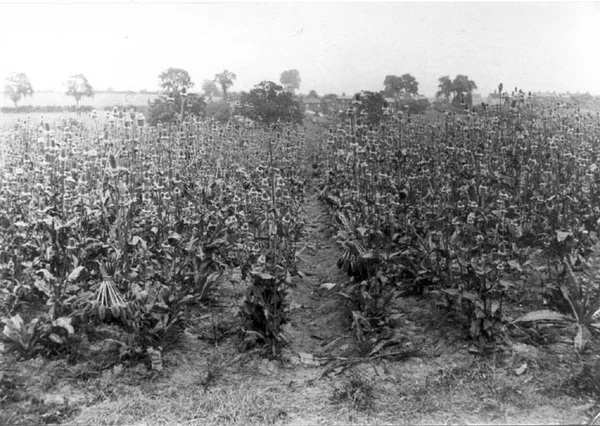
In the late 1700s and into the 1800s an unusual seed combination was sown together in Essex fields: Coriander, caraway and teasel.Caraway and coriander went to London for use in medicine, distilling and brewing as well as in cooking. Teasels could be used locally. Fuller’s teasels were grown just for their spikey heads which were used in the cloth industry to ‘raise the nap’ or comb the surface of a woven fabric to create an even finish. Teasels could grow to nearly 2 metres (over 6 foot) tall with 25 heads of varying sizes. They were ready for harvest in the late summer, a process that is described here by Mr Turner of Coggeshall.
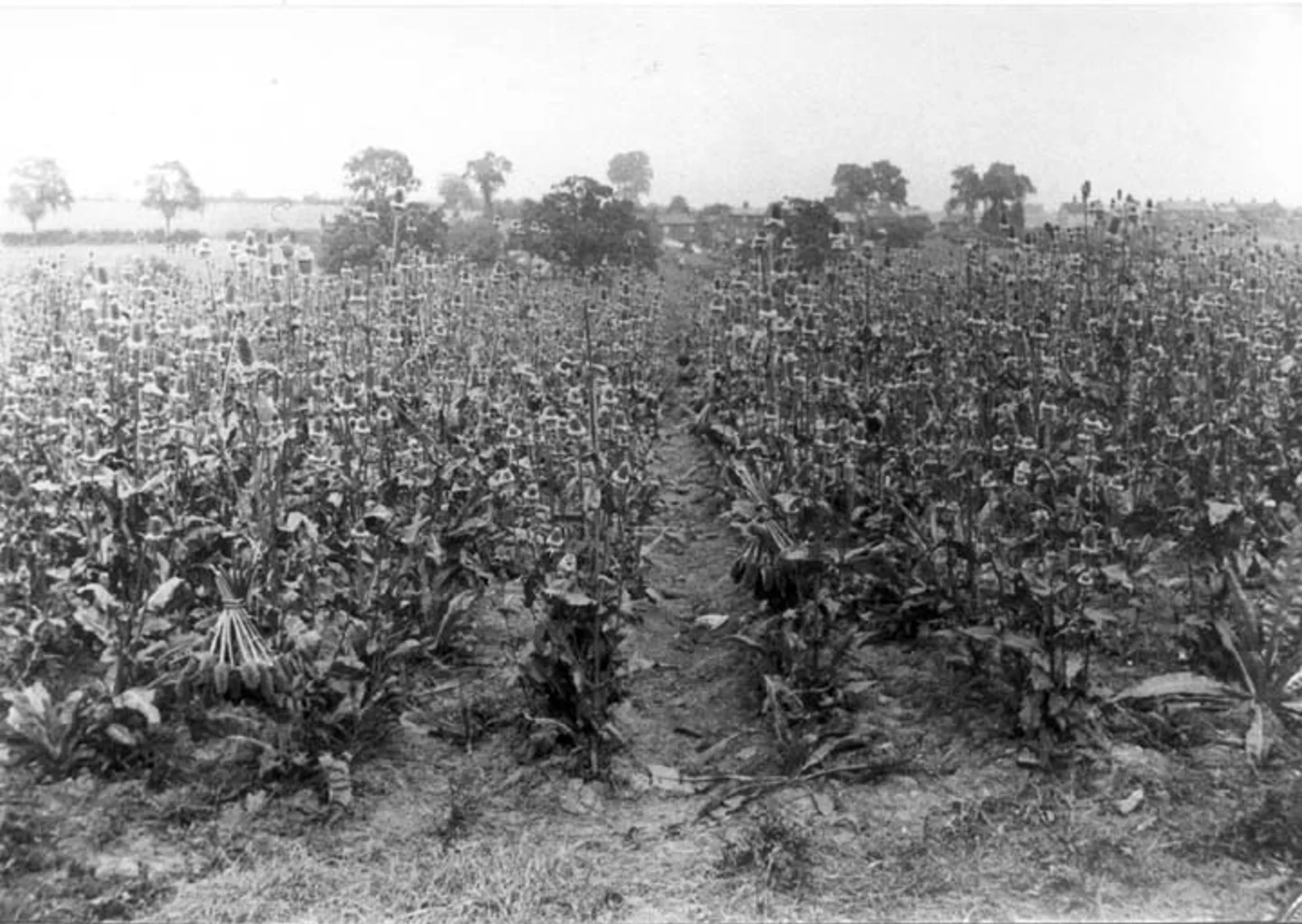
A field of teasels , ,
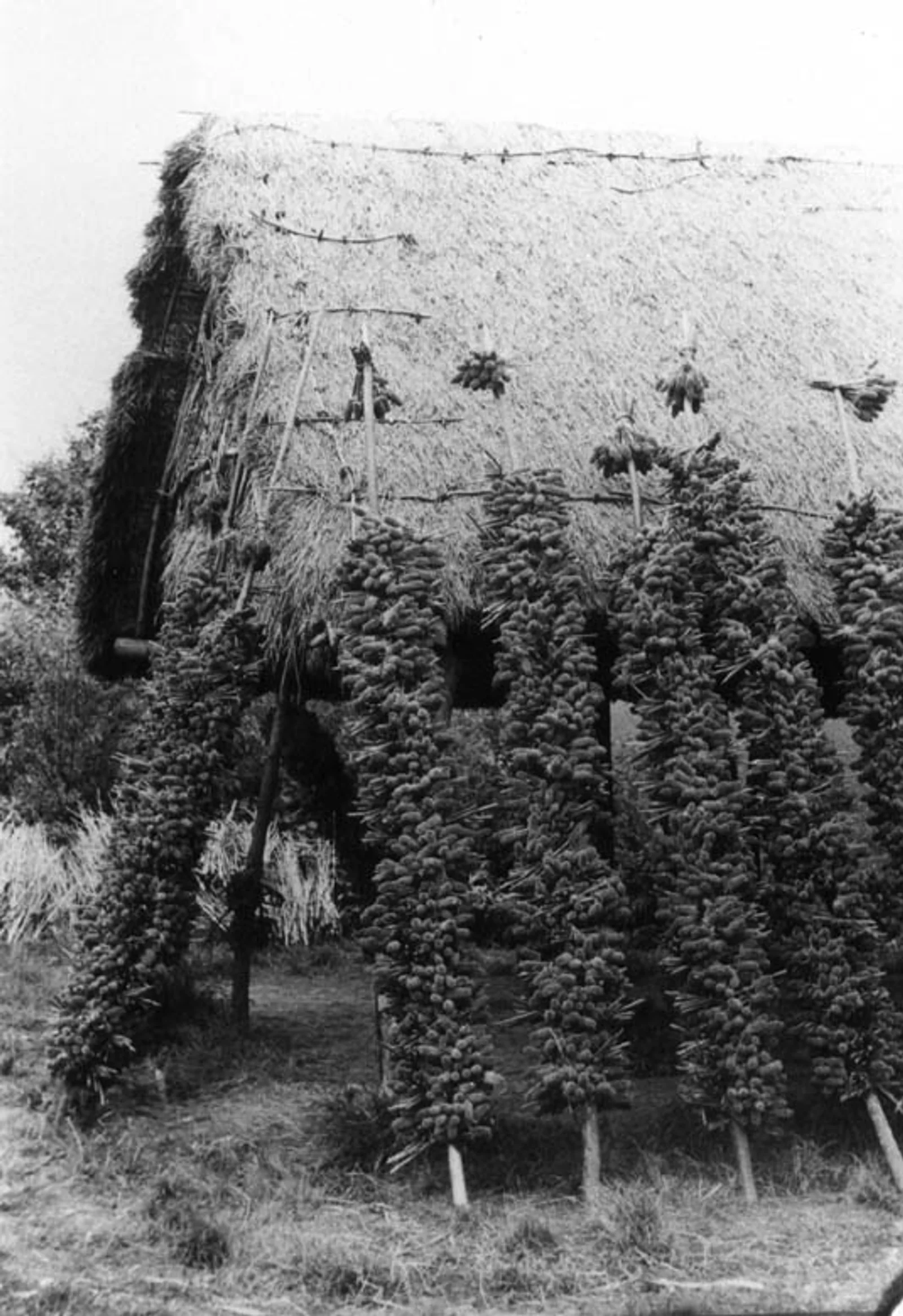
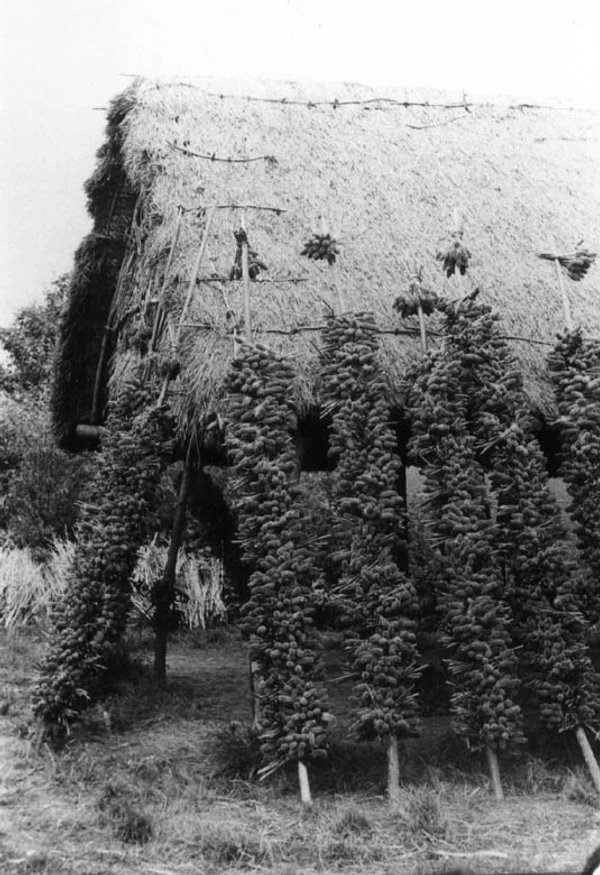
Teasel heads are tied into bunches of 50 and fastened onto long poles which hold 18 bunches or 900 heads.
The heads, when ripe, are gathered by men wearing gloves and aprons of leather to protect them from the spines of the plant, and are tied by the stalks onto long poles. Each pole when laden is called a ‘pack’, and the average yield is said to be ten packs per acre. The packs are placed in sheds until the heads on them are thoroughly dry, when they are sold to buyers at Leeds, whither they are dispatched by rail
- A History of Essex, p.425
Frank Folkard and Sons: ‘A good reliable little family firm’
‘A good reliable little family firm’
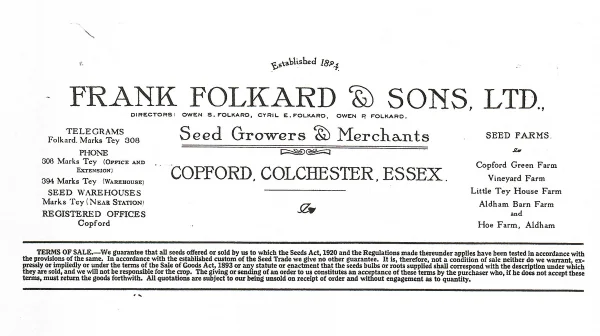
In Copford, Frank Folkard followed in his father William’s footsteps by becoming a farmer, not of livestock but of seeds. He started the seed business from Copford Green, supplying grass mixtures, and a range of roots including mangolds (sometimes known as mangelwurzul), kohl rabi and kale. When the business needed more warehouse space, it took over a disused maltings building in Station Road, Marks Tey, along with two cottages and the use of a nearby railway siding. In the late 1960s the seed warehouse was demolished as part of the A12 road scheme and the business closed.
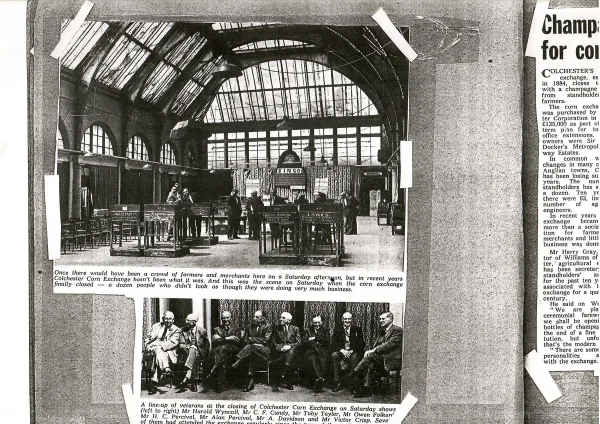
Growers and merchants traded their seeds at local corn exchanges. They took samples of their products wrapped in brown paper bags, linen bags or canvas sacks, whichever was most suitable for the type of seed. Seed buyers, who might be other farmers or merchants could inspect the seed and decide a price directly with the grower. The nearest corn exchange to Marks Tey was in Colchester and was a glass-roofed building next to the Cups Hotel on the High Street. In its day, the Colchester Corn Exchange opened and closed to the ring of a heavy brass bell and could be attended by 1000 buyers and sellers in a day. It closed in 1967.
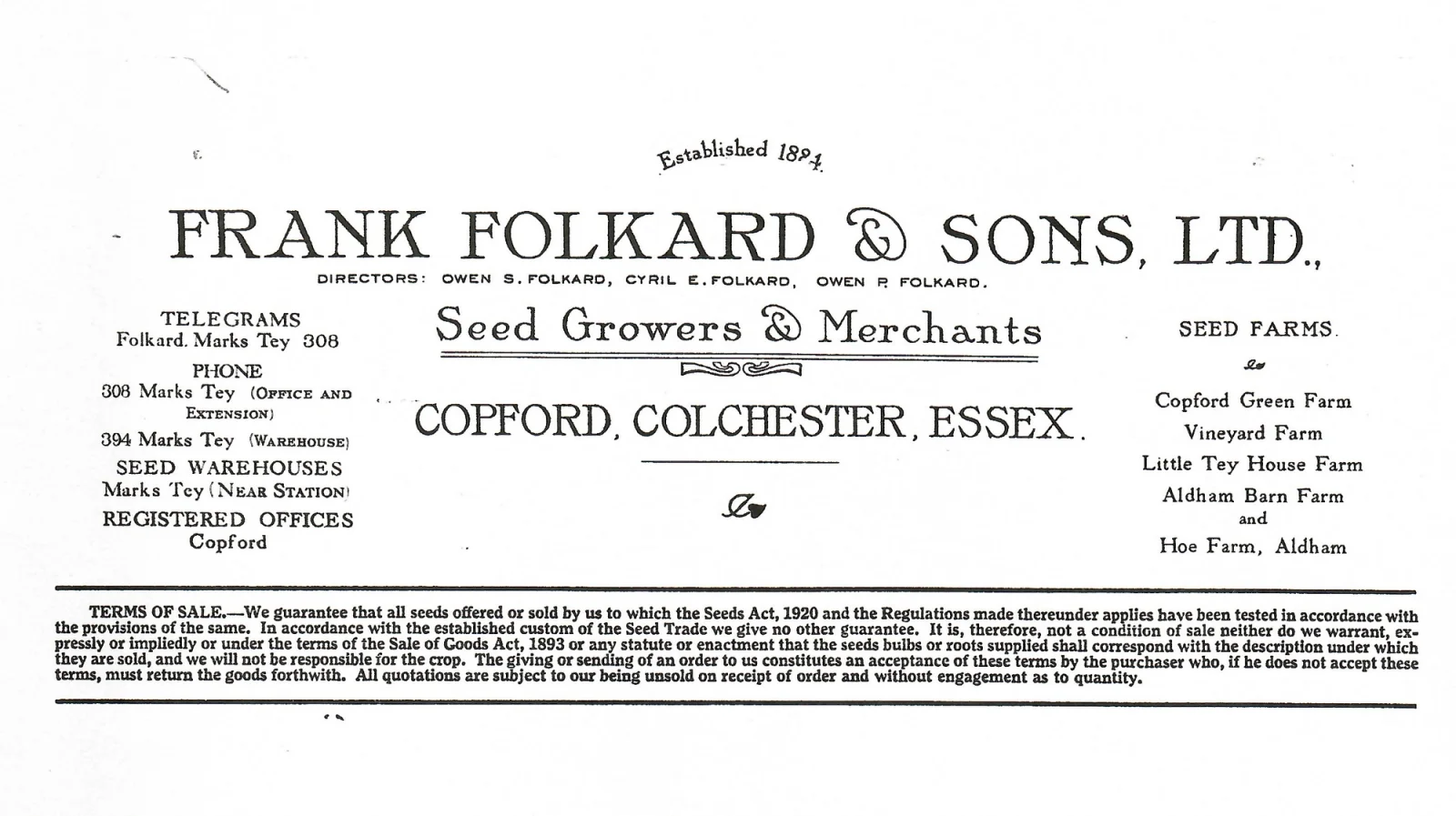
Frank Folkard letterhead, , [MTHP.5.16.3.1]
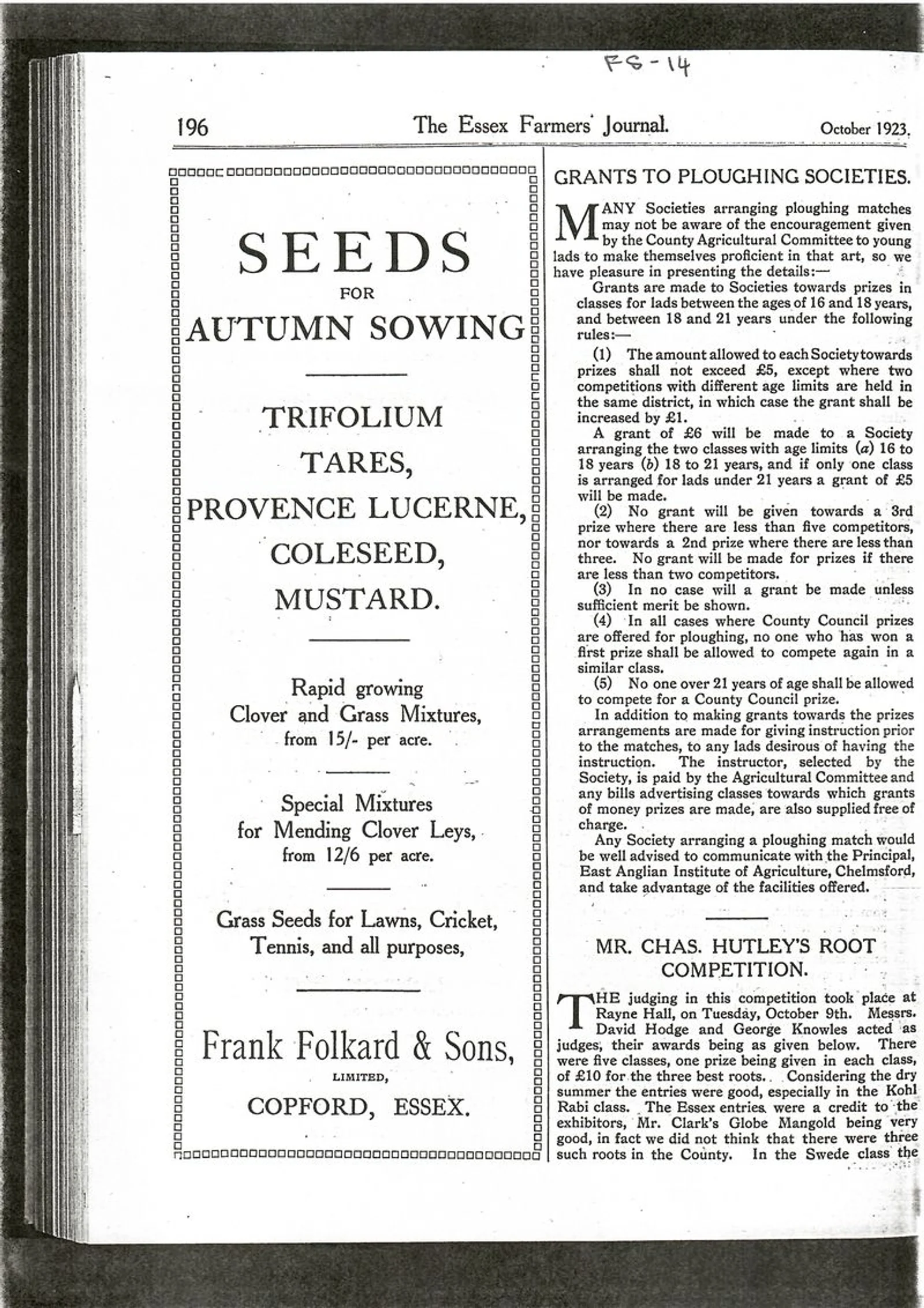
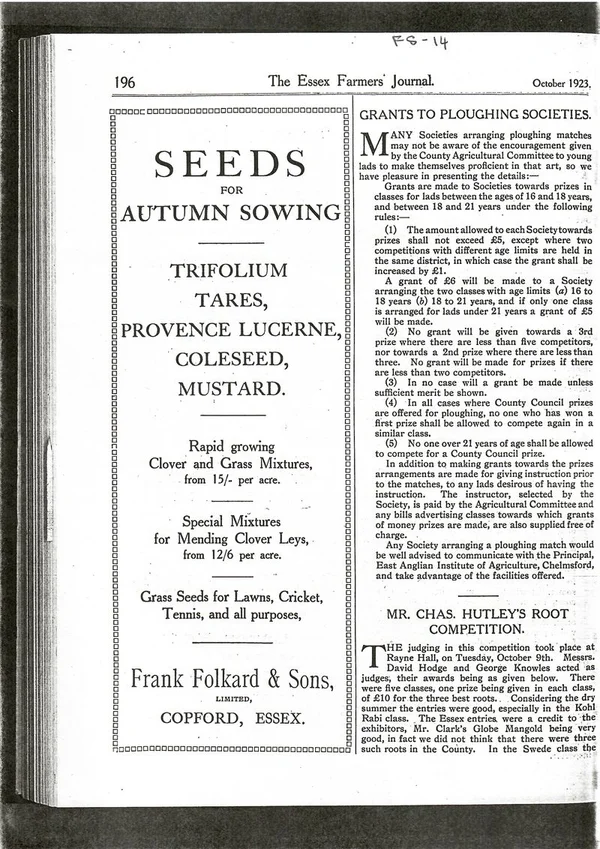
A 1933 advert shows the range of seeds on offer from Frank Folkard and Sons. Crops like clover, lucerne (also known as alfalfa) could be grown as soil improvers. From The Essex Farmers’ Journal, October 1923
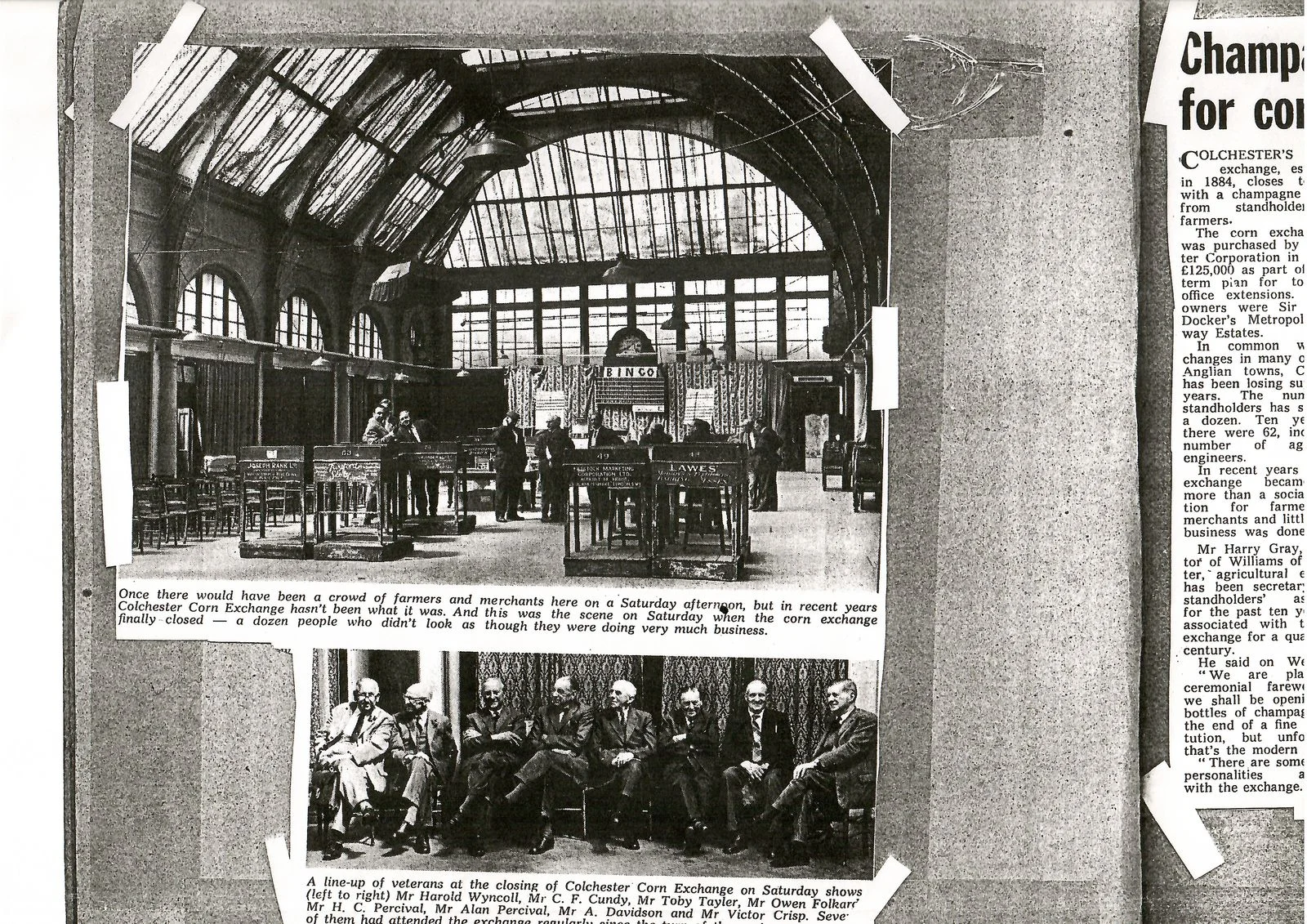
Owen Folkard at closing of Colchester Corn Exchange, , [MTHP.5.16.3.6]
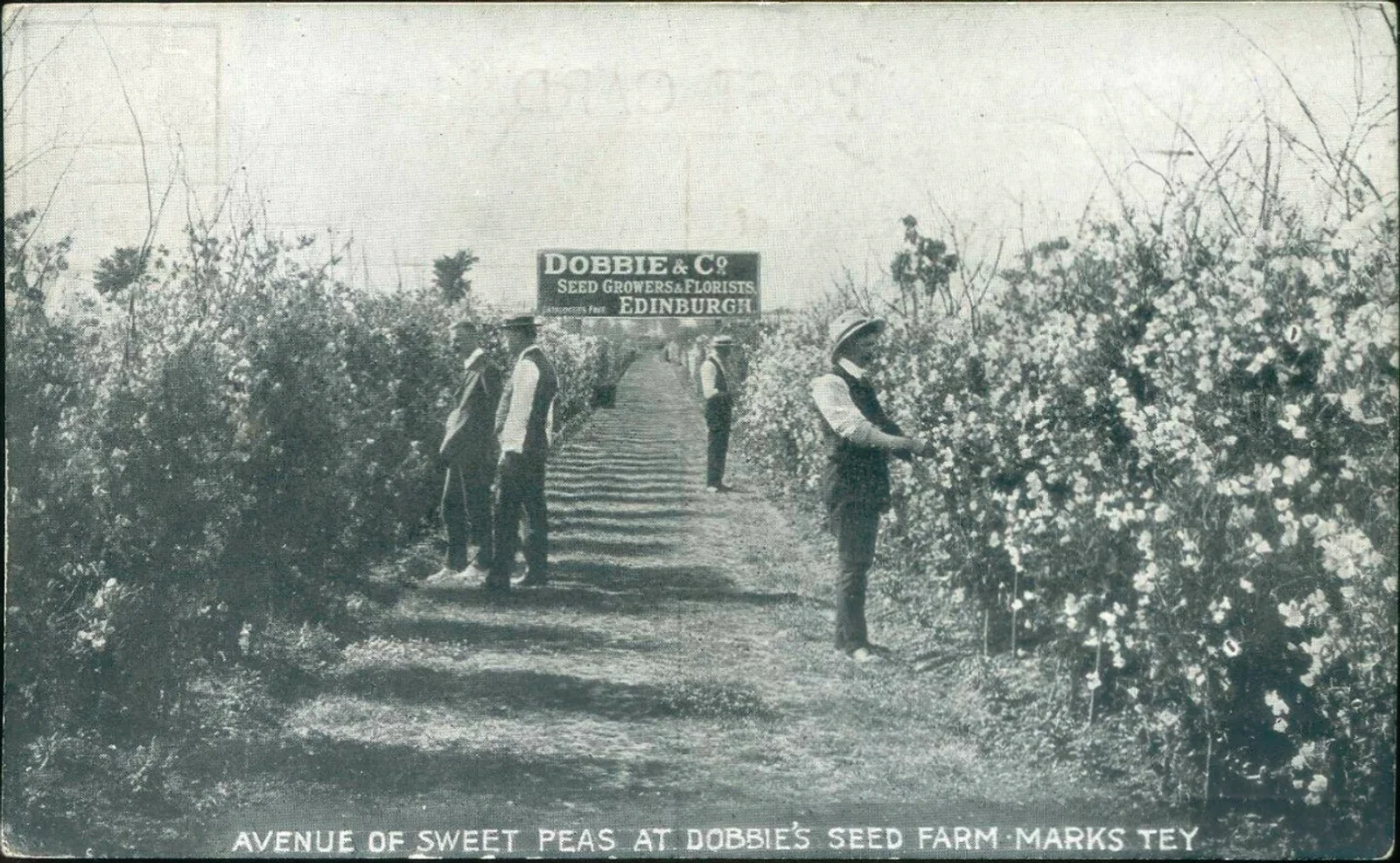
Dobbie’s sweet peas
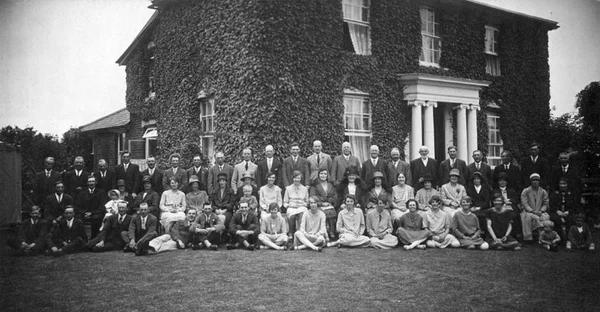
Dobbie and Co were a Scottish firm who moved to Marks Tey in 1905, taking on Palmers Farm. They grew both edible crops and flowers but specialised in sweet peas. There had been increasing popular interest in growing sweet peas from the late 19th as the scented flower became a must have in people’s flower gardens and the Essex soil and climate was perfect for them. Dobbie’s owner, William Cuthbertson was a respected expert in growing sweet peas who published books and pamphlets on the subject. As Marks Tey residents, William and his valued associate Andrew Ireland joined the Parish Council, and even gave a new sweet pea the name ‘Mrs Collier’ after the wife of the council chairman at the time.
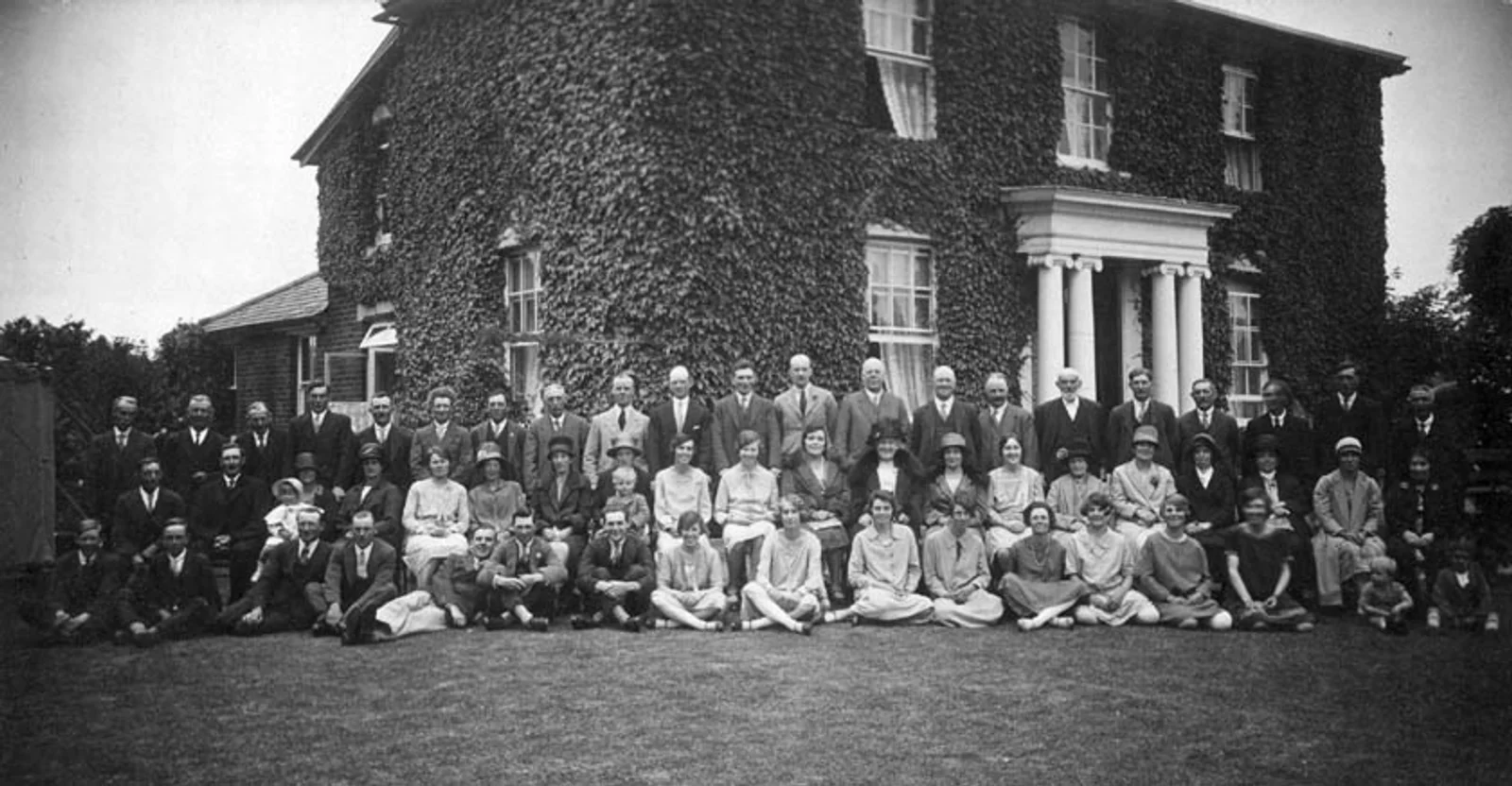
Bypass Nursery
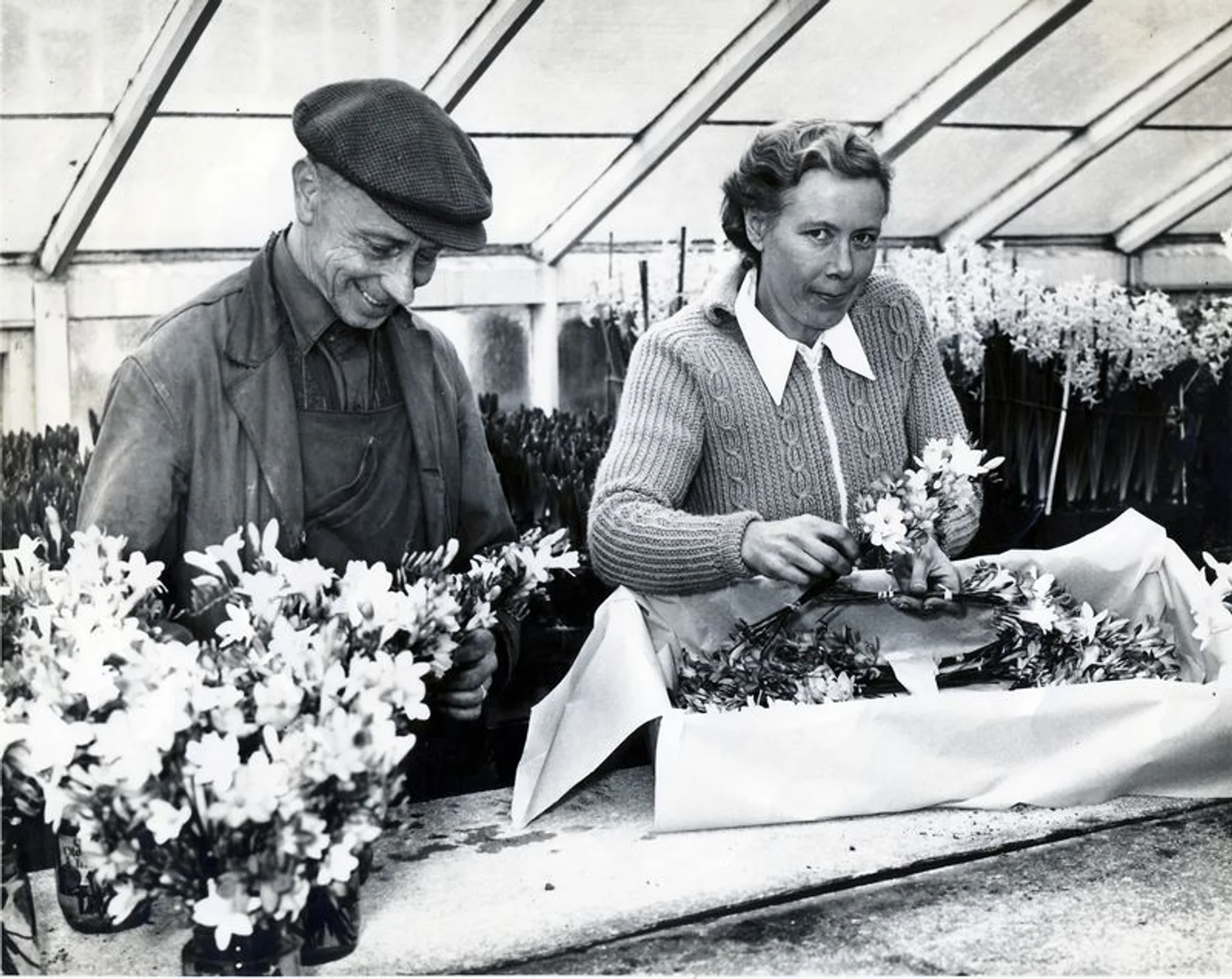
Bypass Nurseries was founded in 1937 by David Fenwick and took its name from its original location near the Ipswich Road roundabout in Colchester. From one site in Colchester, the business expanded to take over the Dobbie’s site in Marks Tey in 1956, two sites near Ipswich, one in Bury St Edmunds, and at its height it also had two shops in London.
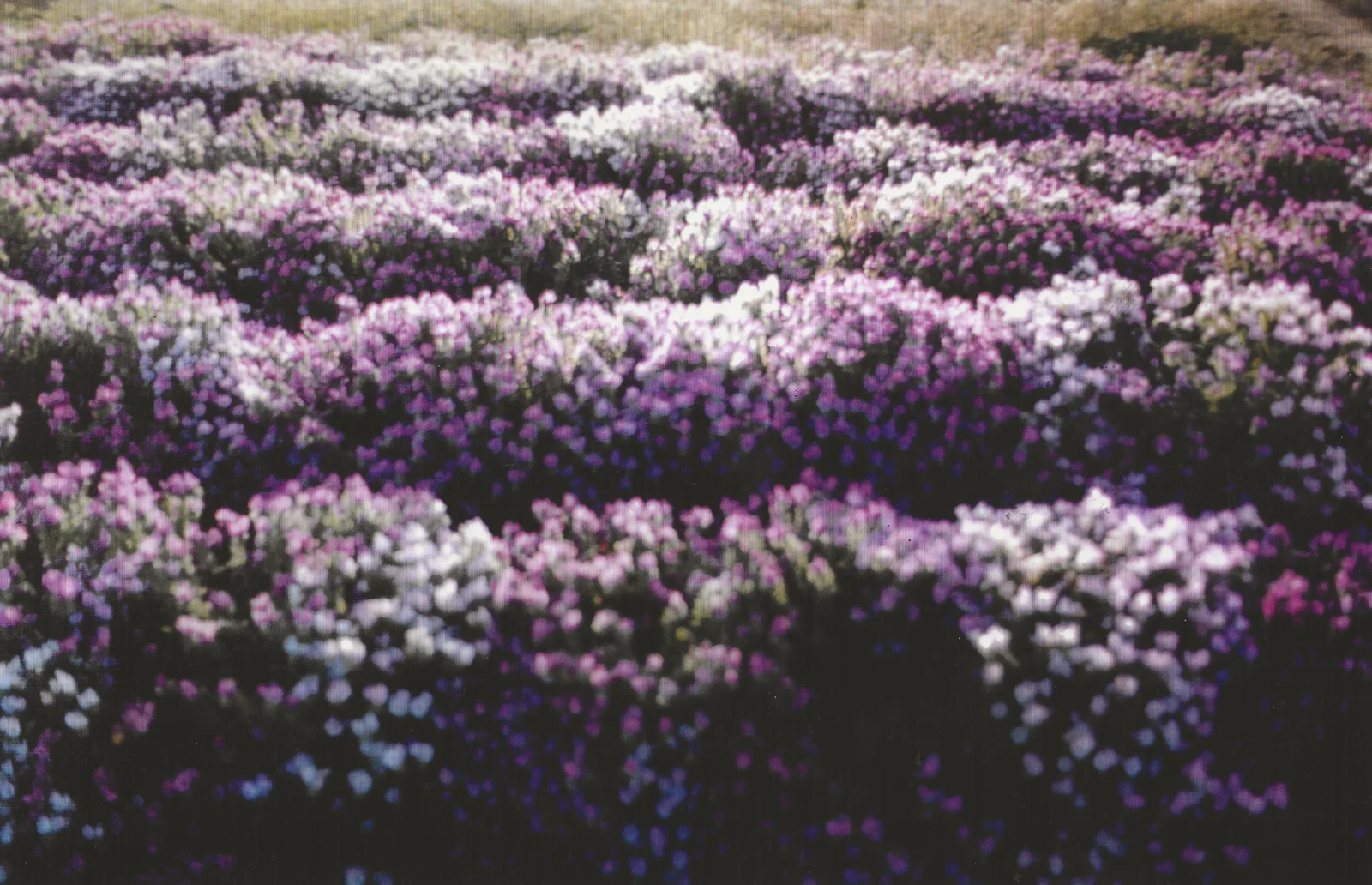
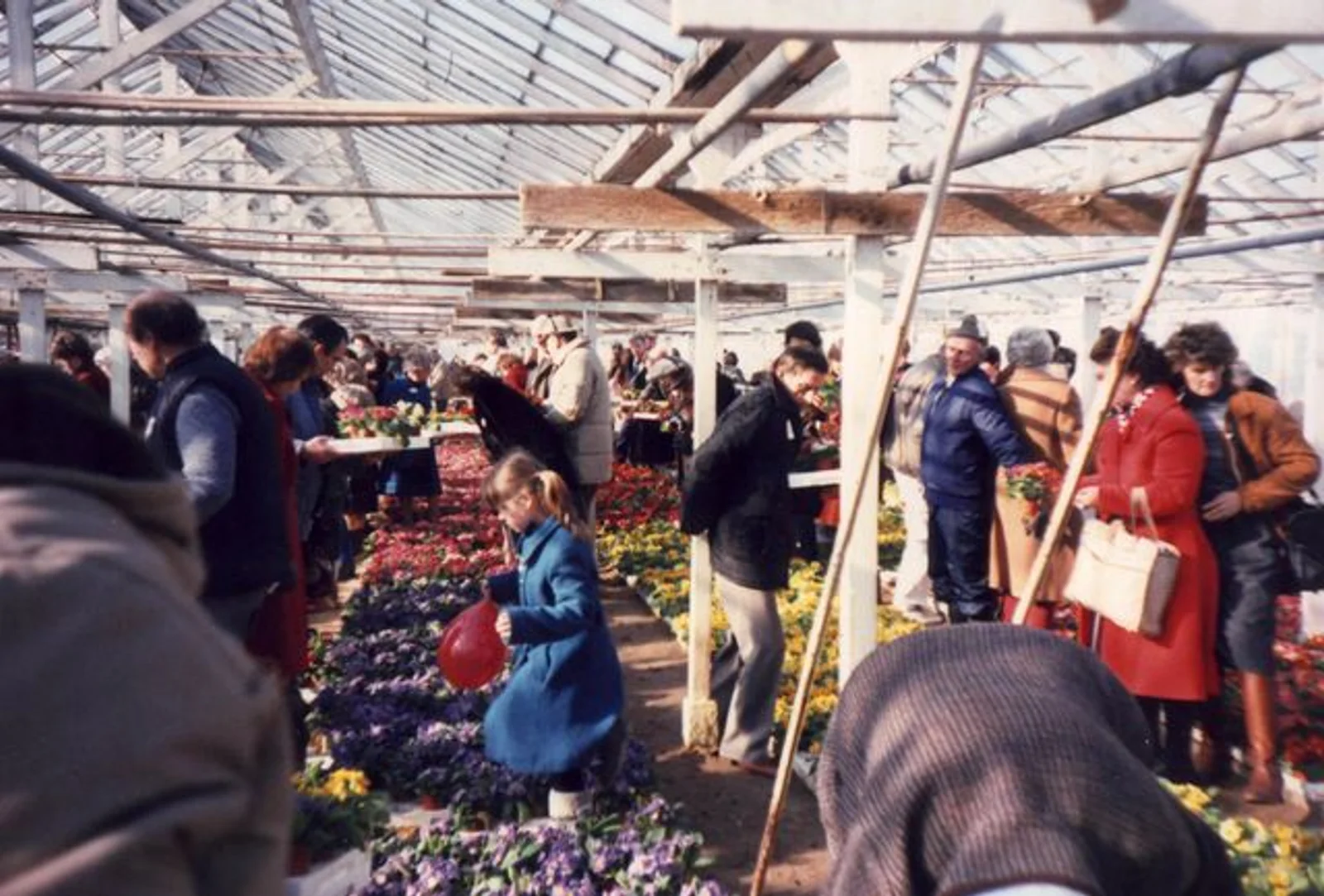
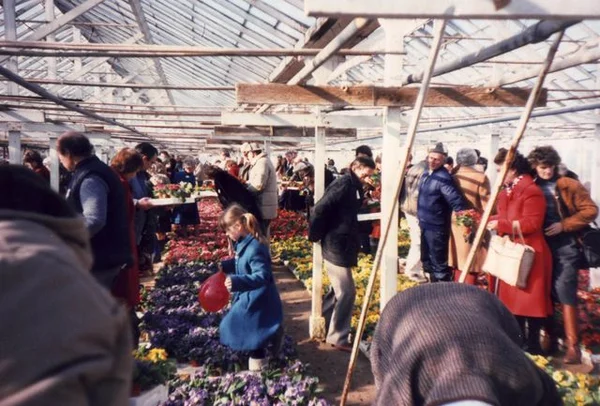
The emphasis in Marks Tey was on growing primroses and polyanthus. In 1971 Bypass Nurseries employed eight full-time staff, three part-timers and twenty bee hives. The plants were grown in large greenhouses and to prevent contamination the primroses were pollinated by hand using a delicate touch and an artist’s paintbrush.
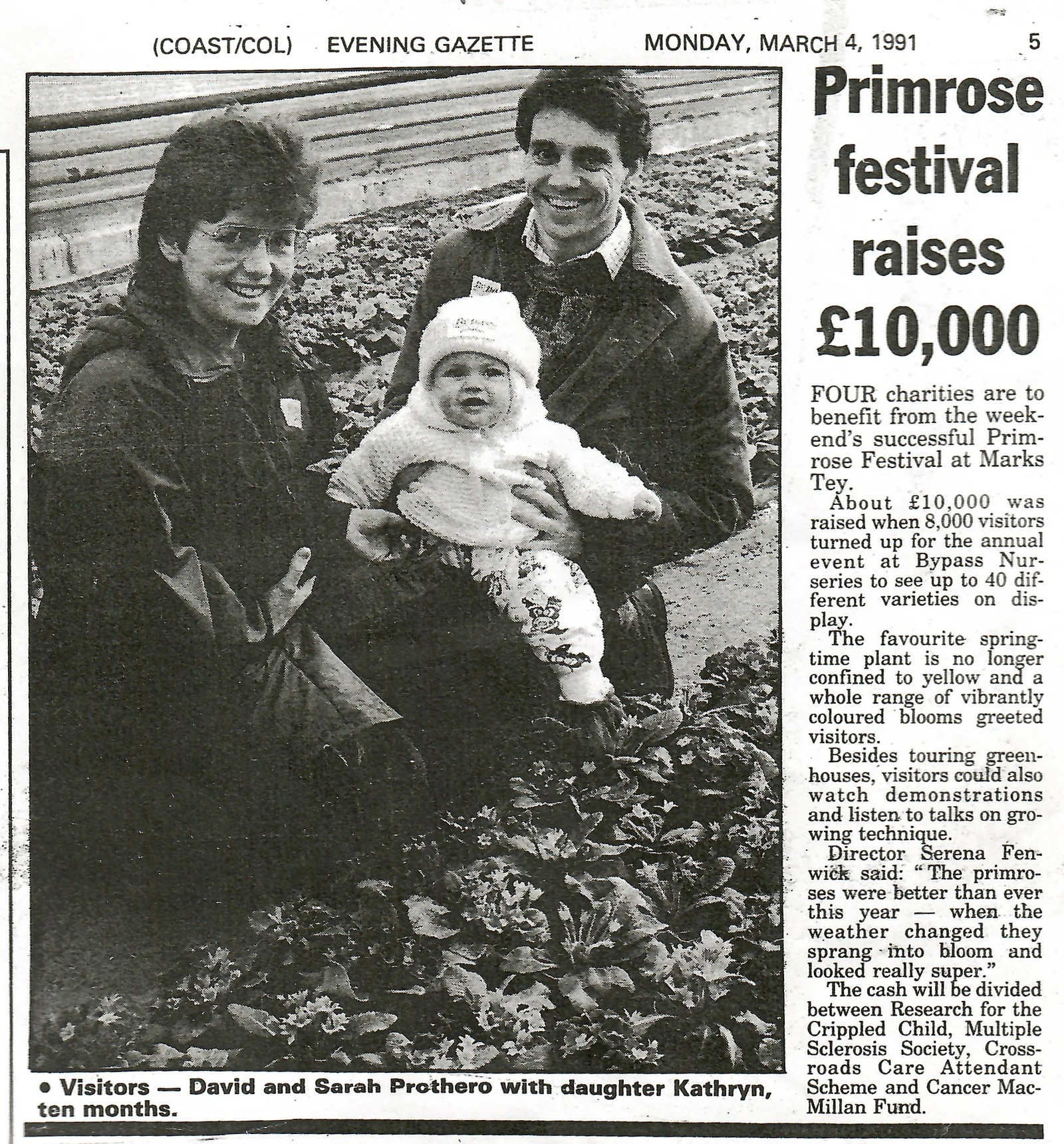
Primrose Festival
In the early spring Bypass Nurseries held a Primrose Festival in Marks Tey. The greenhouses were open to the public to watch pollinating demonstrations, admire the incredible colourful floral displays and buy plants for their gardens. Hundreds of people would visit over the two-day festival that each year raised thousands of pounds for charities.
The ‘multi-hued brilliance’ of Marks Tey
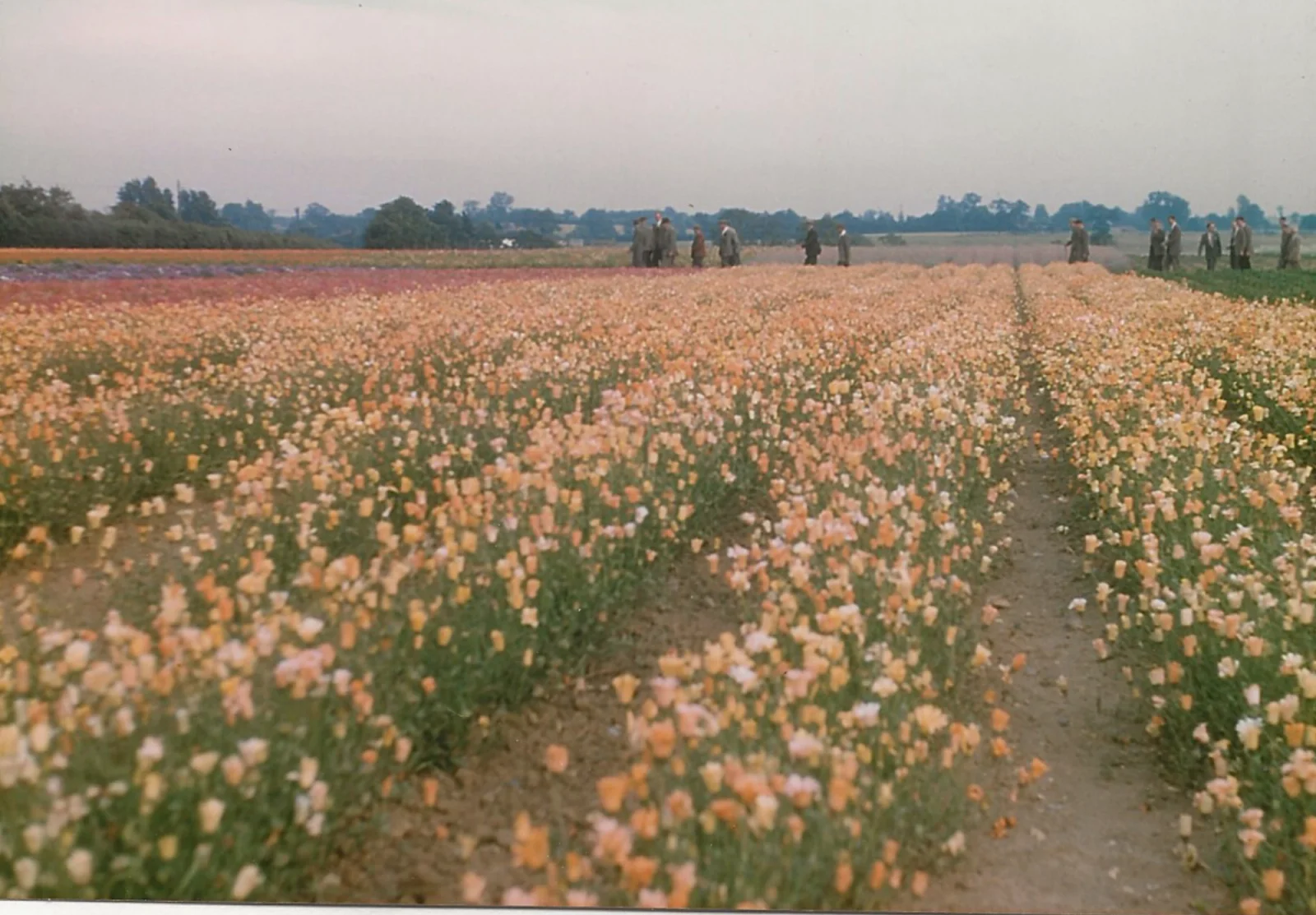
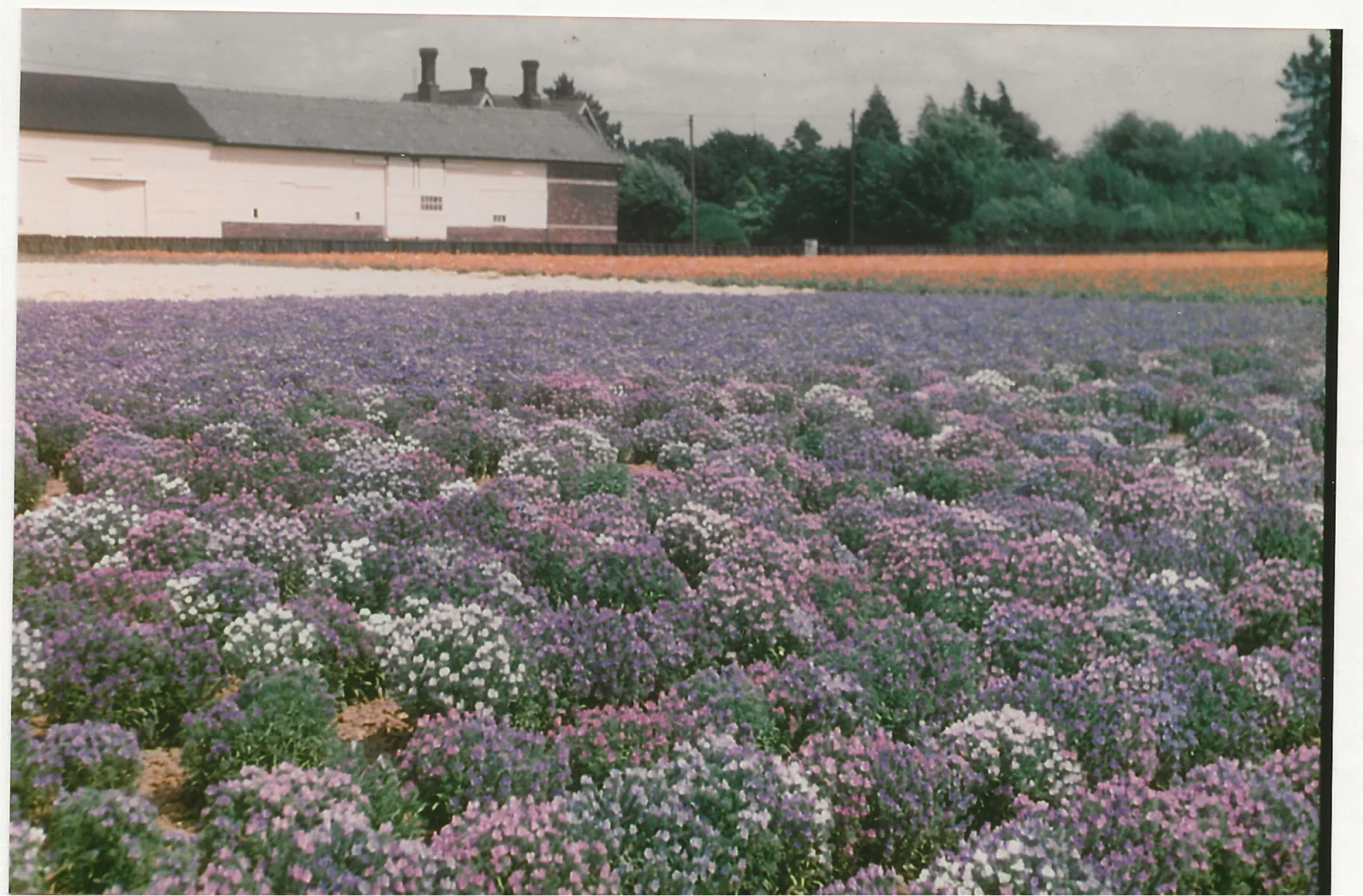
Threshelfords Farm, Feering , ,
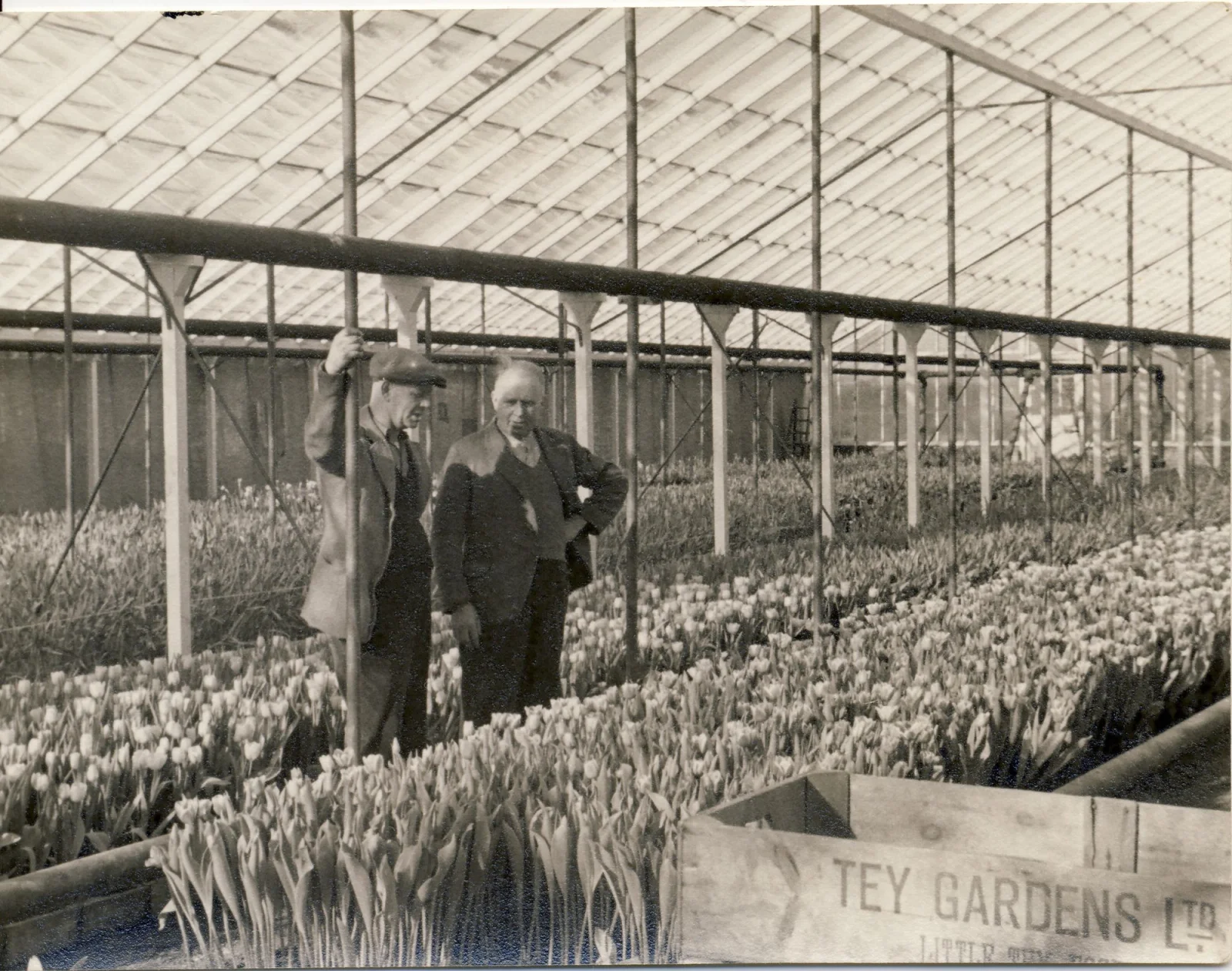
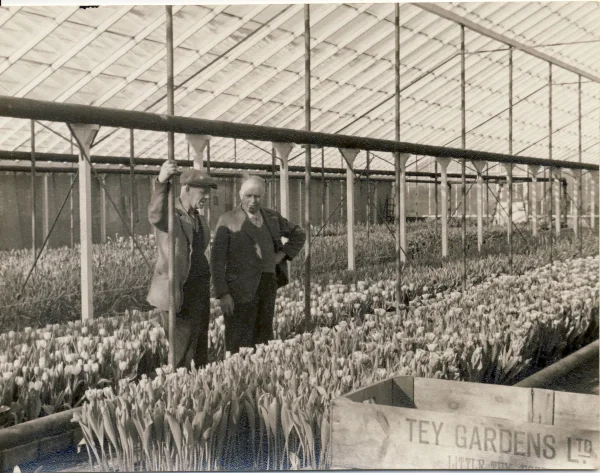
Another local nursery, Tey Gardens at Little Tey, specialised in producing arum lilies, chrysanthemums under glass, and gladioli, with the rest of the site used for cereal production. The man on the left here is Alec Mattin.
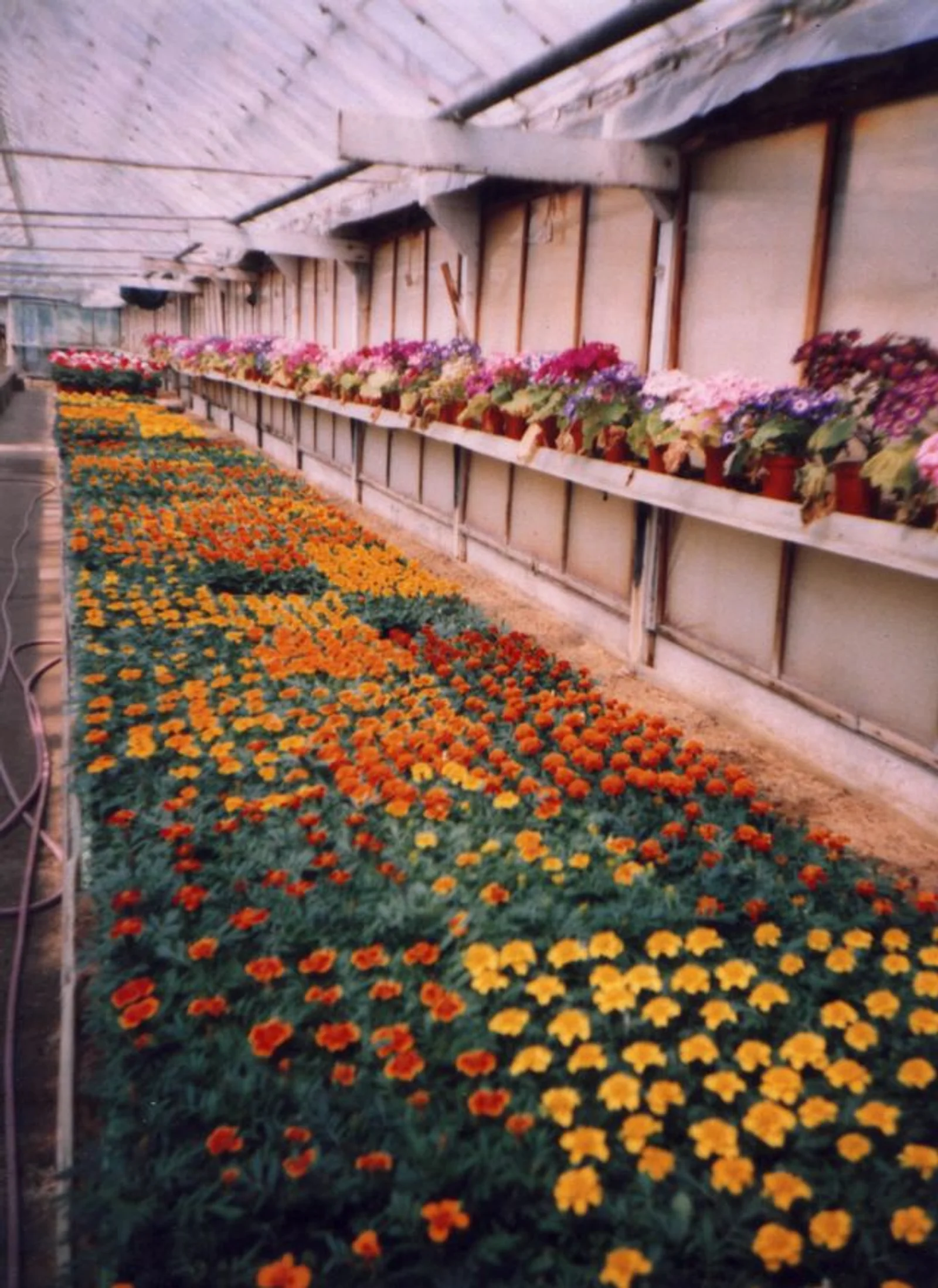
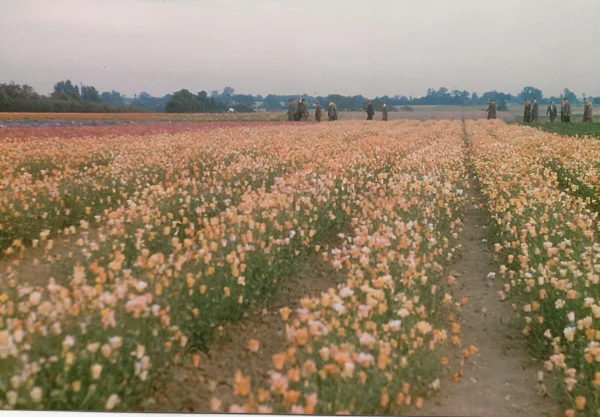
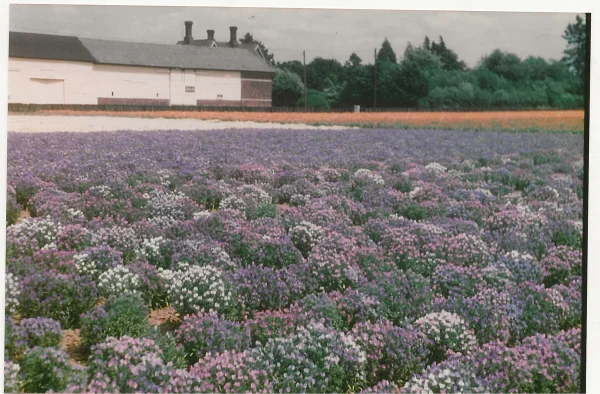
Rail and road travellers to the coast are dazzled in July and August by the vivid stripes of colour, the deep blues and purples of lobelia, the searing scarlet of salvia, and the multi-hued brilliance of antirrhinum, godetia, candytuft, nemesia, clarkia and French marigold.
- Braintree and Witham Times, 26 August 1966
Poplar Nursery
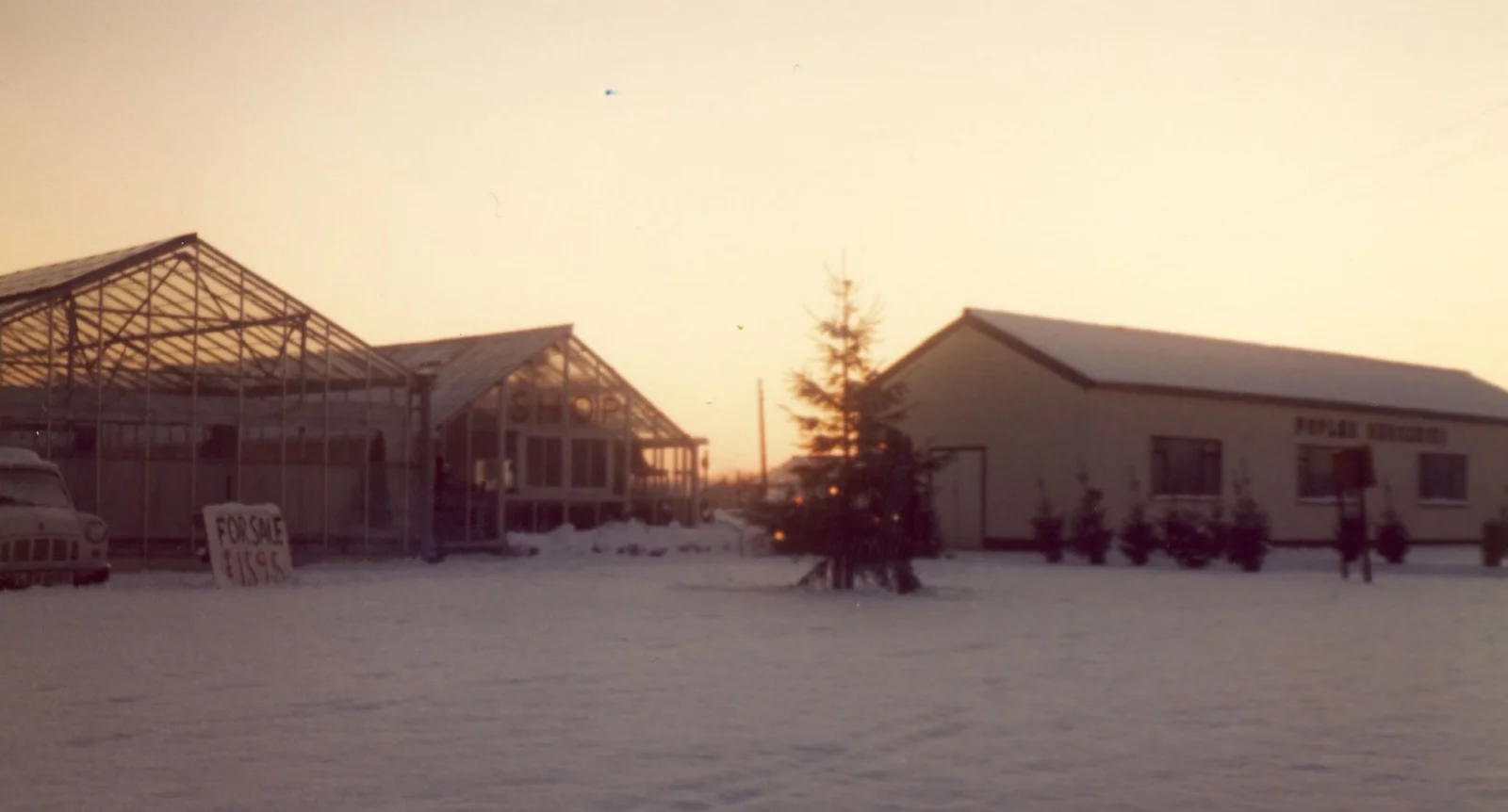
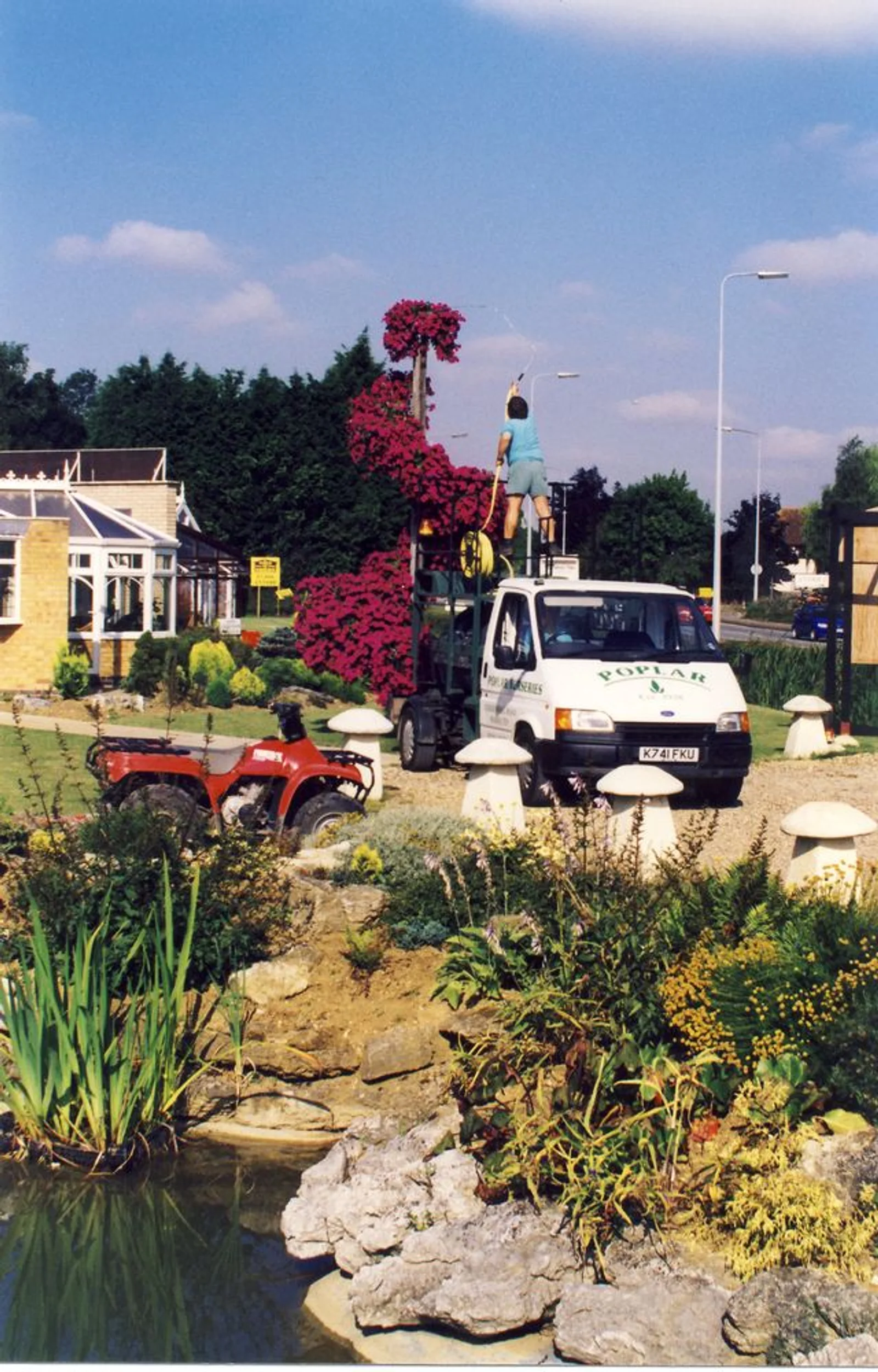
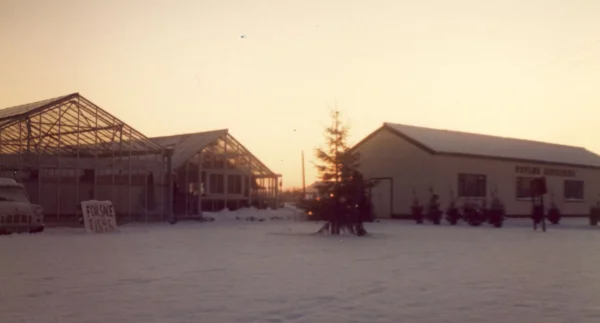
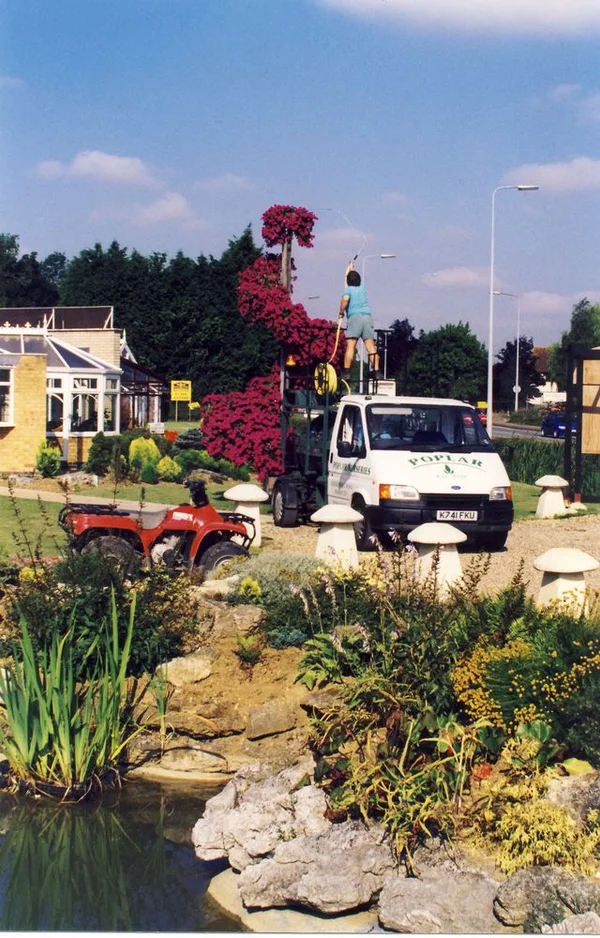
Poplar Nursery has been part of the Marks Tey community for 80 years. Its story started back before the Second World War when Eric Cowan started growing flowers and fruits for seed production in Great Tey Lane. In 1947 the operation expanded onto the current site in Coggeshall Road where Eric was well known for growing sweet peas. His son Martin came into the business with a love for growing chrysanthemums and an eye for hanging baskets and cut flower displays. In 1983 Poplar produced 50 hanging baskets but by 1985 they were supplying 1000s of baskets to customers such as Trust House Forte, Greene King and Chef and Brewer as well as supplying local councils. Today, alongside plant growing and production, Poplar has diversified with retail spaces, café, food hall and events.
FIND OUT MORE
Marks Tey has a rich heritage of flower and seed production and this has only been an introduction to some of the many stories, growers, nurseries and people involved. To find out more and to research other businesses and nurserymen take a closer look at the collection.
Marks Tey Heritage Project is bringing together the history of Marks Tey in one place.
Archive results related to Flowers & seeds
A field of teasels
Teasel heads
Frank Folkard letterhead
Folkards advert from Copford, 1923
1923
Owen Folkard at closing of Colchester Corn Exchange
Photograph of the Dobbies staff outside Palmers on 4 July 1928
1928
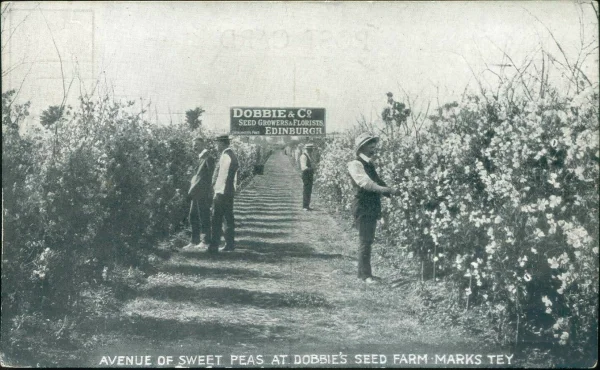
Dobbies Postcard
1905
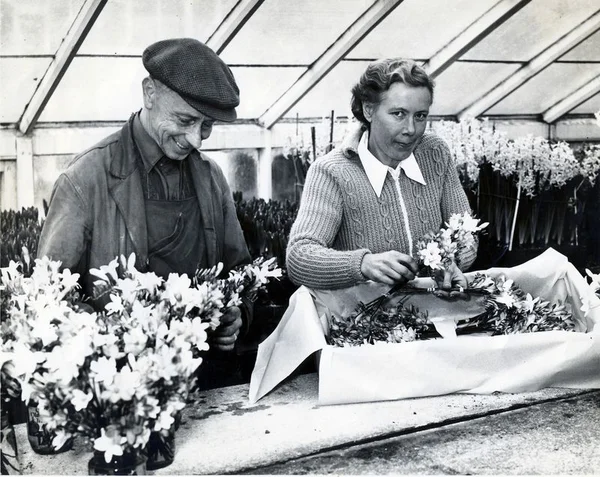
Korniej, photo 1
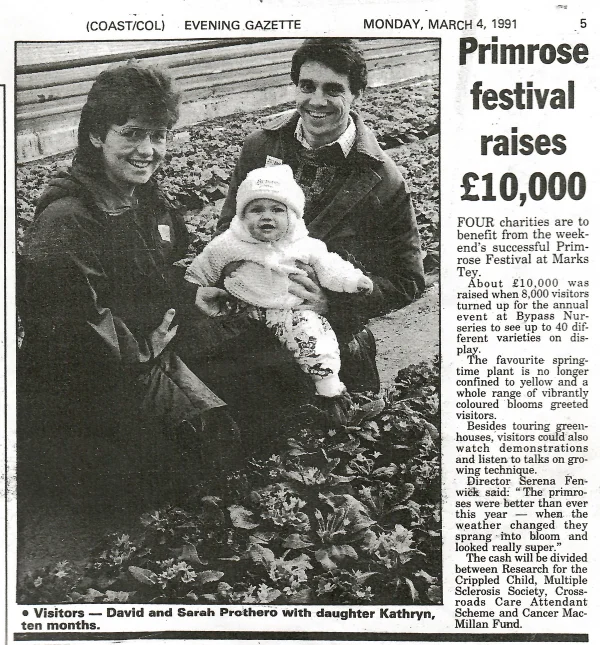
Primrose Festival, 1991
1991
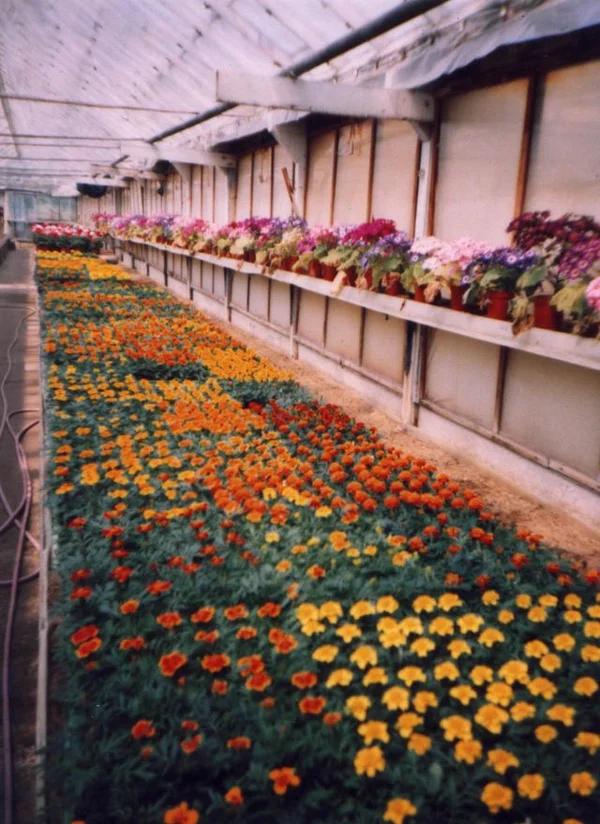
Primrose Festival, photo 6
1983 or 1984
Primrose Festival, photo 7
1983 or 1984
Threshelfords Farm, Feering
Threshelfords Farm, Feering
Tulips in greenhouse at Tey Gardens, photo 1
Poplar Nurseries, Christmas
Poplar Nurseries, photo 2
Explore more stories
BRICKMAKING IN MARKS TEY
Brick is beautiful
TRANSPORT
Getting around Marks Tey
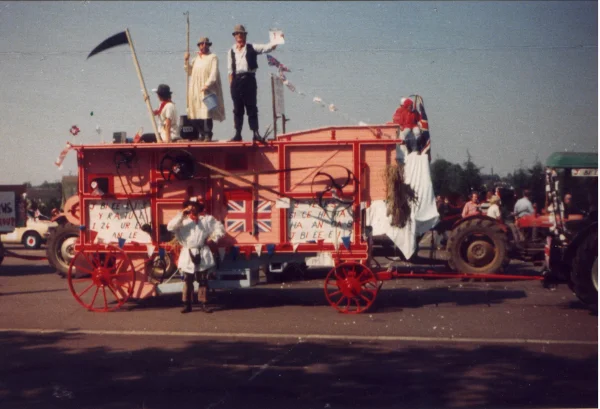
Marks Tey Carnival in the 1970s
Blooming Marvellous!
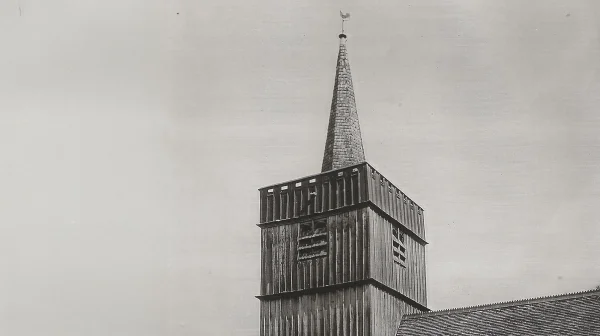
CHURCHES OF MARKS TEY
A spire and its stories
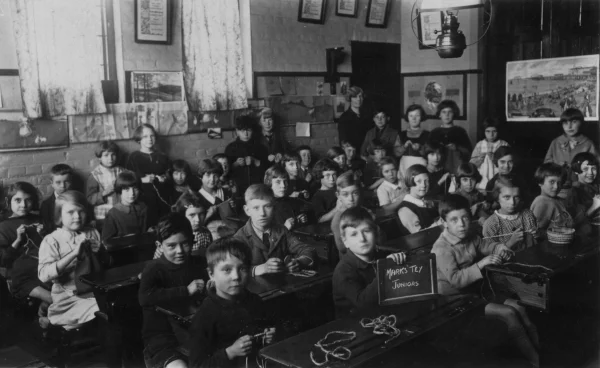
A SCHOOL FOR MARKS TEY
Marks Tey school days
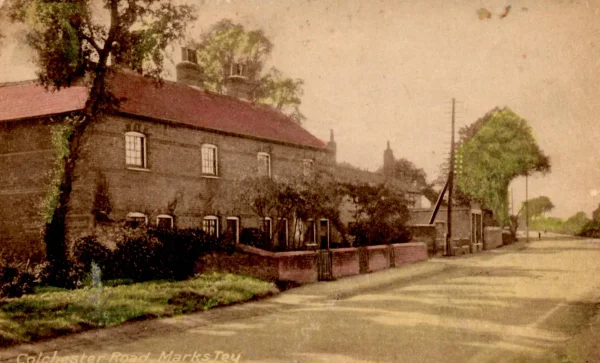
BRENDA WILBY'S WALK
A walk around Marks Tey in the 1920s
World War comes to Marks Tey
Wartime Marks Tey
LIVING HISTORY TALKS
Origins
Places names in marks tey
Tey at Elms & other names
LIVING HISTORY TALKS
Building of the Church

LIVING HISTORY TALKS
Marks Tey Cricket Club
LIVING HISTORY TALKS
Impact of the Railway
LIVING HISTORY TALKS
The Famous Case of William Steel
LIVING HISTORY TALKS
1944