Tey at Elms & other names
Places names in marks tey
Have you ever wondered how Marks Tey got its name? What about Cornwallis Drive, Bree Avenue or The Rookeries? So often place names are clues to local history and digging around and asking a few questions can reveal surprising results. Our researcher Claire Driver gets started.
Explore story →
Tey Mandeville and Tey at Elms
When William the Conqueror decided to survey his new lands in England in 1086, the Tey part of Marks Tey was already in use for the places we now call Marks Tey, Little Tey and Great Tey.Tey or Teye means enclosure in the woods, so gives us an idea of what the area looked like, surrounded by forest.The Domesday Book describes how the land here was held by someone called Wulfric before the Norman Conquest, and how William I granted Tey to his supporter Geoffrey de Mandeville afterwards. After that, the place was sometimes known as Tey Mandeville and also as Tey at Elms, another reference to the surrounding landscape and the elm trees that did well in the Essex soils.
The manor of Marks Tey was held in return for knight’s service. This meant that the lord of the manor, living at Marks Tey Hall, had to supply arms, armour and horses for up to 40 days active service per year, although over time this changed into a money payment.The manor was held by the de Merk or Merks family. By 1275 Alda de Merk owed four knights fees for the manor. Soon after this the manor came into the hands of the Tey family possibly when Alice de Merks and William Tey were married around 1310. In 1384 the place is called Teye Merkys.
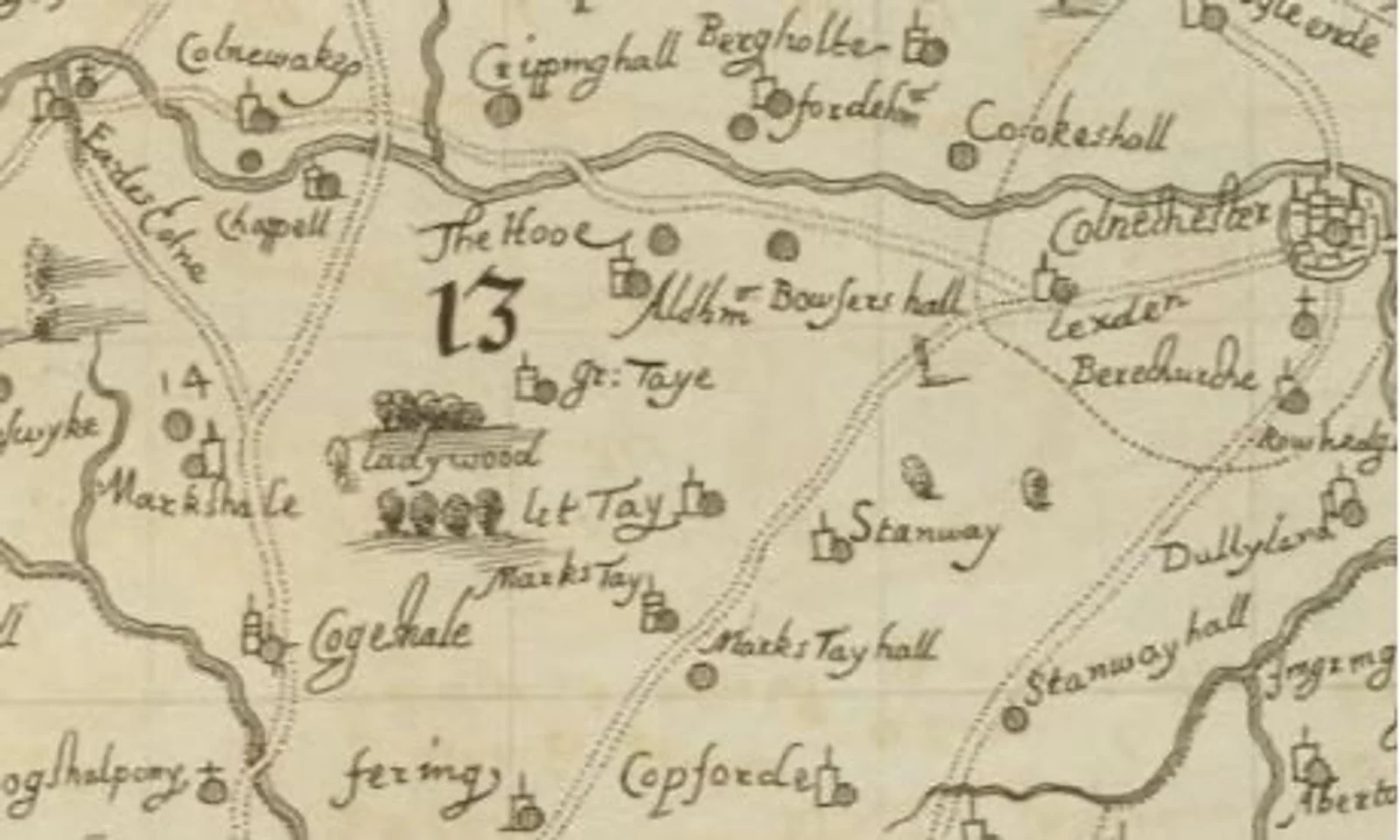
Great Taye, Little Tay and Marks Tay shown on a detail of John Norden’s Essex map, 1594. The name Tey was already being used at the time the Domesday Book was written in 1086.
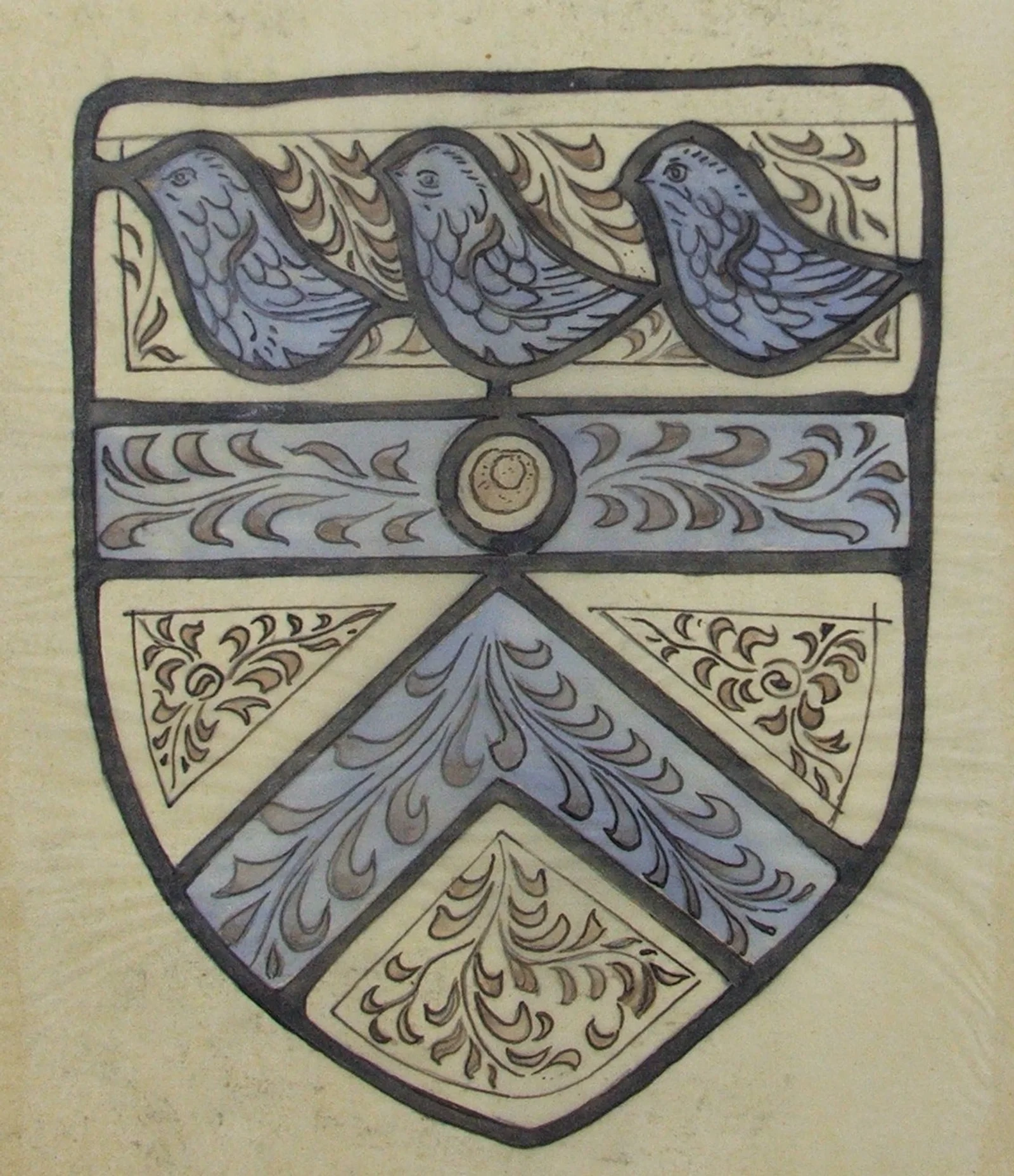
The Tey family arms from the West window at Copford Church.
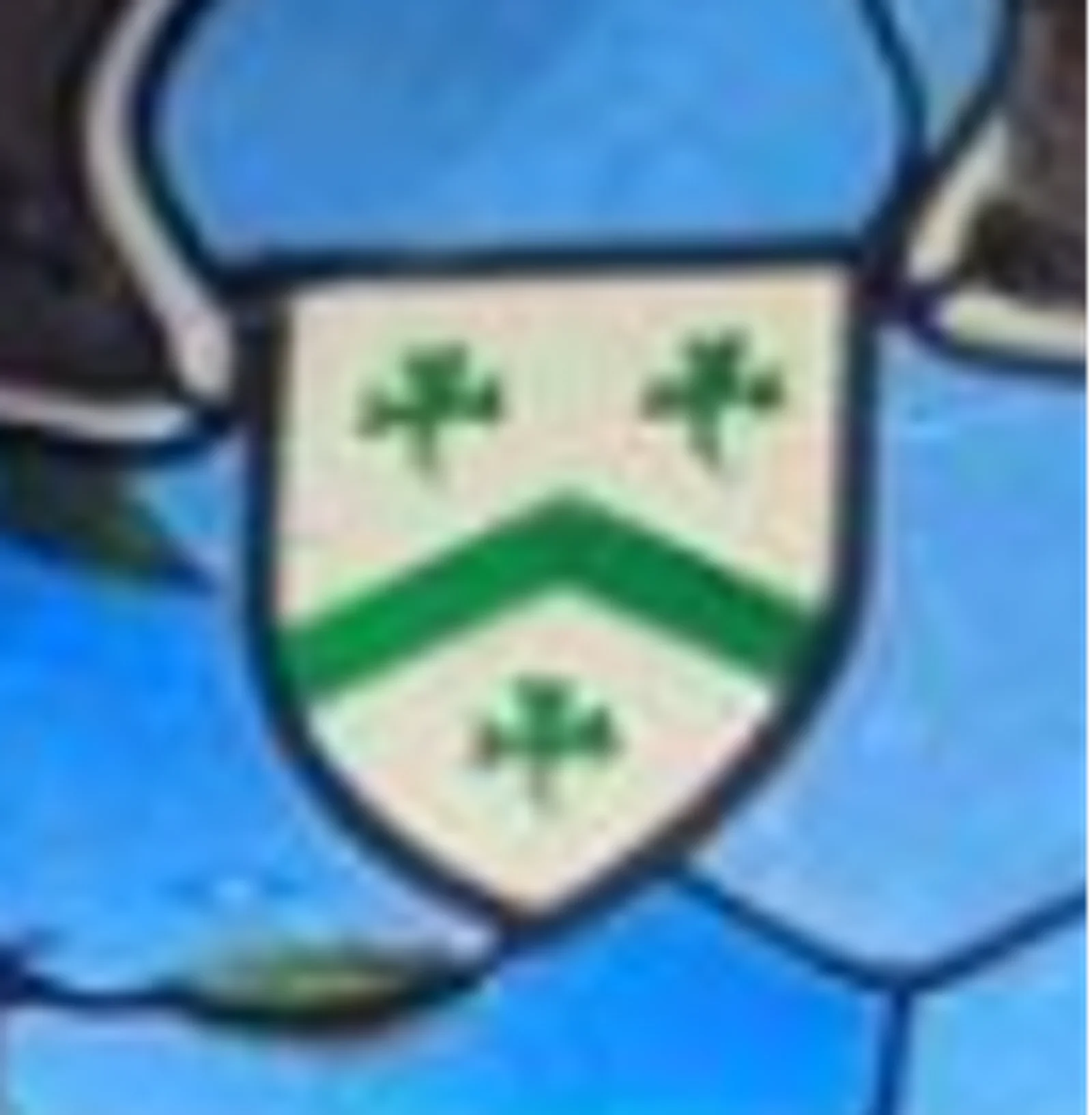
The Mark family arms from the Millenium Window at St Andrew’s Church.
The London merchants
In 1592 the manor was passed to Charles Cornwallis by Elizabeth I. Cornwallis is another name that will be familiar to modern residents of the Marks Tey estate. After this and for the next 200 years Marks Tey manor sold to a succession of London merchants. In 1733, Robert Marsh, factor at Blackwell Hall in London and Deputy-Governor of the Bank of England, owned the manor. At this time, Blackwell Hall was the centre for the wool and cloth trade in England and factors were the agents who charged a fee to handle the trade. These merchants no doubt benefited from the convenience of Marks Tey’s location for travelling to the city, just as modern commuters do today.
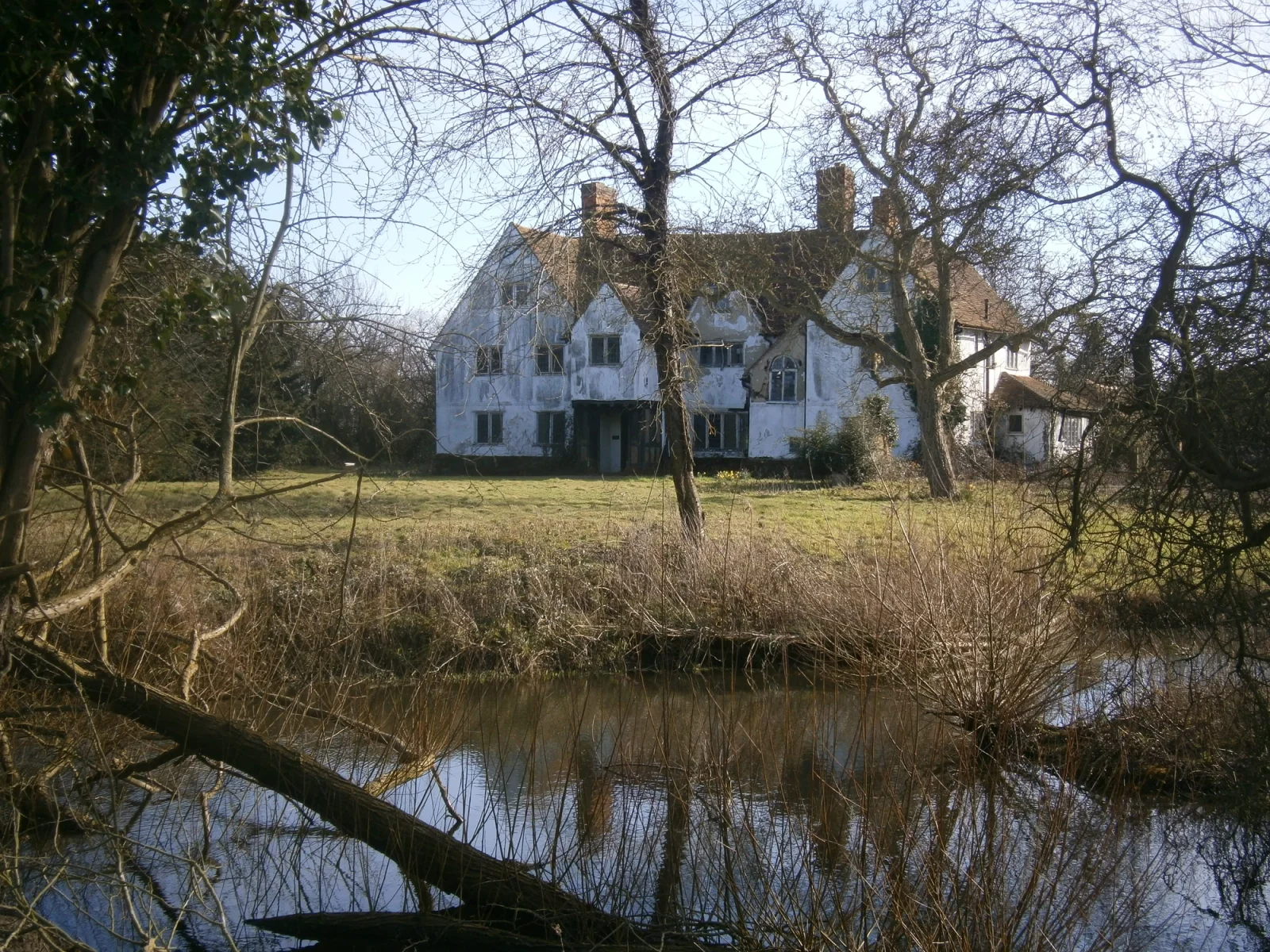
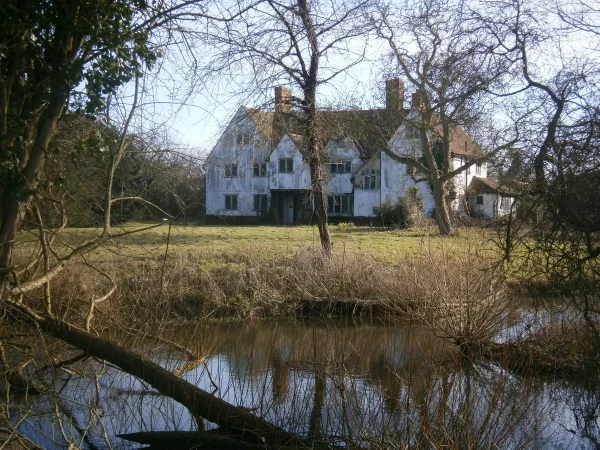
Marks Tey Hall with its surrounding moat (M4-160)
‘Being contiguous to the Turnpike Road and at an easy distance from a Capital market and Seaport town. The Mail and other coaches pass within a very short distance of the house.’
- Essex County Standard, 16 June 1934
William Bree
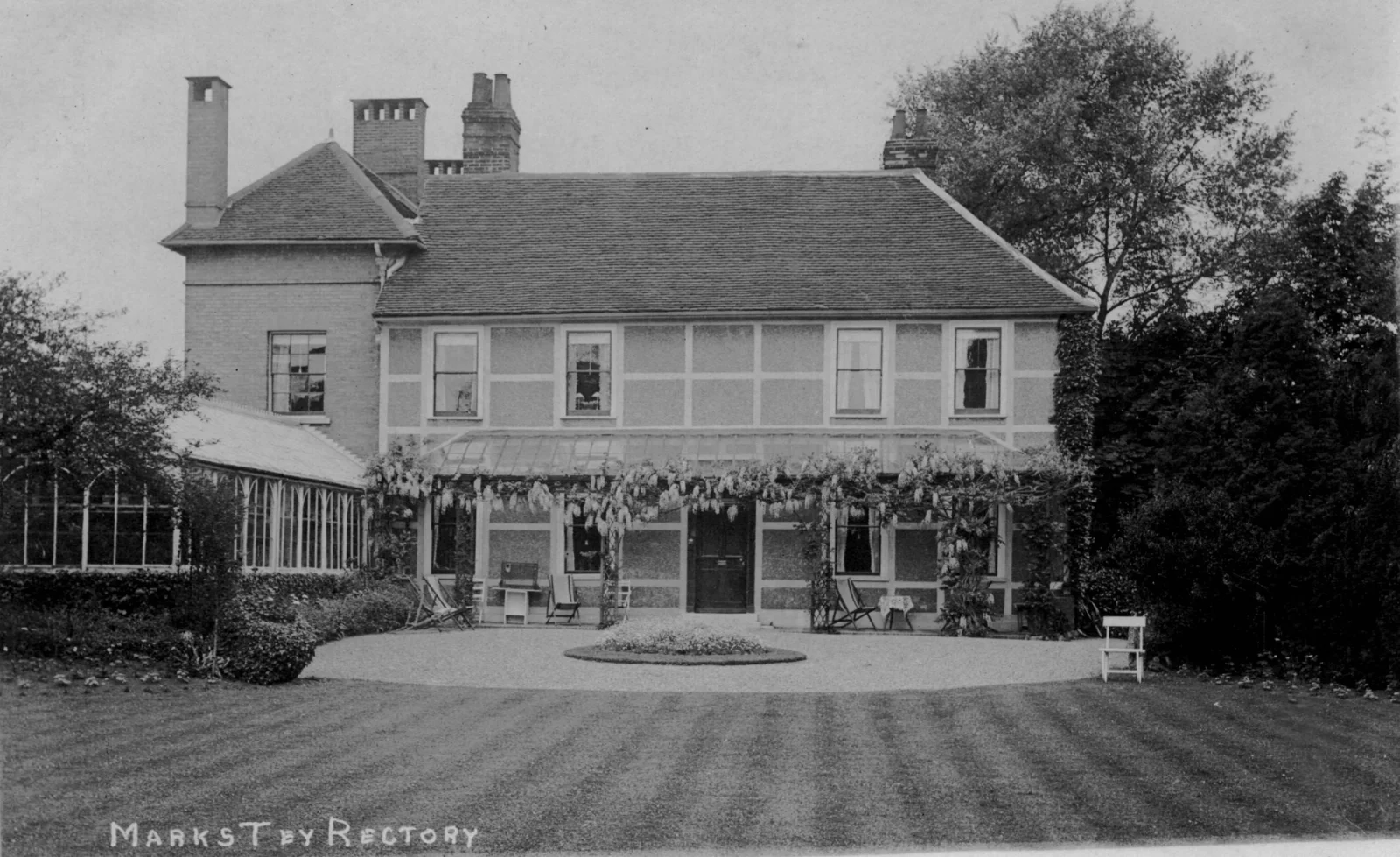
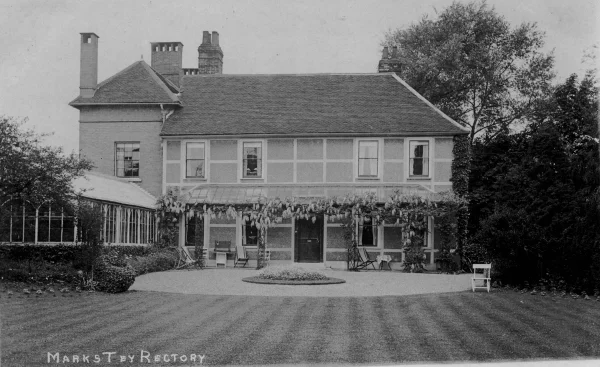
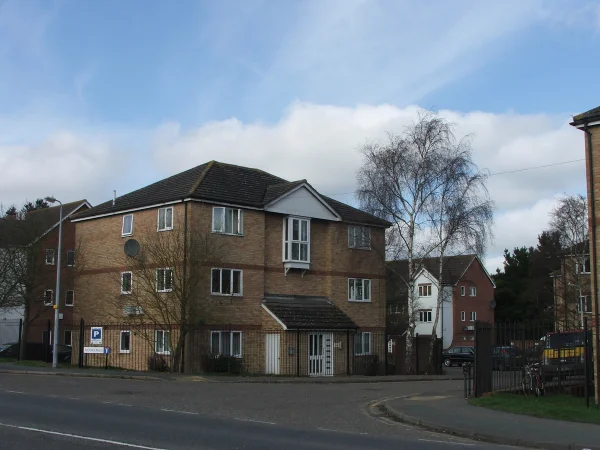
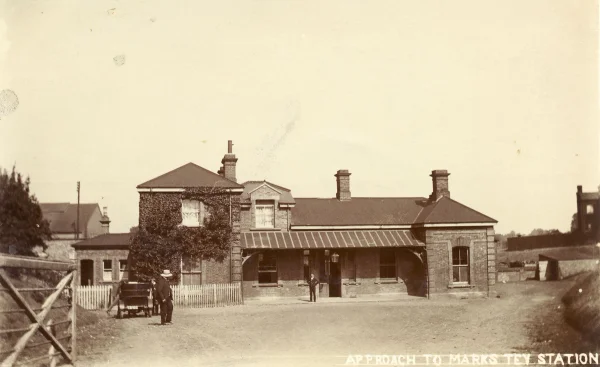
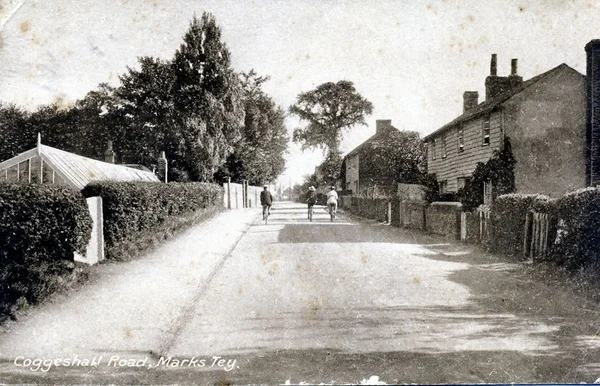
Another familiar name to residents of the estate is Bree, as in Bree Avenue. This was built over 200 years after the Reverend William Bree became vicar at St. Andrew’s Church in 1722.His own house, the Parsonage, still stands near the station alongside Coggeshall Road and originally had extensive gardens and orchards that were lost when the roads were redesigned in the 1960s. After Bree’s death the Parsonage was advertised to rent and described as:
‘being a very good Dwelling-House, fit for a Gentleman’s Family; containing of three Parlours, Kitchen and Offices, six Chambers, and 2 Garrets, all conveniently furnished, two Coach-Houses, and Stabling for eight Horses, with Orchard and Gardens well planted with Espaliers and Wall-Fruit, and as much Land adjoining to the House as shall be required, with good Dove-House.'
— Ipswich Journal, 23 January 1762
The Parsonage, now known as Old Rectory Court, was converted into apartments in 1988.
Timeline
1066
William I (William the Conqueror)
1086
Land is held by Geoffrey Mandeville
Bohun family, Earls of Essex
Mary de Bohun (b1369) m Henry Bolingbroke, future King Henry IV
Henry de Merk (d.1268)
Henry de Merk
Henry de Merk
This Henry did not inherit from his father and the manor passed to Alda de Merk
1275-76
Alda de Merk (Daughter of Geoffrey Dynant)
After this the manor passed in marriage to the Tey family
c1310
William de Tey m Alicia Merks
Sir Robert Tey
Sir Robert Tey
1426
John Tey
1440
John Tey
he ‘much lessened the estate’
1462
Henry
1510
Thomas
Dobbies Lane
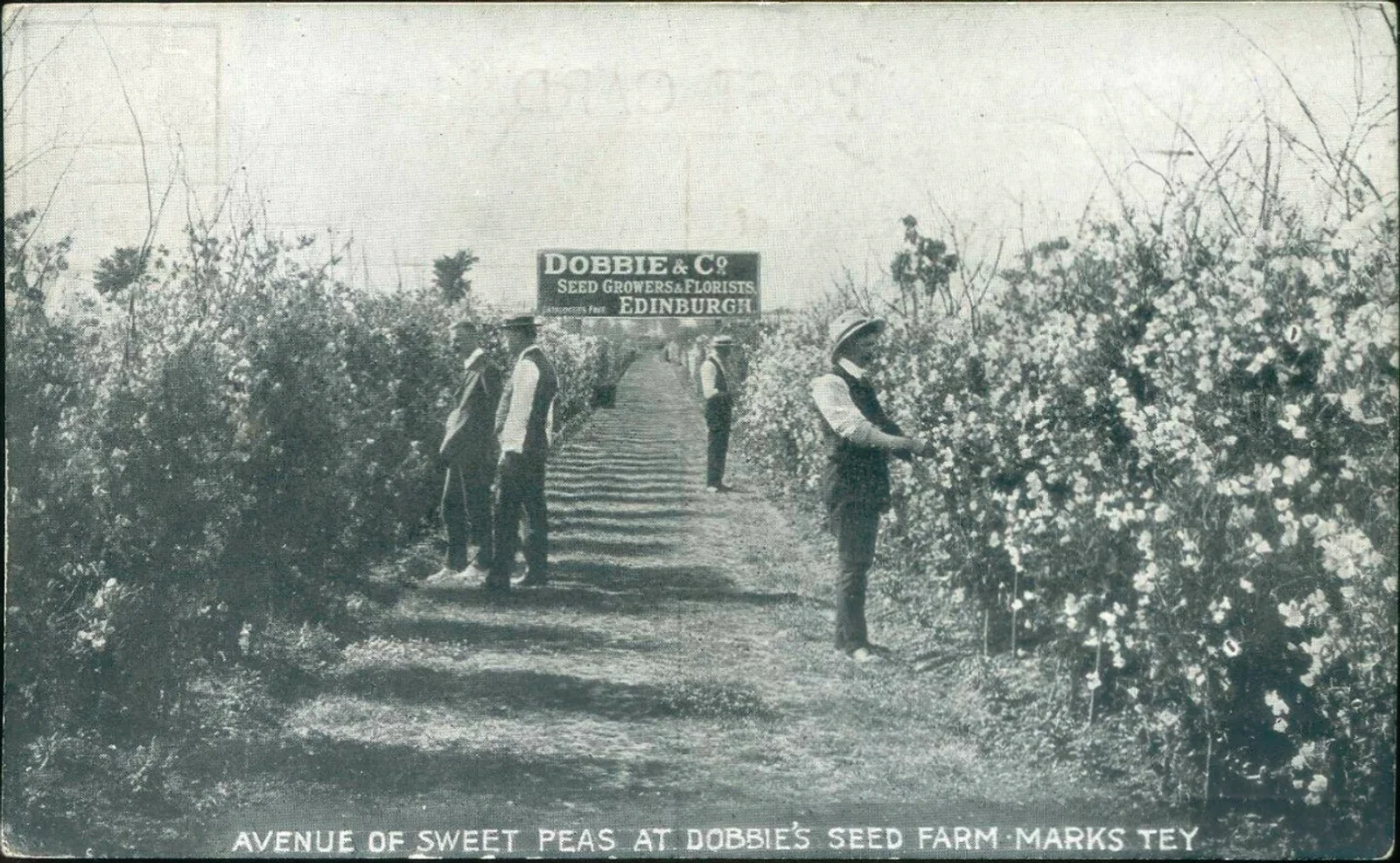
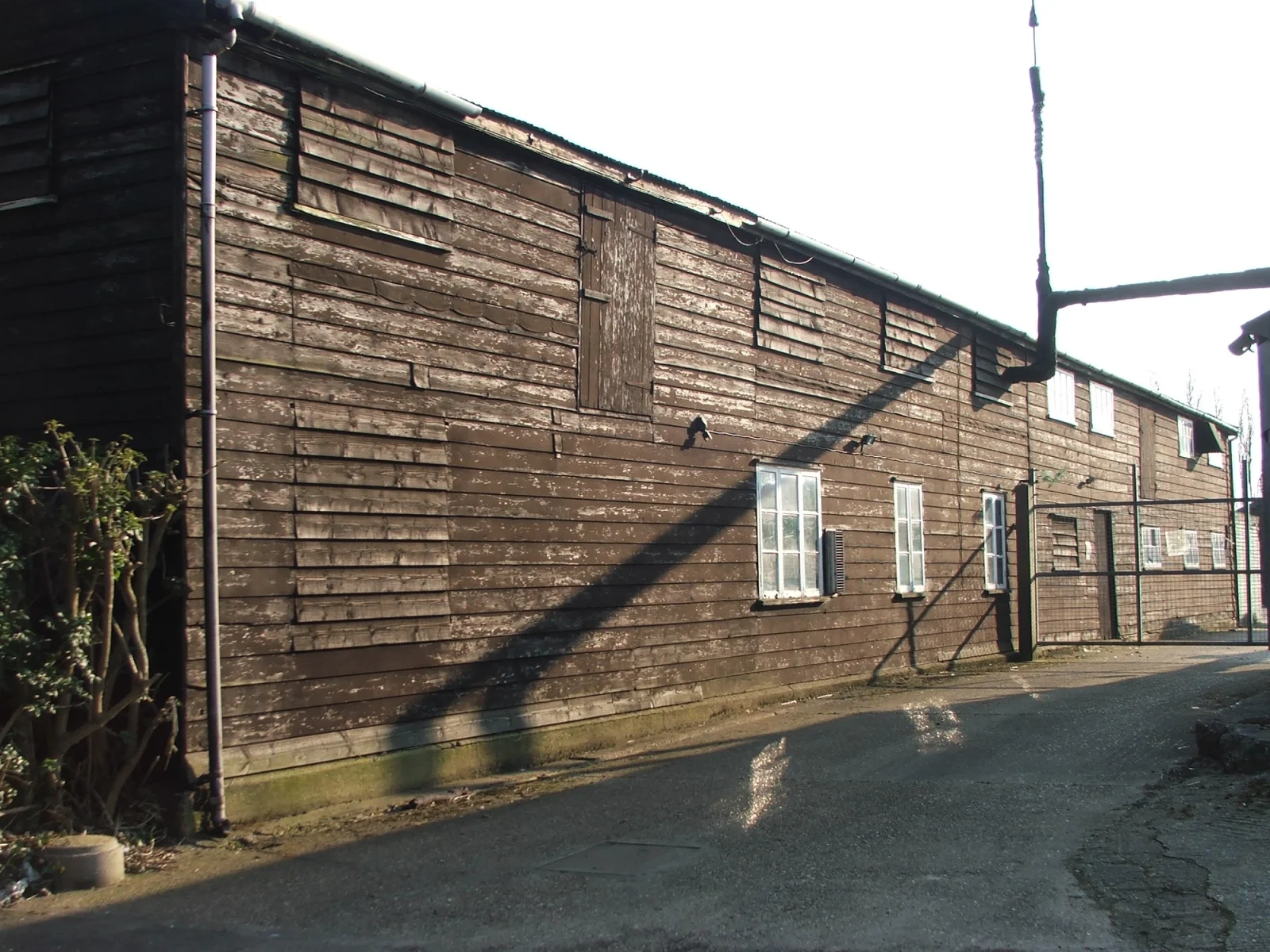
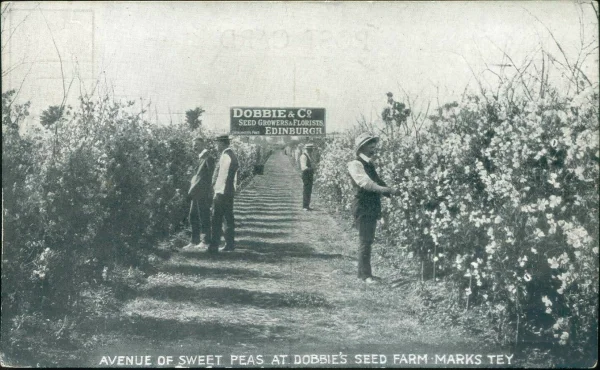
Other names in Marks Tey hint at the more recent past. Dobbies Lane is named for the Scottish seed firm Dobbie and Co who moved into the area at the beginning of the 20th century. Before this the lane that joined the old London Road to Jays Lane had been known as Green Lane.
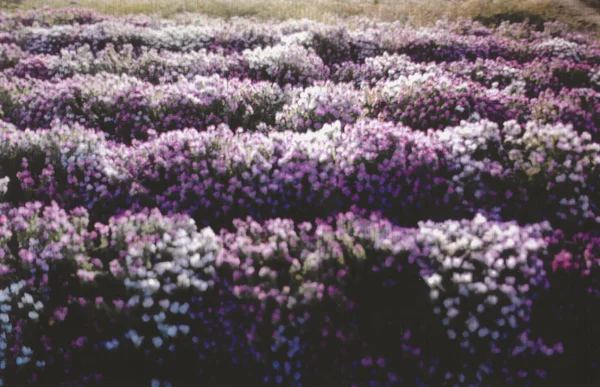
Dobbies grew all their sweet peas in Marks Tey and even named one for their neighbour, Mrs Jessie Collier. The Mrs Collier sweet pea is still a popular heritage variety today and has a strong scent and cream colour. The area was well known for its seed and flower production as Miss Phillbrick of Halstead wrote in 1923:
Oh! I can never forget those peas,
And that sweet close of day;
They lifted me from weariness,
And cheer me on my way,
They sent a glow of much delight,
As flowers alone convey:
Their mem’ry stays through darkest days,
Those sweet peas of Marks Tey
— Chelmsford Chronicle, 9 November 1923
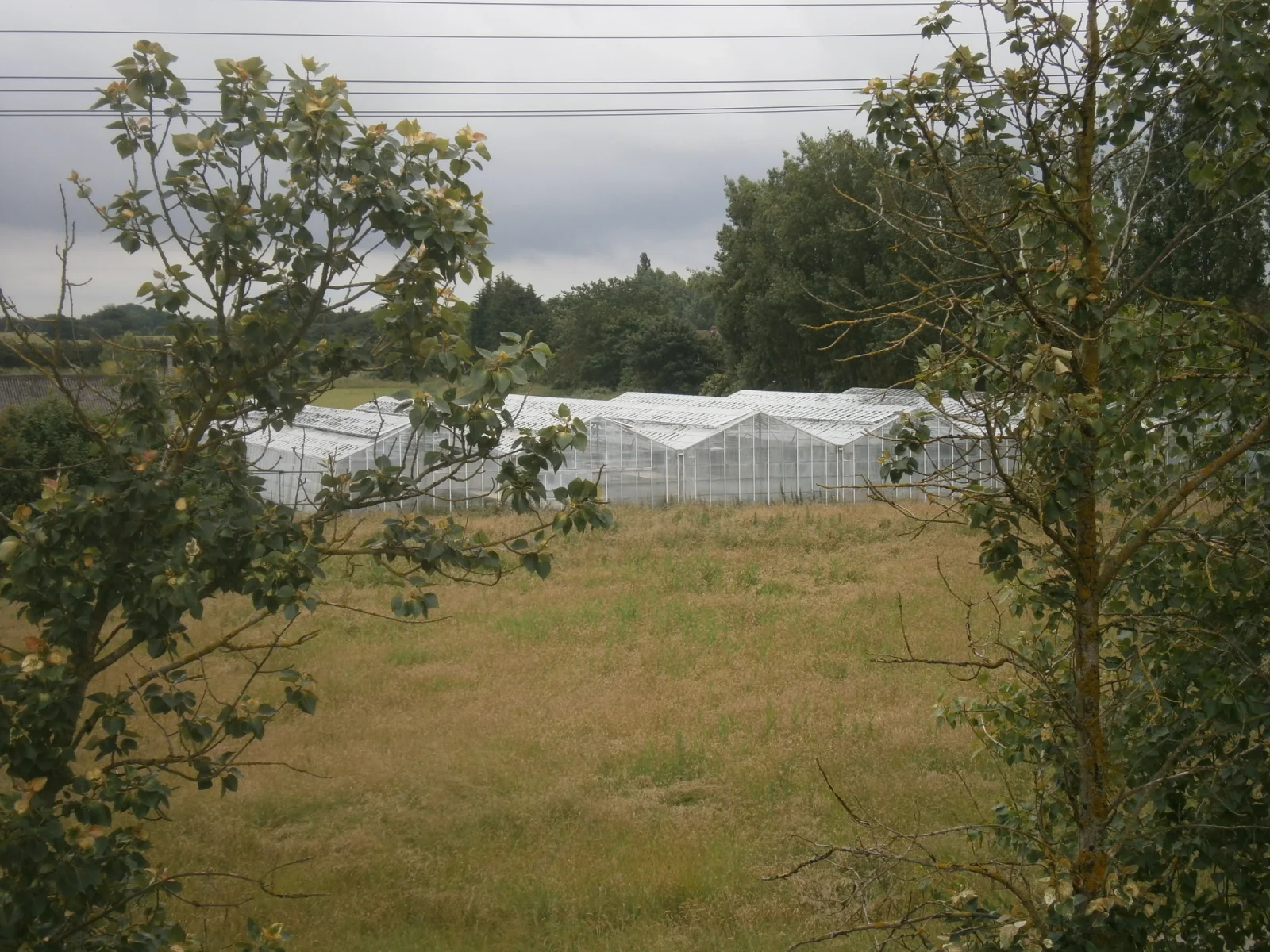
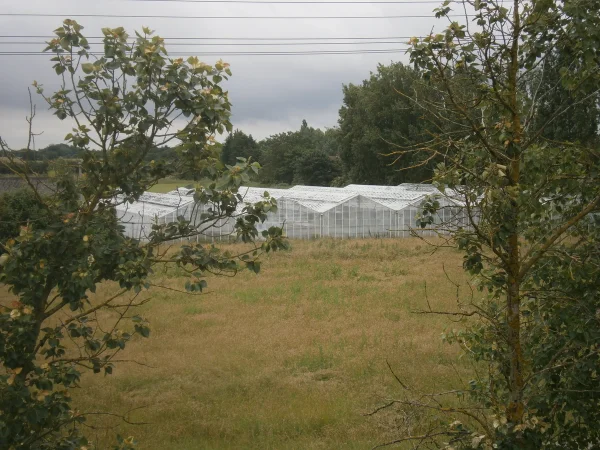
When Dobbies closed in 1956 the nursery became Bypass nurseries, well known for growing primroses.
Noisy rookeries
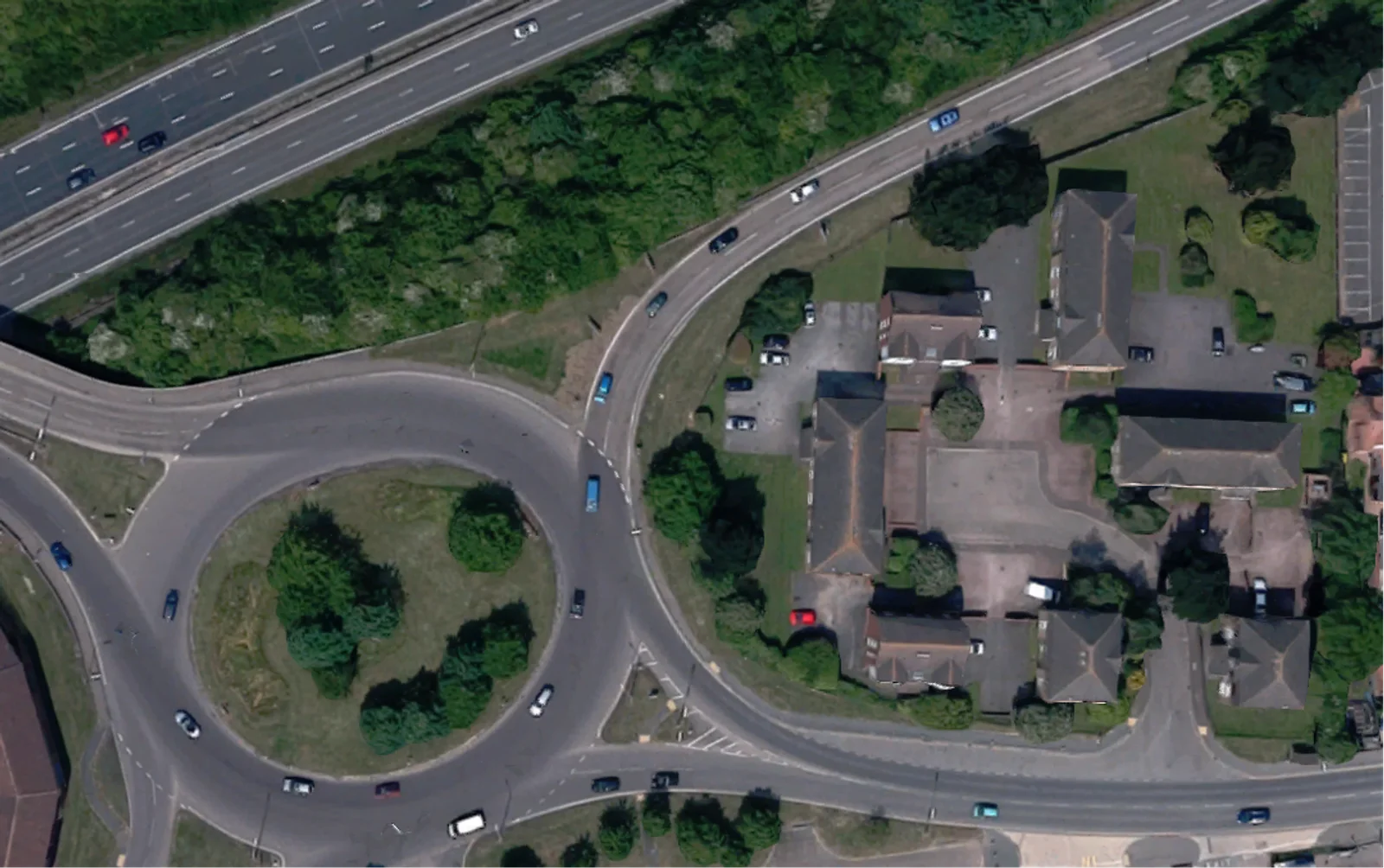
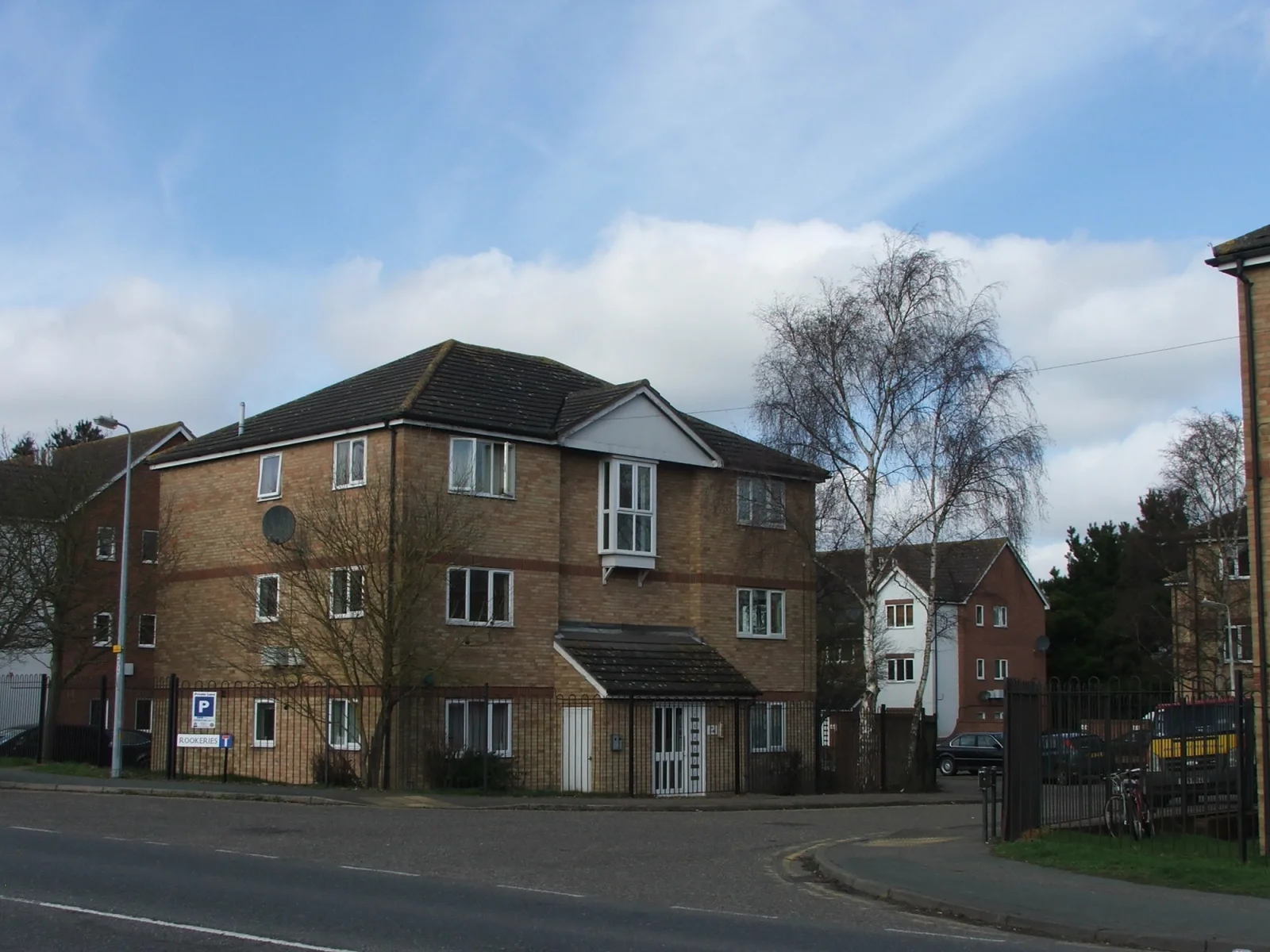
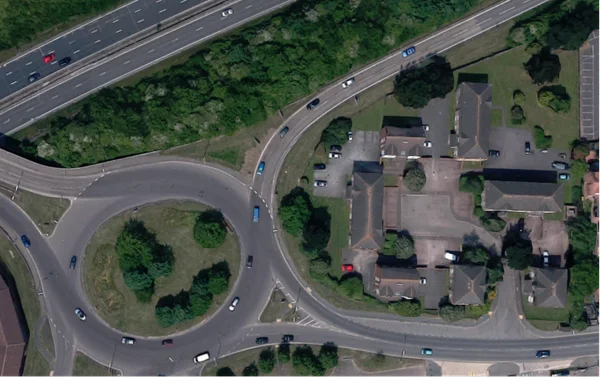
Returning to names inspired by the natural world, The Rookeries is the name for an apartment complex on London Road built in 1980s. An aerial view of the area in the early 1970s shows this space as an open field with a line of established elm trees opposite the Prince of Wales roundabout. At one time these trees provided nesting for noisy rooks and once the new flats were developed these were the inspiration for the name. Perhaps the rooks didn’t move that far as according to the Essex rookery count in 2021 there are 20 nests nearby at Marks Tey station.
Find out more
There are many clues to Marks Tey’s history in the names of buildings and roads that you will see as you walk or drive around.
Marks Tey Heritage Project is bringing together the history of Marks Tey in one place. If you’re interested in the name or history of your road or house take a look at these suggestions.
Explore more stories
INDUSTRIES OF MARKS TEY
Flowers & seeds
BRICKMAKING IN MARKS TEY
Brick is beautiful
TRANSPORT
Getting around Marks Tey
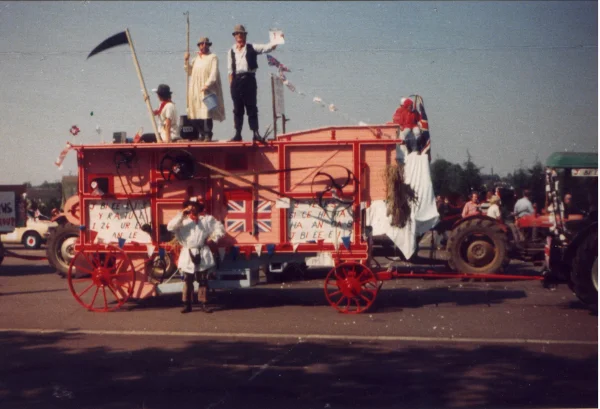
Marks Tey Carnival in the 1970s
Blooming Marvellous!
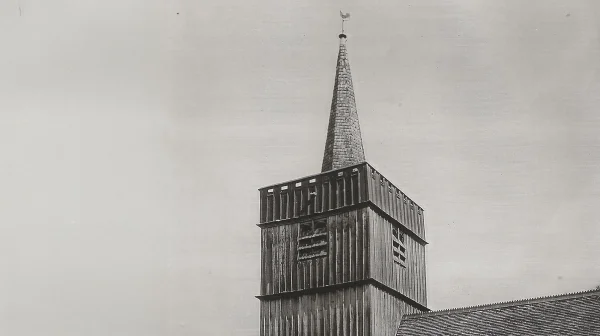
CHURCHES OF MARKS TEY
A spire and its stories
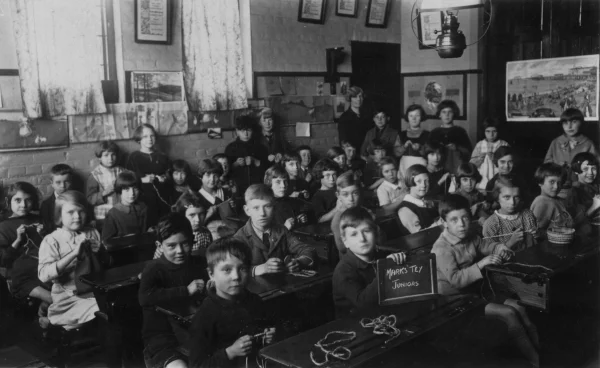
A SCHOOL FOR MARKS TEY
Marks Tey school days
BRENDA WILBY'S WALK
A walk around Marks Tey in the 1920s
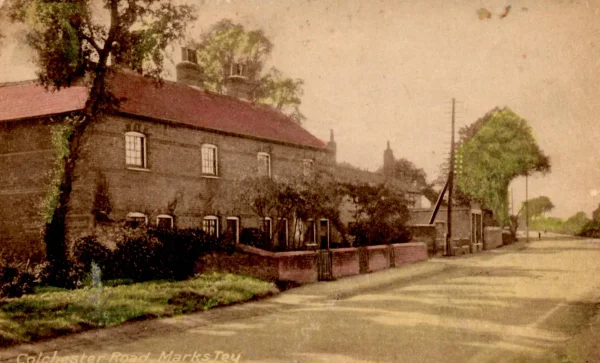
World War comes to Marks Tey
Wartime Marks Tey
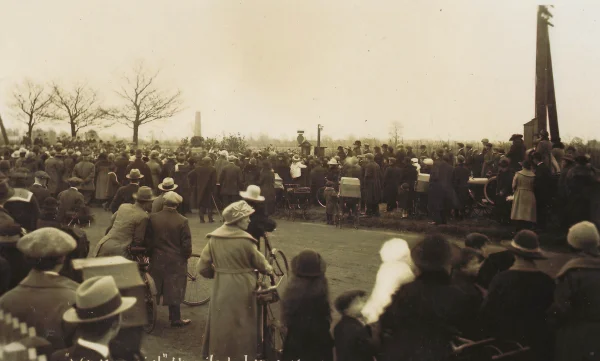
LIVING HISTORY TALKS
Origins
LIVING HISTORY TALKS
Building of the Church

LIVING HISTORY TALKS
Marks Tey Cricket Club
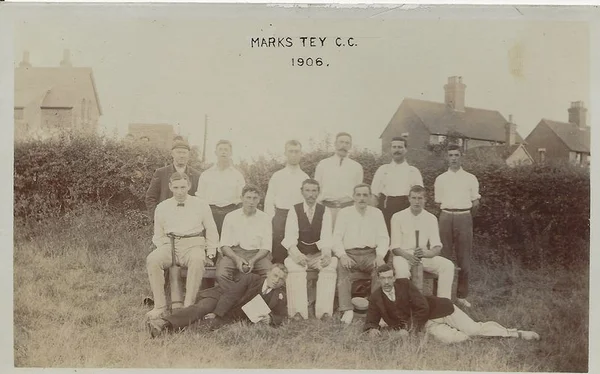
LIVING HISTORY TALKS
Impact of the Railway
LIVING HISTORY TALKS
The Famous Case of William Steel
LIVING HISTORY TALKS
1944