Marks Tey school days
A SCHOOL FOR MARKS TEY
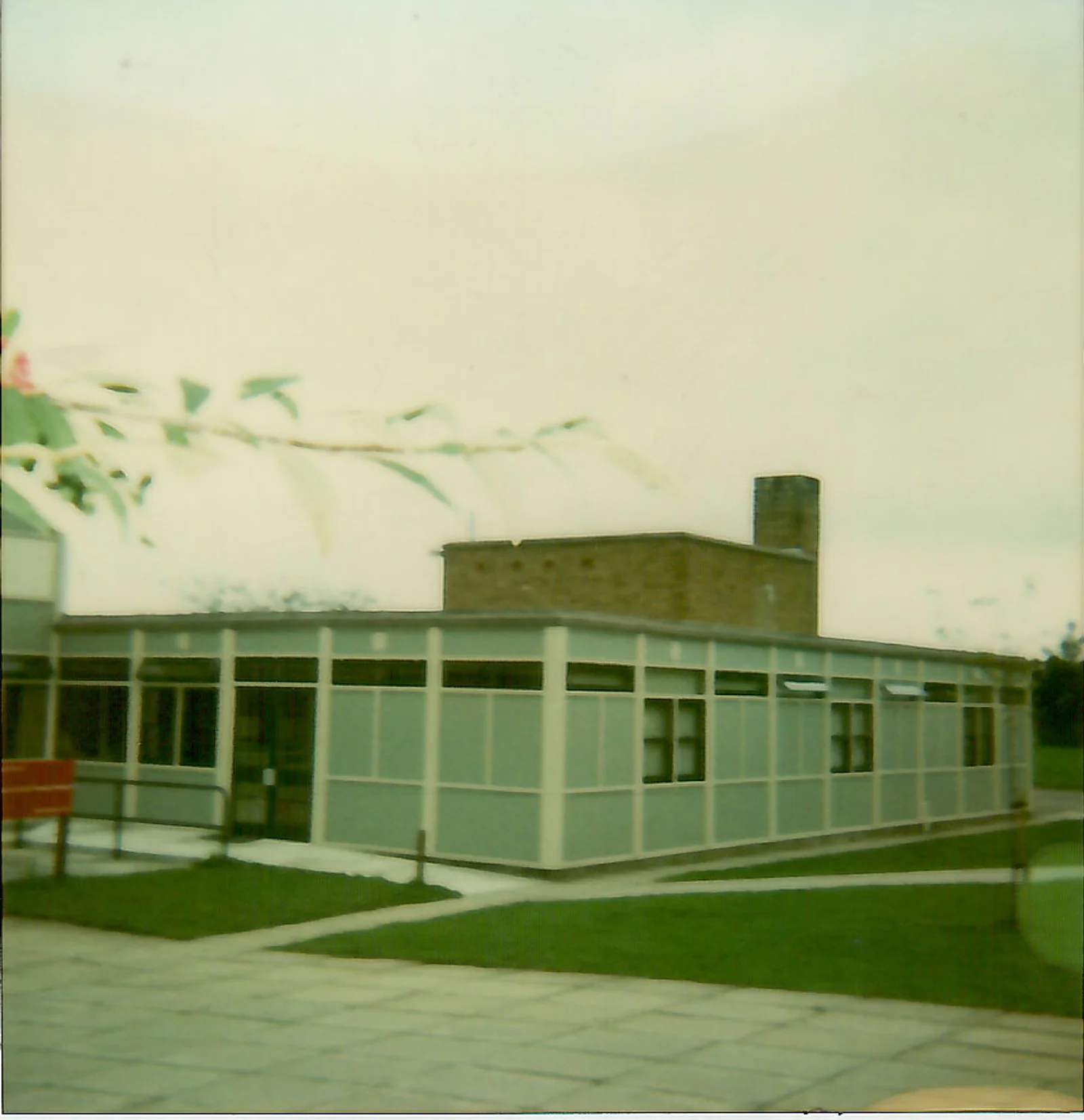
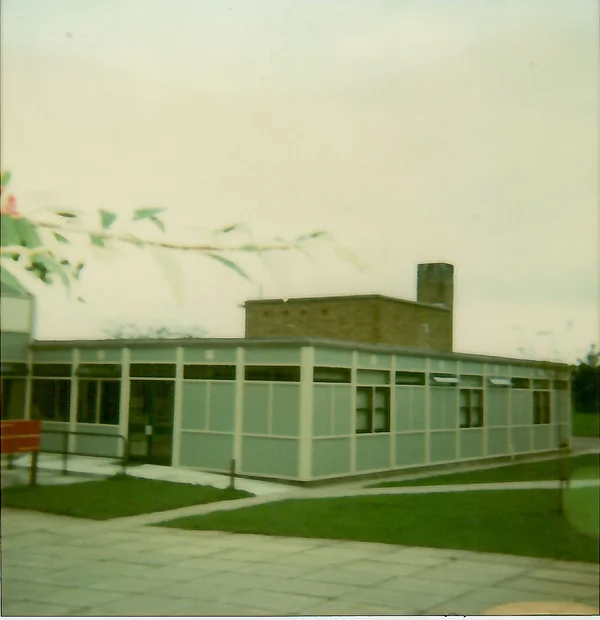
In 1863 a fine new school was built for the children of Marks Tey. One hundred years later it was demolished. Our project researcher finds out more about this first school building and why moving the school to its current location in the 1960s was so needed.
Explore story →
125th birthday
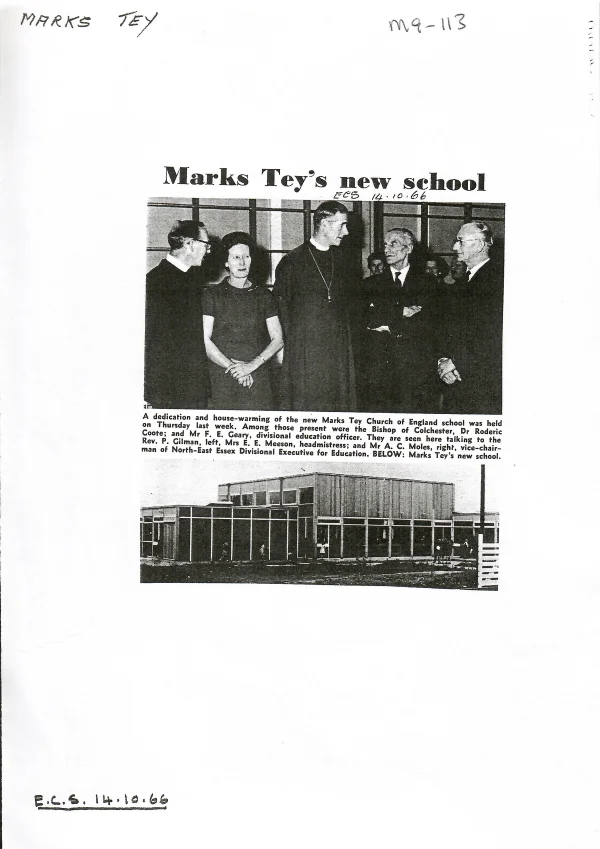
St Andrew’s Church of England Primary School celebrated its 125th birthday in 1988, just 22 years after moving to its new location in Mandeville Road. Teachers, parents and visitors packed into the modern school hall to listen to the children read extracts from the school logbooks carefully researched by Miss Gant. The story started in 1863 when St Andrew’s opened as the National School in Marks Tey, and progressed with notes of interest about everyday life, pupils and teachers, and national events such as the FA cup winners in 1901 (Tottenham Hotspur!). Familiar hymns and songs, All Things Bright and Beautiful and Good-Bye-Ee, were sung with much enthusiasm no doubt, as the audience went on a journey into their own school days and those of the many families of Marks Tey before them.
‘A handsome and commodious school-house’
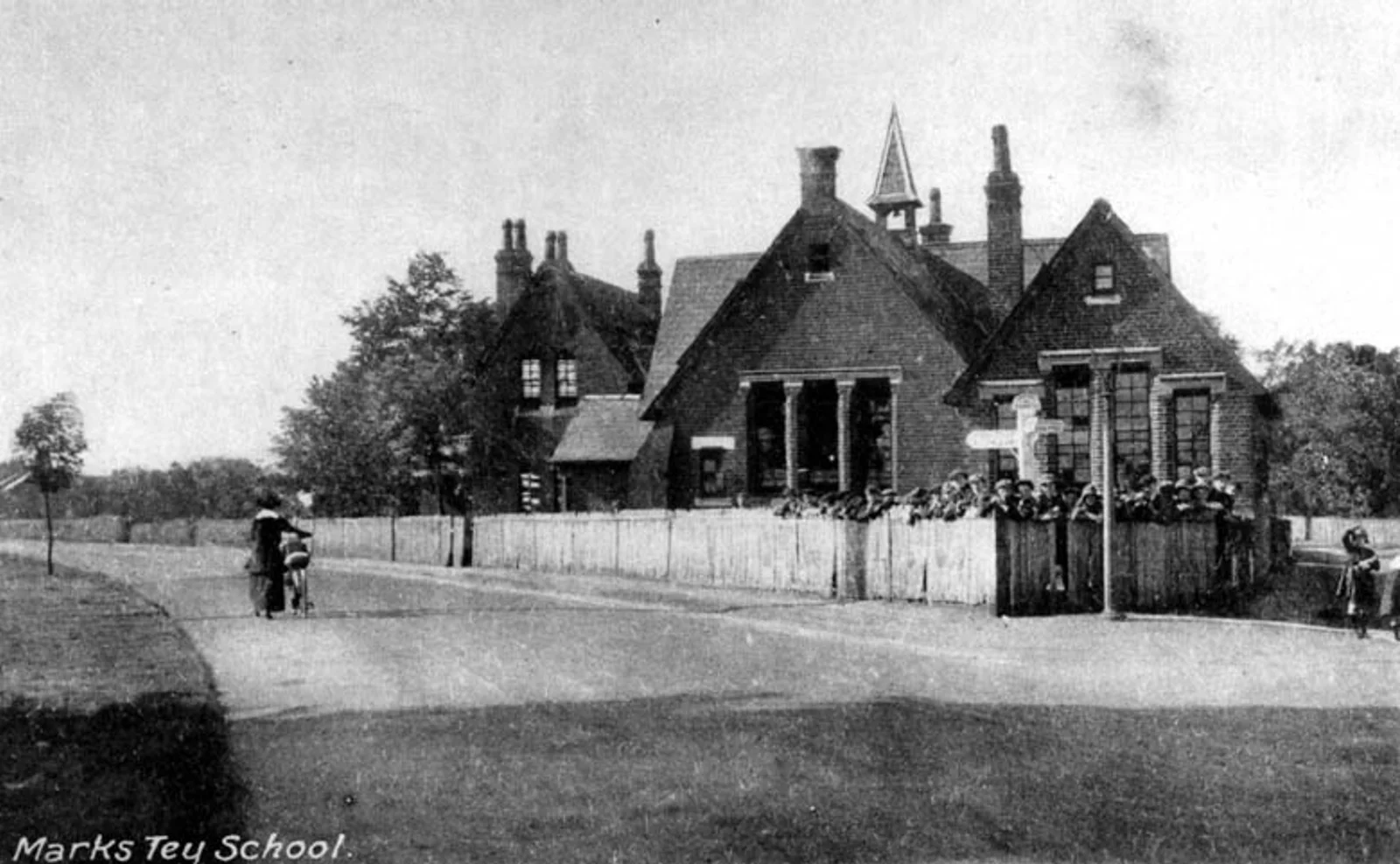
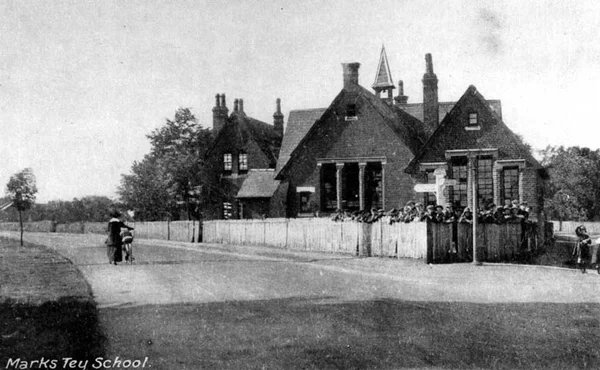
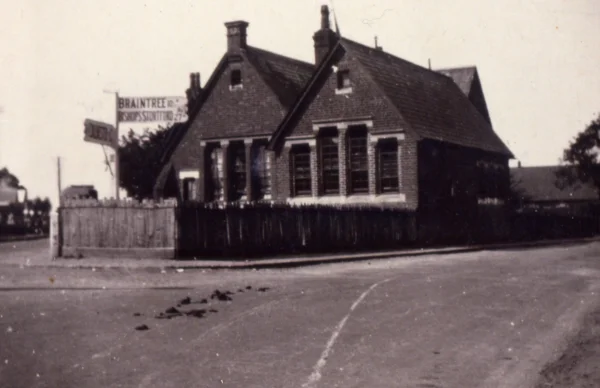
Plans for a school in Marks Tey began in the early 1860s. A parcel of land was gifted by Mr Robert Chaplin as the site for the new building. The site was bounded on two sides by the roads from Colchester to Coggeshall and Colchester to Kelvedon and only met the requirement to be ¼ acre in size if it took in the public pump and well. Local builder J Turner, who lived in nearby Rice cottages, translated the plans drawn up by London architect G E Laing and by October 1863 the building was ready to welcome a mix of local boys and girls.
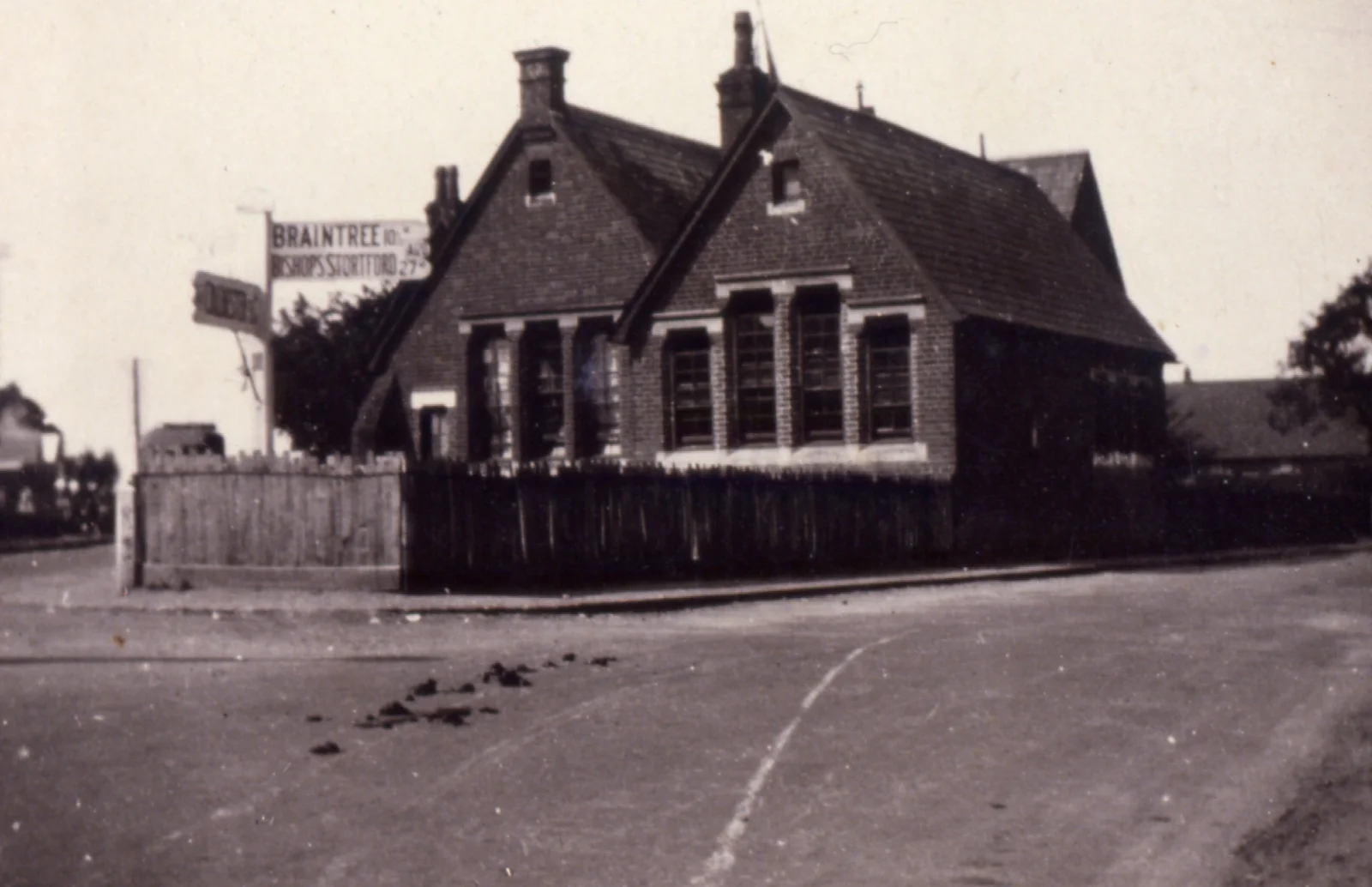
Marks Tey School
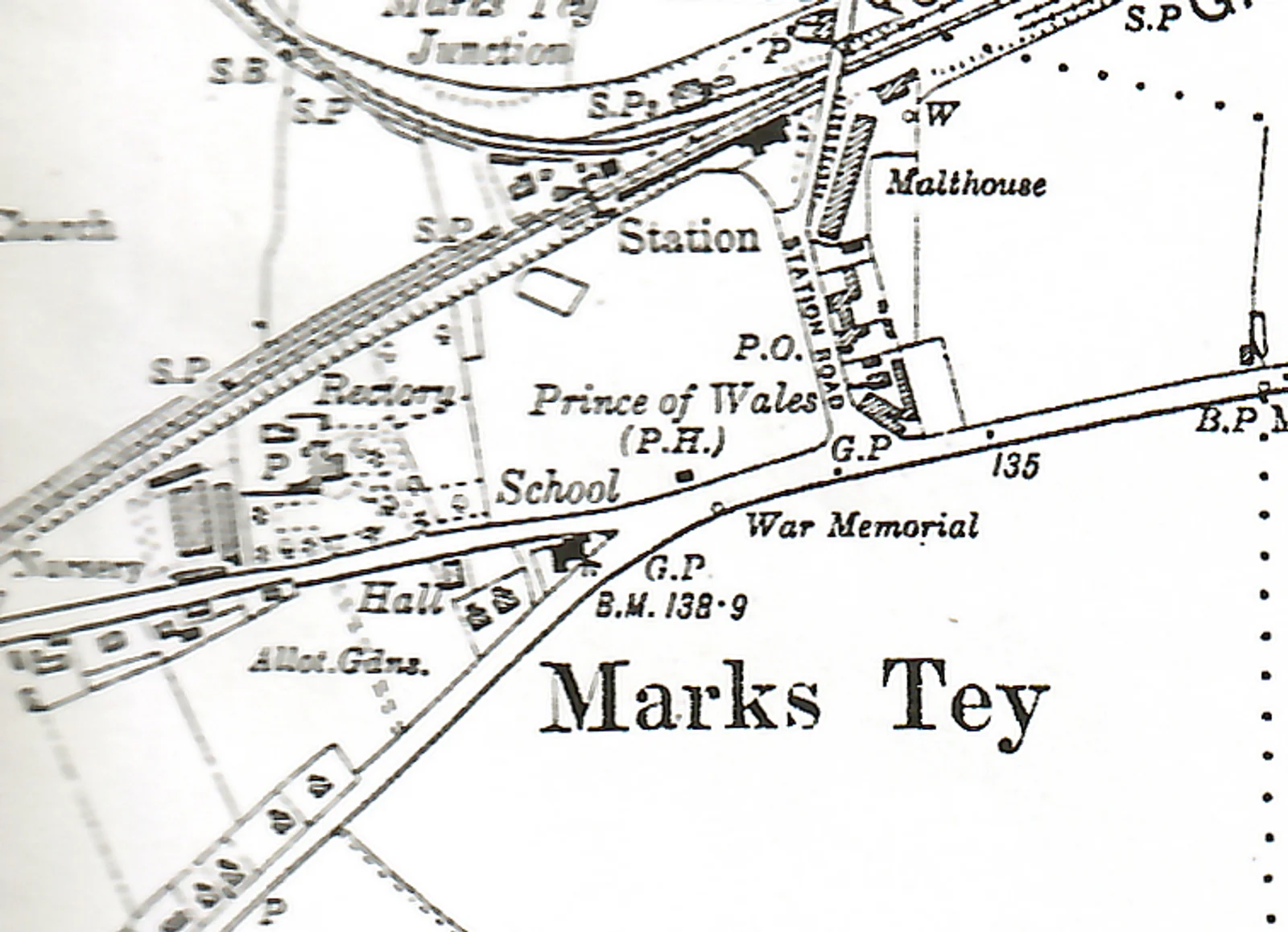
Marks Tey National School on its 25 rod plot and bounded by two roads, 1923.
A handsome and commodious school-house for the poor children of Marks Tey and the adjoining parish of Little Tey, has just been erected on the green at the junction of the London and Coggeshall roads. It is intended to accommodate 60 children.
- Essex County Standard, 16 October 1863
A school day
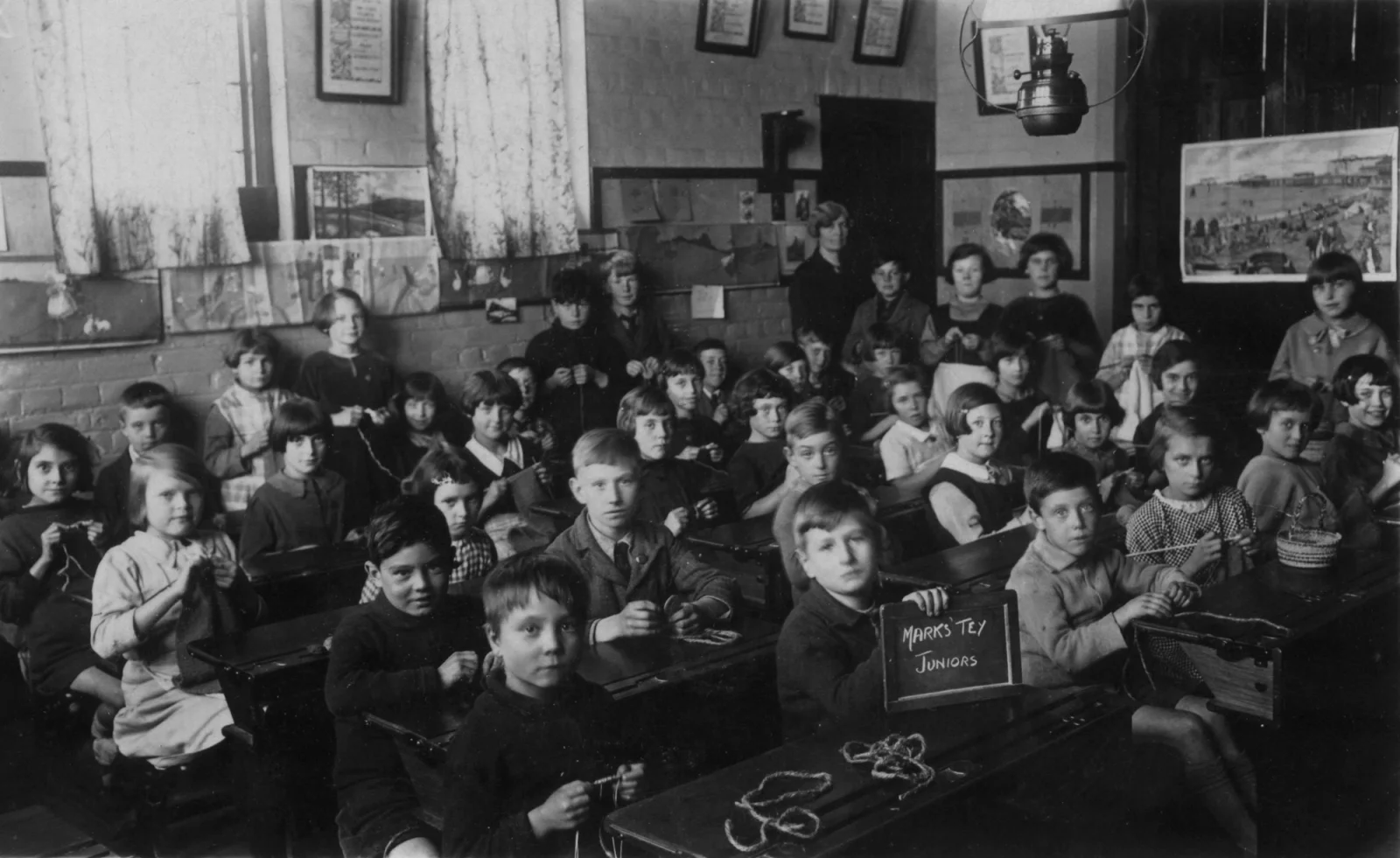
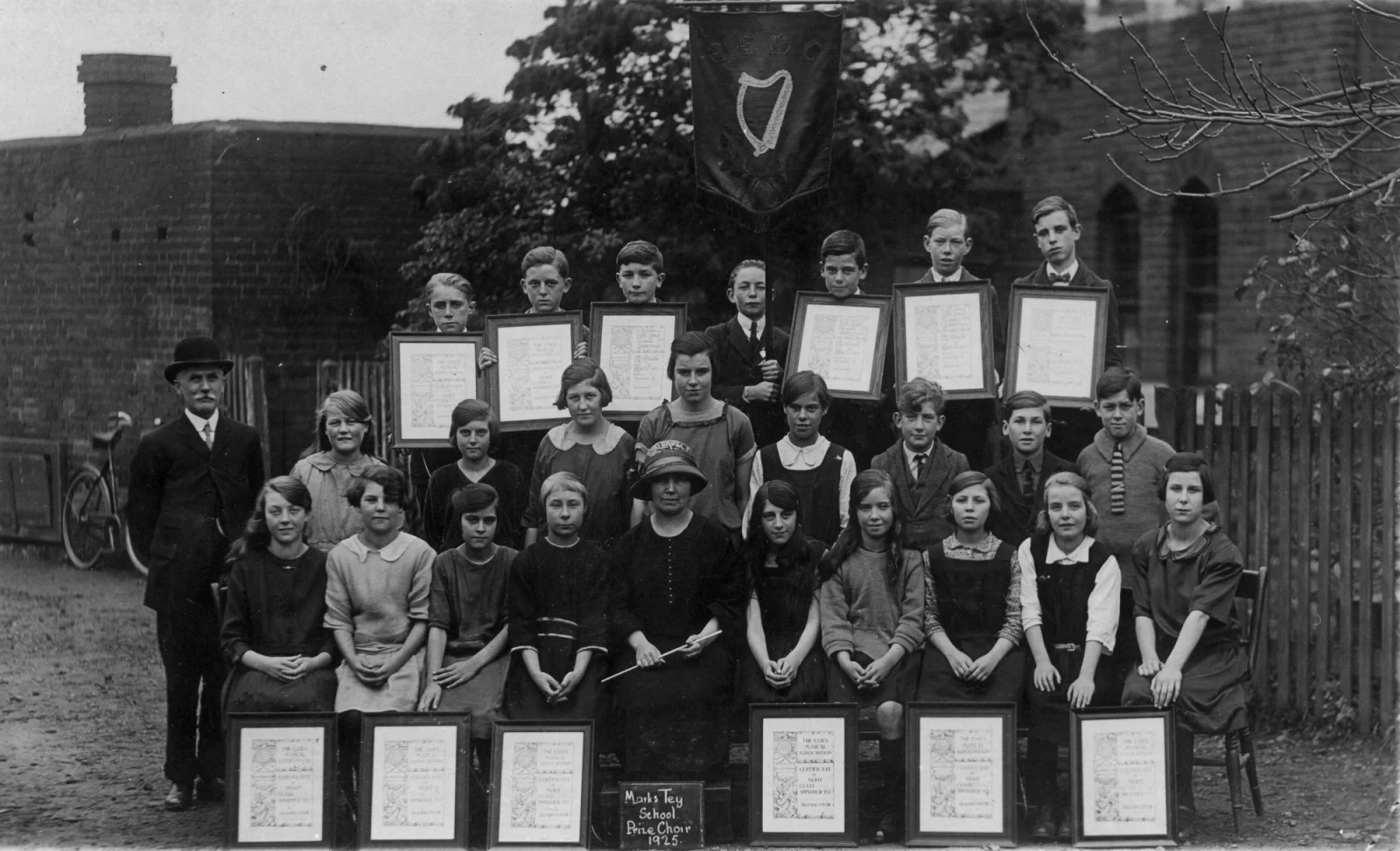
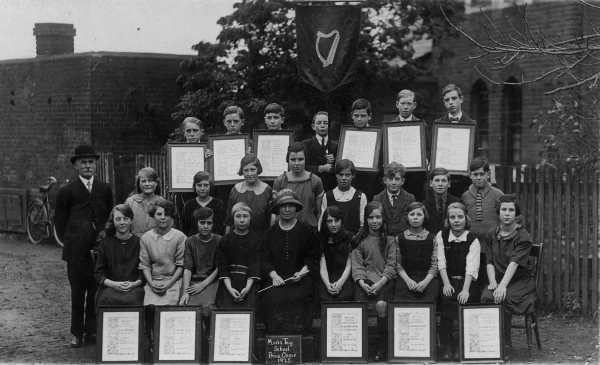
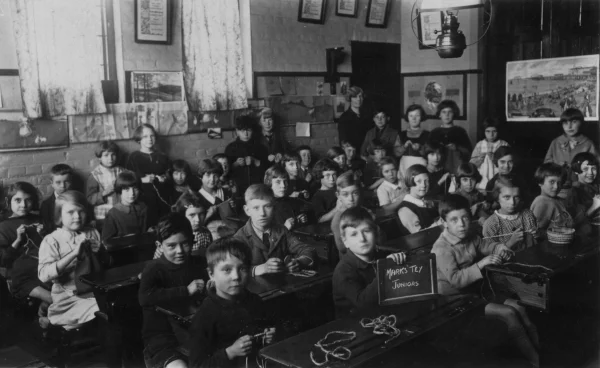
Just like now, the school day was a busy one, with students learning the 3Rs - Reading, Writing and Arithmetic - on their slates, doing Bible Study, rote learning and lots of singing. The Marks Tey choir was award winning. Object lessons were popular. A wide range of different subjects from snow to cabbages were chosen for the teacher to talk about and for the children to answer questions on. There was plenty of time for needlework and handicraft. Girls worked on their embroidery samplers, stitching the alphabet and bible verses to practice and demonstrate their skills. Over time clay modelling, mat weaving, stick laying and bead threading were added as classroom activities.
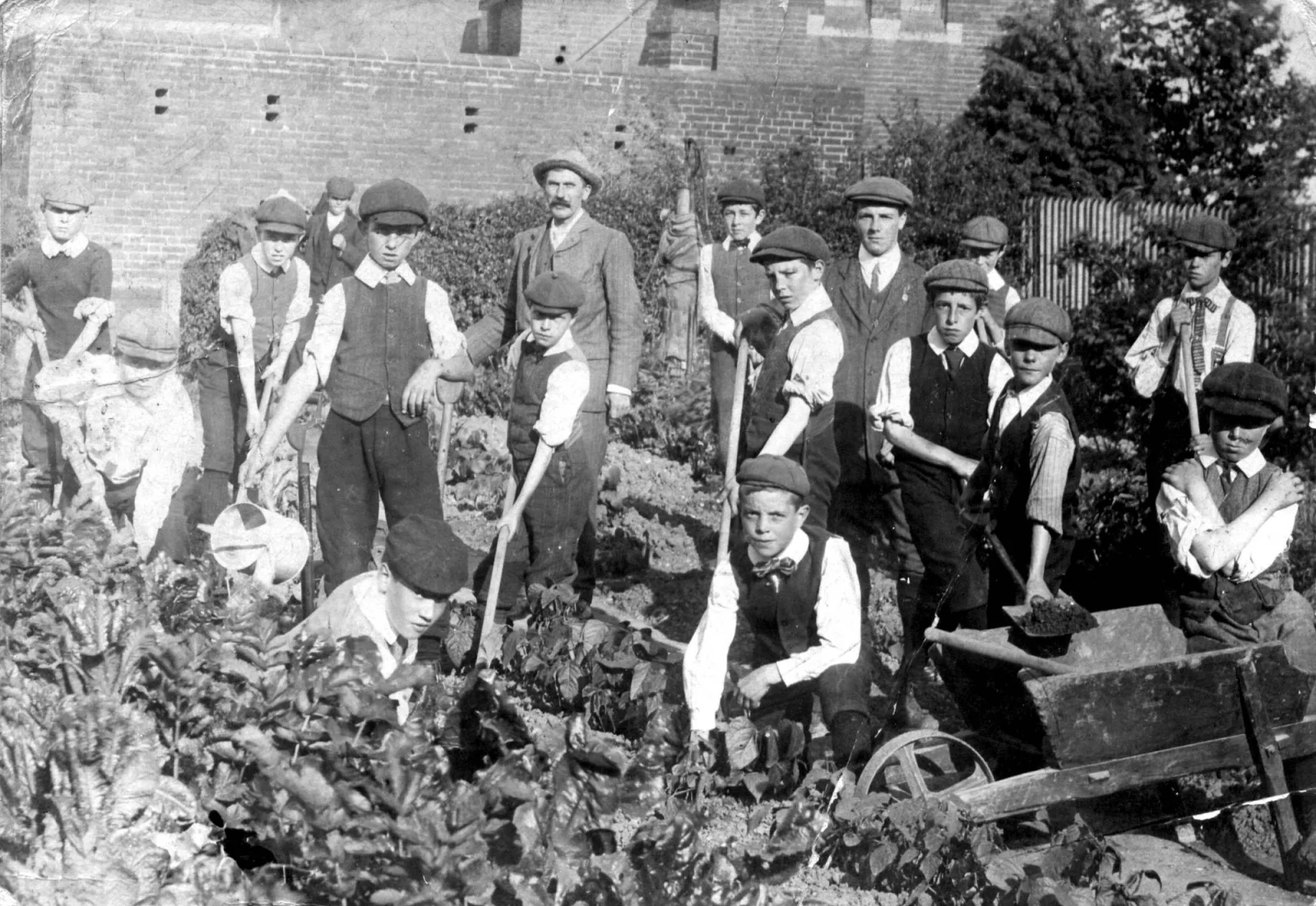
The Pea Picking Holidays
Until 1891 parents were required to pay the ‘school pence’ that contributed to the cost of their children’s education. Children took the money into school each week, which was then collected up and taken to the Rectory across the road. The parent of one family of four managed to negotiate a reduction with the head teacher, and paid 4d for the children a week instead of the 5d usual charge.
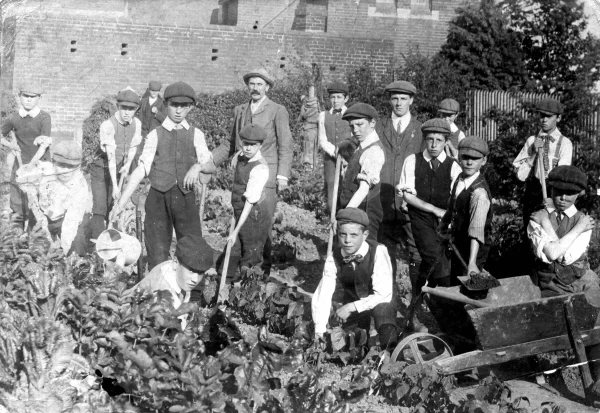
Children were regularly absent because of illness or because bad weather (and bad roads) made getting to school on foot difficult. They also missed school to help in the fields. Many children were away each February for ‘dropping’, otherwise known as pea planting, and were away again in June to help with the pea harvest. The ‘Pea Picking Holiday’ closed the whole school for the month of June. Children went back to their classes until the middle of August when school closed again for the ‘Harvest Holiday’. This time children might be helping with the hay making, picking up potatoes and other field work. In September 1918, the school closed so the children could pick blackberries for the Ministry of Food’s jam making drive. They picked a remarkable 1093 pounds of blackberries.
1 October 1866: School reopened after the harvest holiday. Order bad. Attendance fair. Children very noisy. 21 March 1873: The school has been very thin all the week so many being away dropping.
- Marks Tey School Log Book
‘the incessant rush and clamour of traffic’
Education at Marks Tey School was good but the school began to outgrow the site. At first the school’s sixty children shared one large classroom and children of different ages sat together on long benches. By 1872 the infants and juniors needed separating, so a large curtain was hung across the room as a divide. By the 1950s, the old church hall at the back of the site was rented as an additional classroom and canteen. It wasn’t ideally suited for this purpose as there was an open fire at one end and poor lighting throughout. To remedy the lighting situation the headmistress was advised to buy new lampshades!
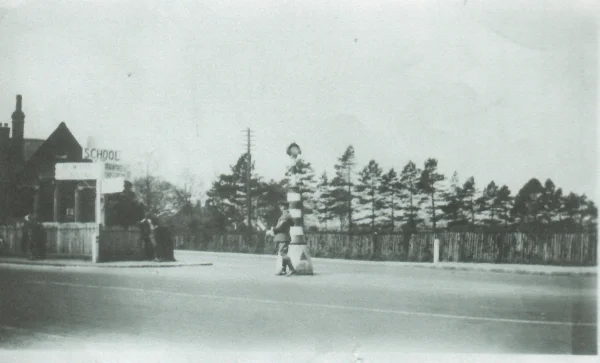
As car ownership increased in the 20th century, so the impact was felt in the school rooms. In 1906 the Parish Council requested improved signage near the school to alert motorists that there were children nearby. In 1911, a school inspector concluded that traffic noise was seriously interrupting lessons, and that safety was a real concern after multiple accidents involving children outside the school. At one dinner time in 1925, Mr Clarence Hawkins ran his car into the school railings and knocked a portion of them down. Shortly after this when the children arrived at school in the morning, they found the railings had been knocked over by a car in the night.
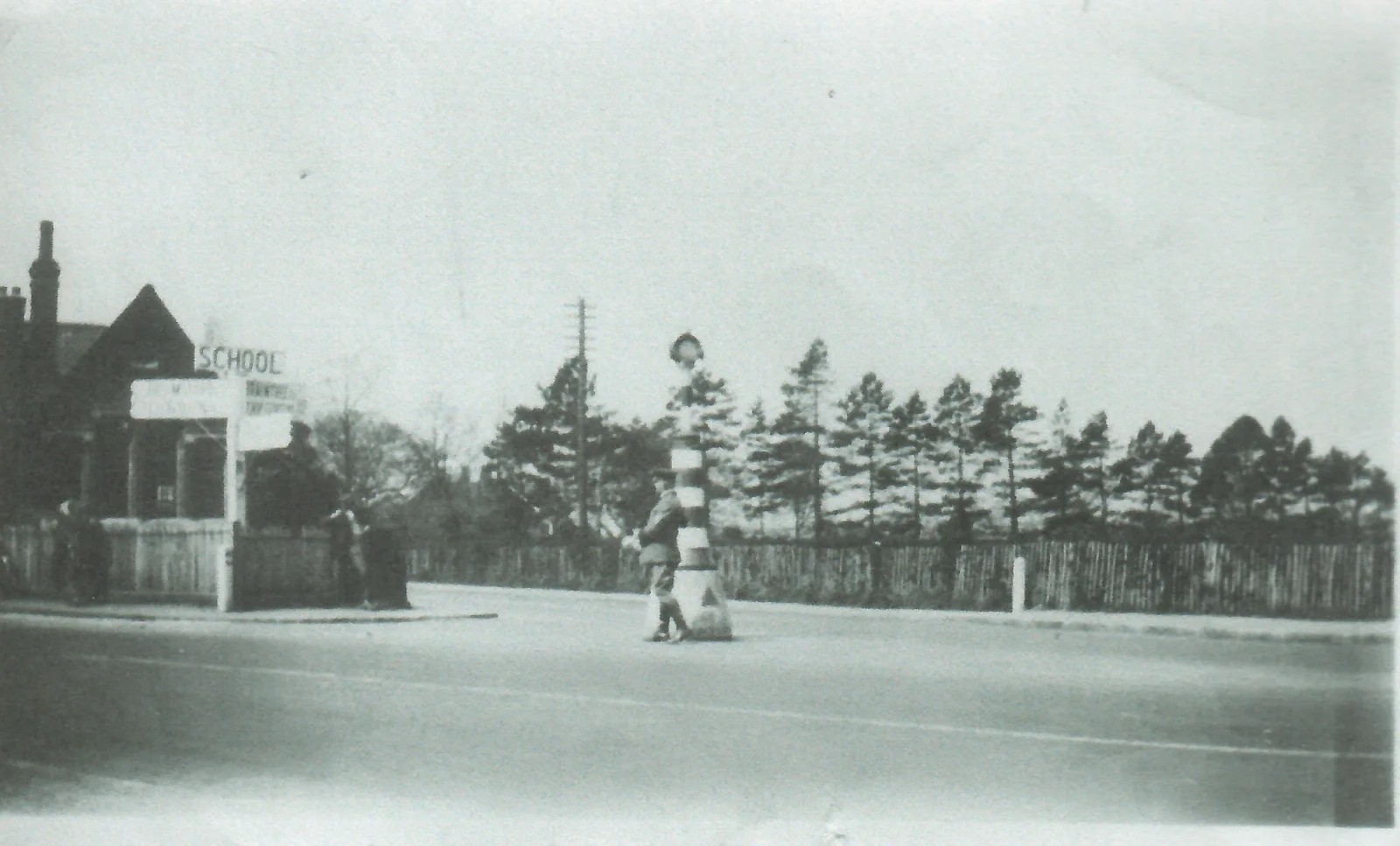
Signage and AA man. ‘At the road junction, where the school stood, the boys playground came almost to a point, an AA man stood there in the road directing traffic towards the London Road or Coggeshall Road’ From Brenda Wilby’s ‘The Marks Tey I remember’.
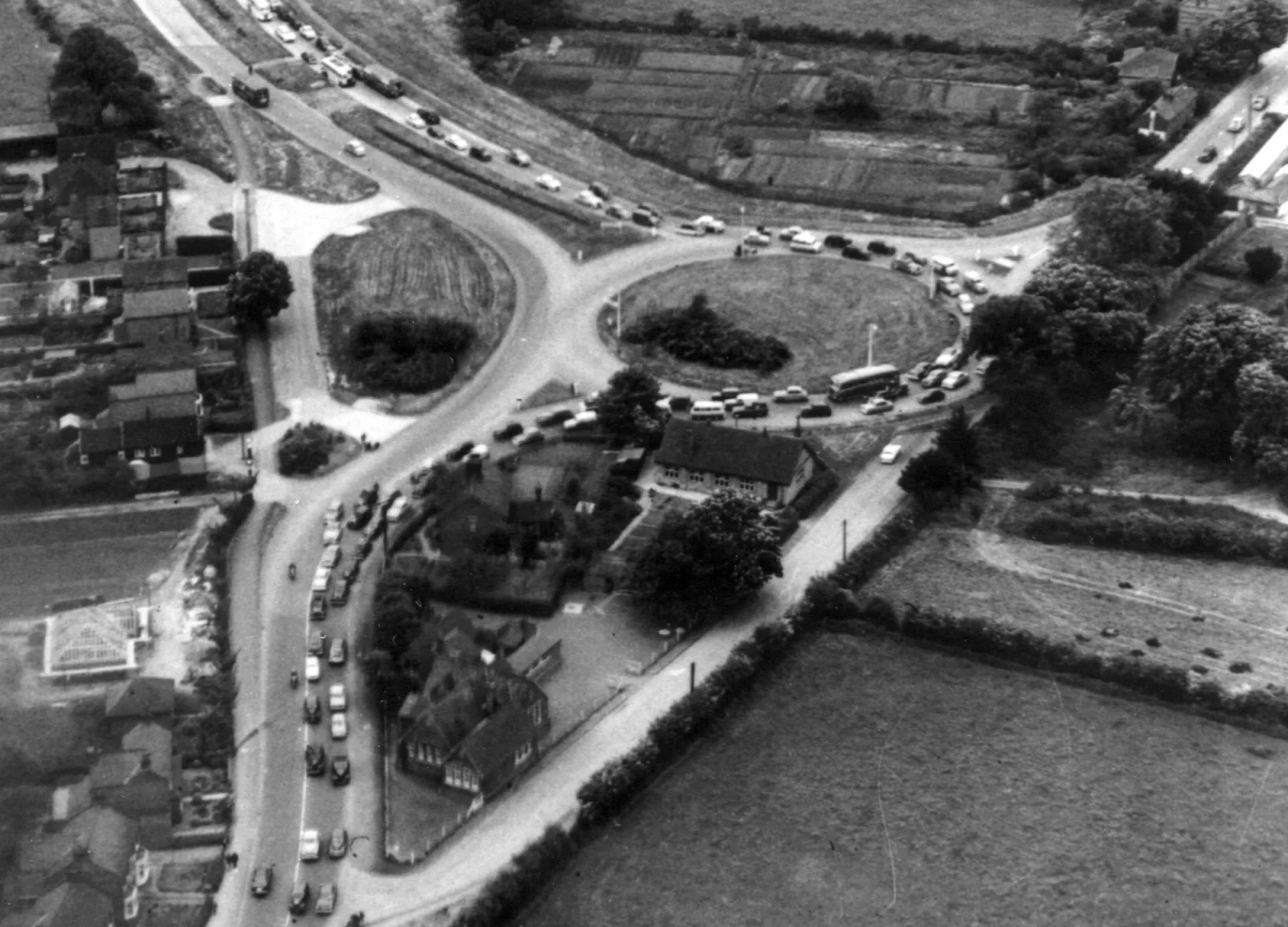
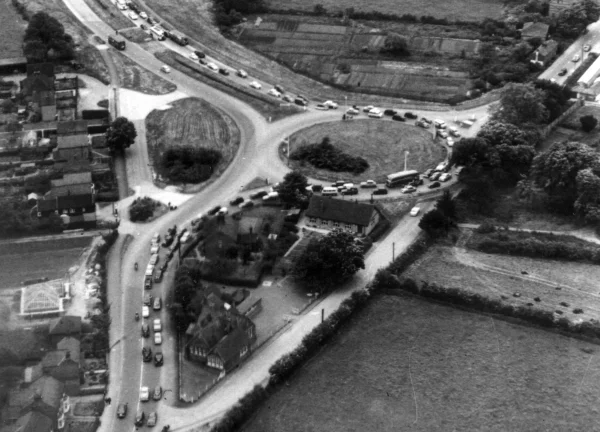
Aerial photo of Marks Tey School. In 1956 inspectors described ‘on one side of the School is the incessant rush and clamour of traffic, while on the other the road has been made into a cul-de-sac, and serves as the school’s playground. There remains nevertheless a right of way, and as games and physical activities have frequently to be interrupted to allow the passage of vehicles, the use of the road is not without an element of danger.’
Find out more
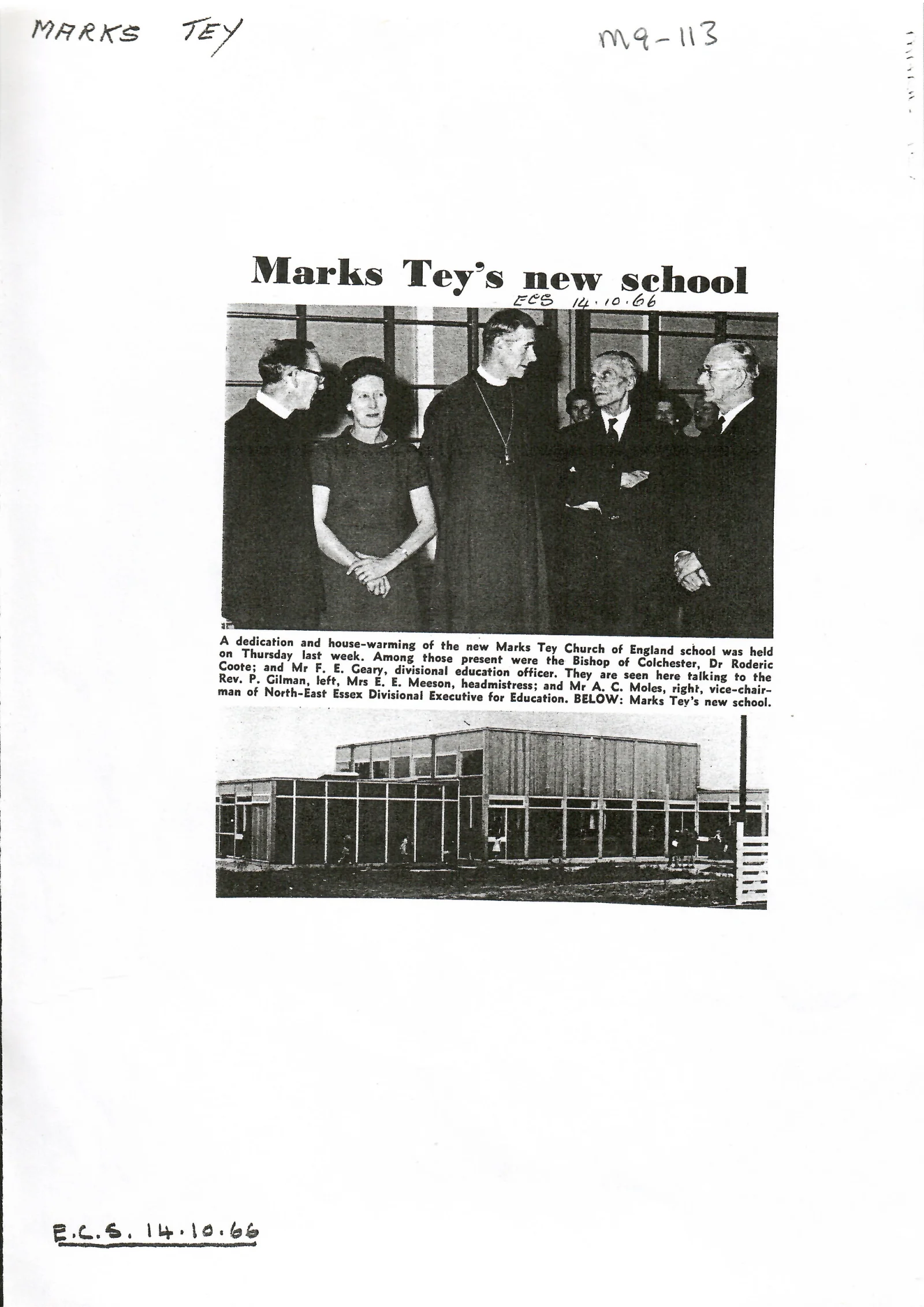
In 1968 the old school buildings were demolished to make way for the A12 road improvements. One resident reflected ‘it seems sad to think we once played where now the traffic roars past at great speed’, but the new school in Mandeville Road was already open and busily getting on with life in its quieter and more spacious location. The Marks Tey Heritage Project is bringing together the history of Marks Tey in one place. To find out more about school days have a look at other items in our collection.
Archive results related to Marks Tey school days
Explore more stories
INDUSTRIES OF MARKS TEY
Flowers & seeds

BRICKMAKING IN MARKS TEY
Brick is beautiful
TRANSPORT
Getting around Marks Tey
Marks Tey Carnival in the 1970s
Blooming Marvellous!
CHURCHES OF MARKS TEY
A spire and its stories
BRENDA WILBY'S WALK
A walk around Marks Tey in the 1920s
World War comes to Marks Tey
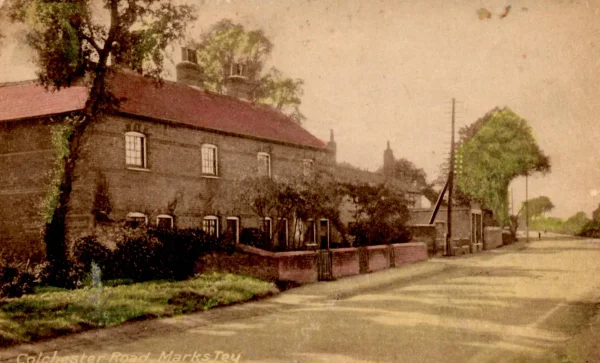
Wartime Marks Tey
LIVING HISTORY TALKS
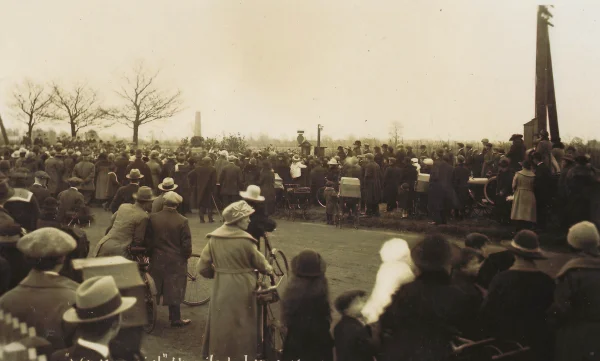
Origins
Places names in marks tey
Tey at Elms & other names
LIVING HISTORY TALKS
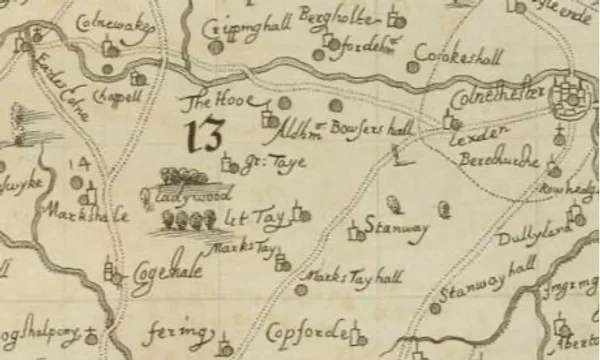
Building of the Church

LIVING HISTORY TALKS
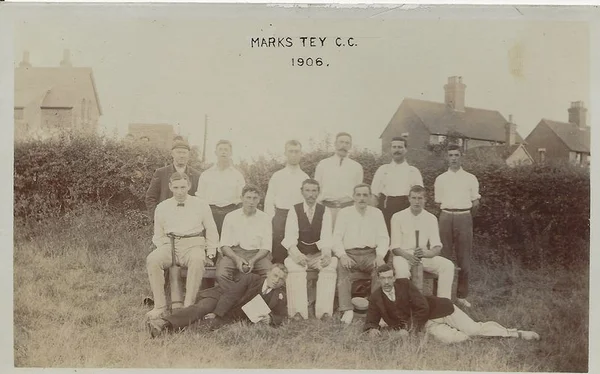
Marks Tey Cricket Club
LIVING HISTORY TALKS
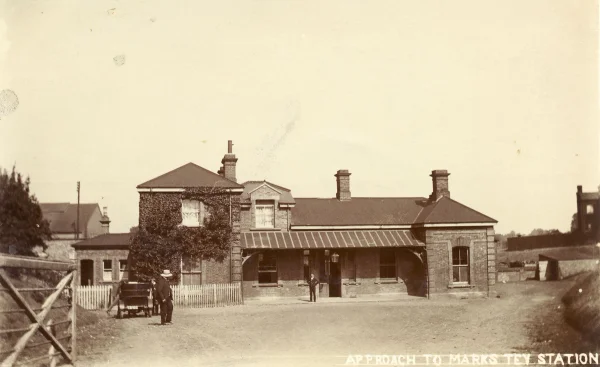
Impact of the Railway
LIVING HISTORY TALKS
The Famous Case of William Steel
LIVING HISTORY TALKS
1944