Impact of the Railway
LIVING HISTORY TALKS
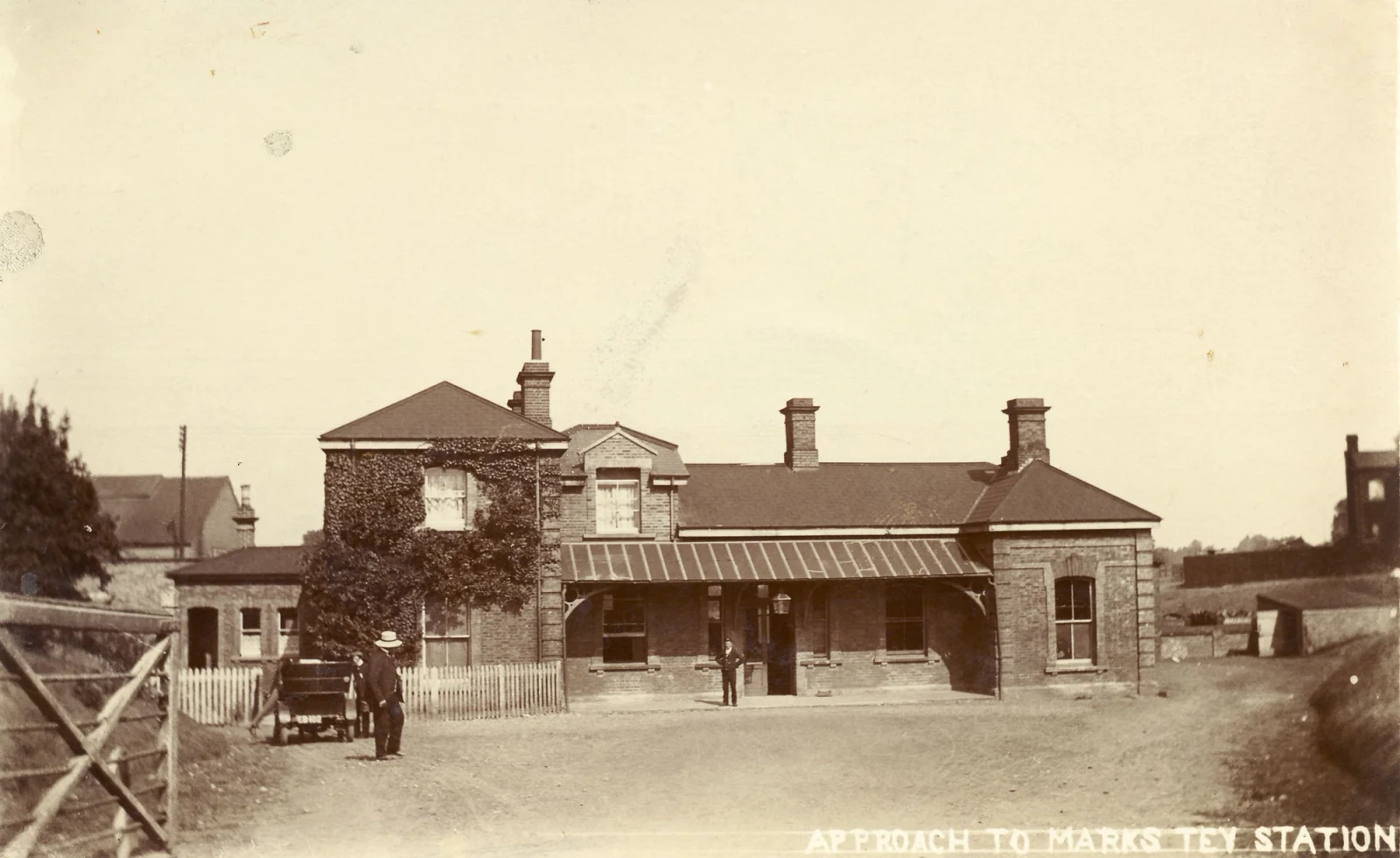
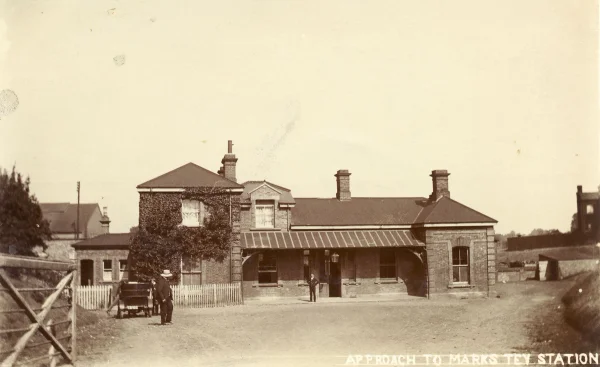
The coming of the railways was a pivotal point for Marks Tey.
This short story was originally shared as a talk by Andrew Waters at the Living History event in St Andrews Church, November 2025, as part of the Marks Tey Heritage Project.
Explore story →
EARLY 1800s
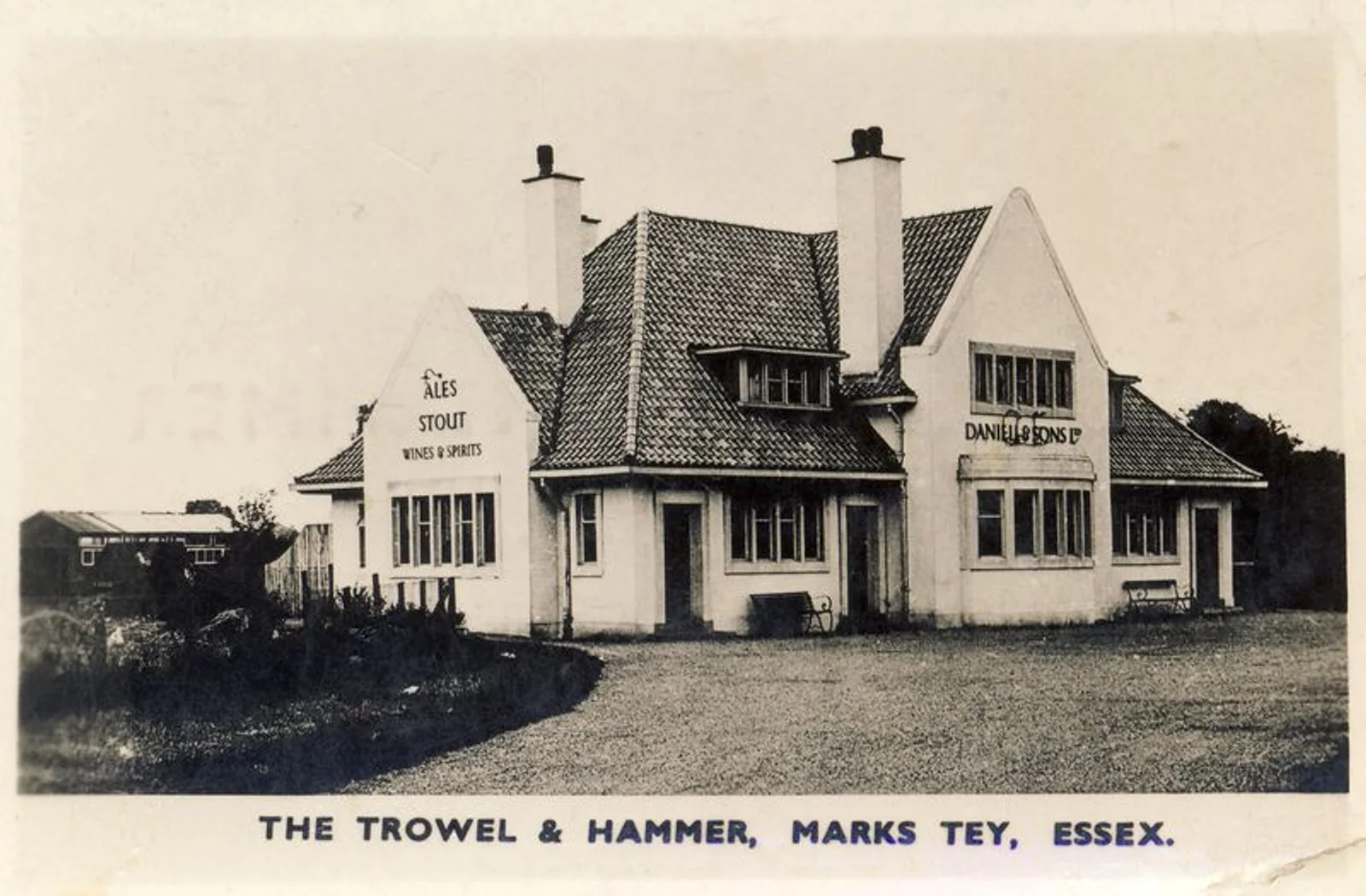
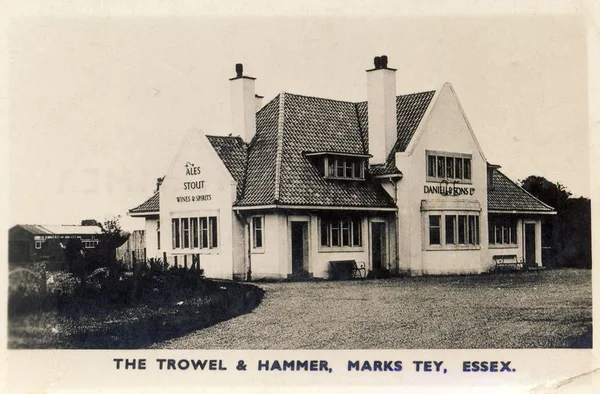
In the early 1800's the main roads through the parish were in poor shape despite the obligation on the parish to maintain them. There were wagons carrying goods, people on foot, and from time to time soldiers marching through, daily stagecoaches going to or from London and sometimes even John Constable on horse back with his sketchbook. Meandering animals driven to market along uneven roads. Some stayed over night in the yards behind the old Trowell and Hammer.
LONDON VIA COLCHESTER TO NORWICH
In September 1825 the first railway for freight and passengers was opened between Darlington and Stockton. In the 1830's and 1840's there was a great explosion of proposals for new railways, most never came to fruition.
In 1834 a prospectus for a Railway from London via Colchester to Norwich was published by the Eastern Counties Railway, receiving Parliamentary approval in 1836. The surveyors had been out and their plans show that a significant swathe of land was being acquired causing the loss of a fair number of homes.
Construction began in 1837 but did not reach Colchester until 1843 when the money run out. Two years later there were proposals for a rail line from Marks Tey to Sudbury and Halstead. Another plan was a line through to Braintree cutting through Jays Lane and where the estate now is.
A NEW WAY OF LIVING
The arrival of the railways changed the life of Marks Tey and the nation.
Railway time became the standard. The Post Office was established in 1660 but the arrival of the trains and the penny black postage led to an explosion in letter writing with speedy delivery.
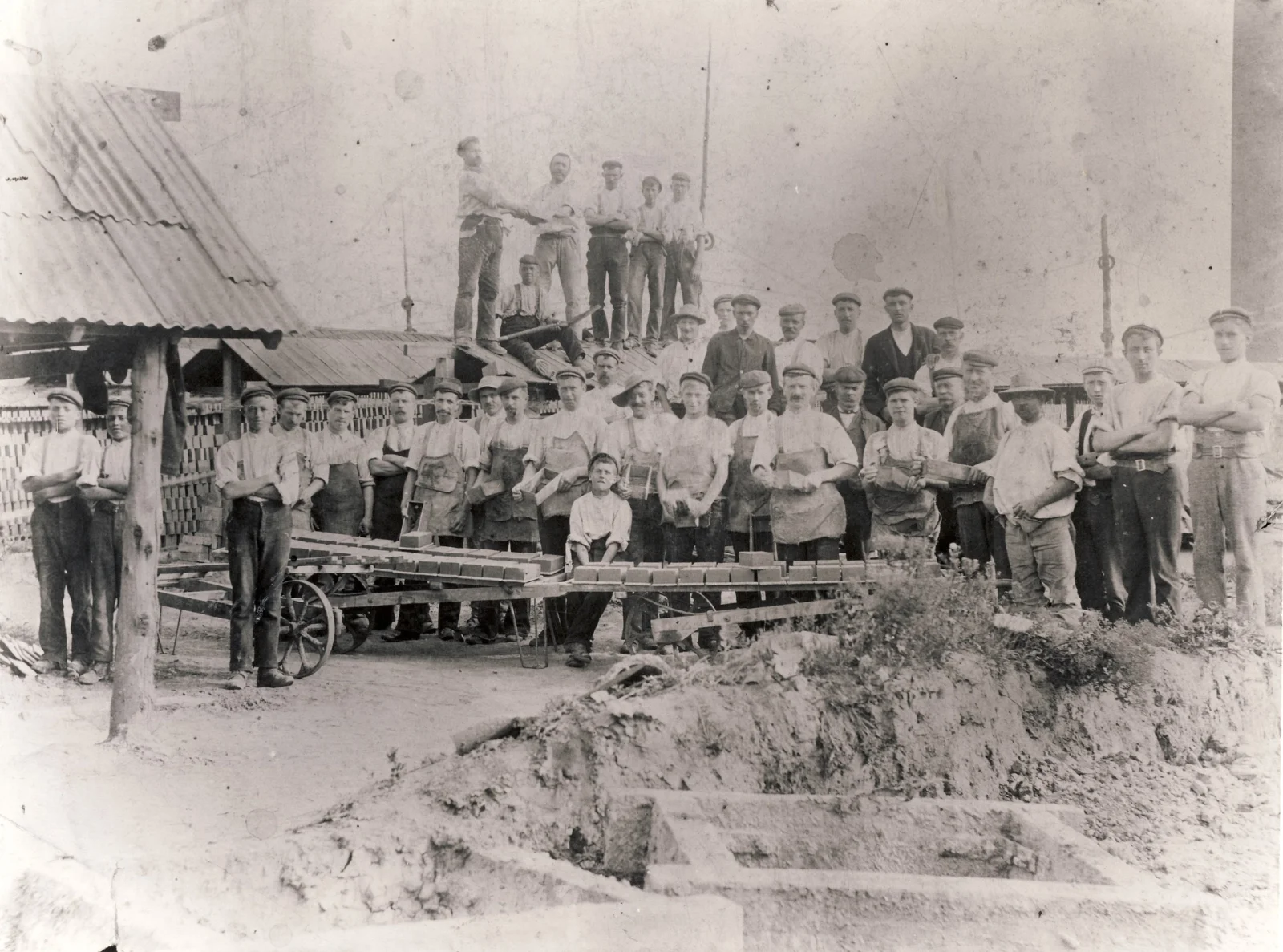
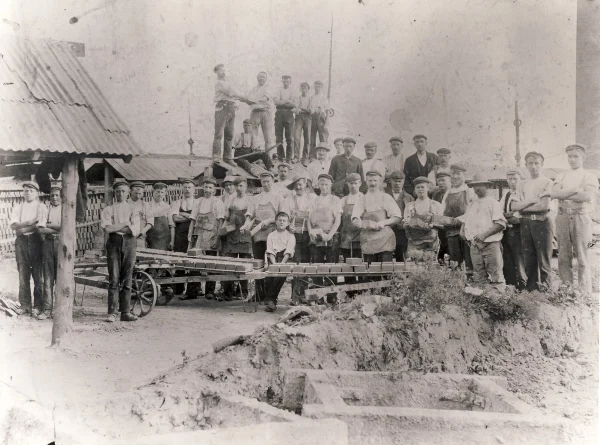
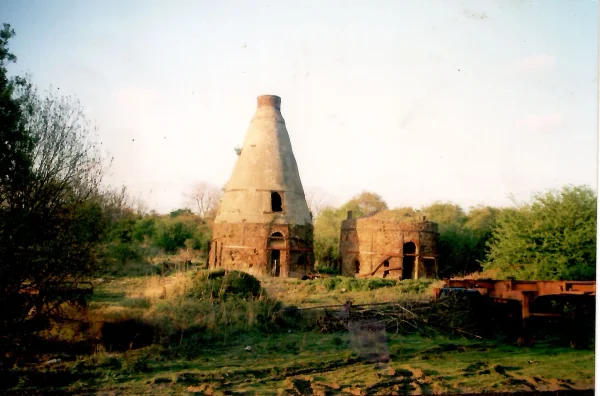
Travel was now quicker, less tiring and cheaper. Goods were moved more easily and speedily. Factories had new markets and expanded. Local shops could stock items which previously they had only dreamed off. W H Collier took over the brickworks and had a rail link from the works to the the public line which no doubt helped the business to grow and prosper.
SOCIAL MOBILITY
The railways created employment directly, and indirectly. Essential as the population of England quadrupled in the 19th century. In 1881 23 men in Marks Tey worked on the railway – several living in houses for rail staff.
Working on the railway often allowed great social mobility. The records inform us of several individuals starting on 5s/25per week at 14 and eventually had a major management position at £600 per annum.
So much moved by rail – the station had animal pens. The roads were quieter. The better off were able to visit the seaside and the holiday business had started. The modern world had arrived.
FIND OUT MORE
Marks Tey Heritage Project is bringing together the history of Marks Tey in one place. To take a look at our other stories from the Living History evening to find out more about our village.
Archive results related to Impact of the Railway
Explore more stories
INDUSTRIES OF MARKS TEY
Flowers & seeds

BRICKMAKING IN MARKS TEY
Brick is beautiful
TRANSPORT
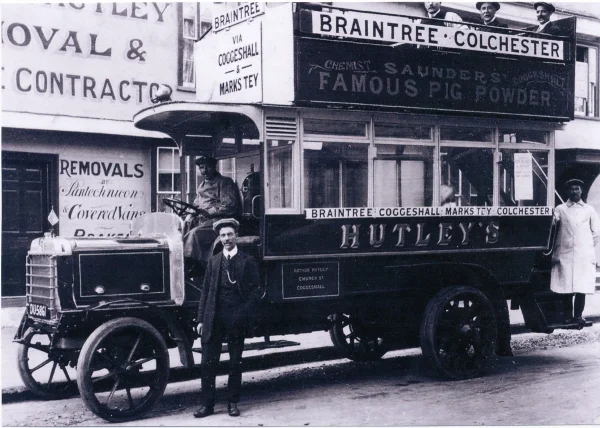
Getting around Marks Tey
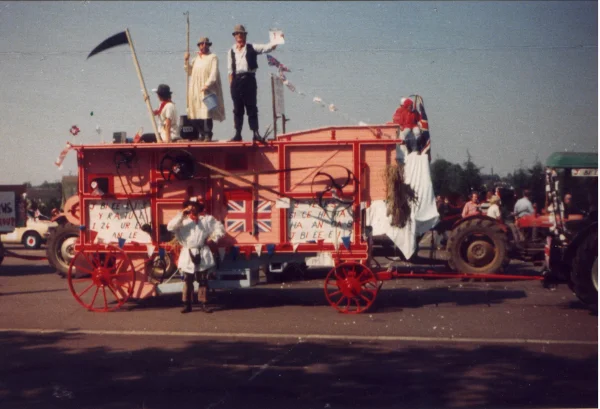
Marks Tey Carnival in the 1970s
Blooming Marvellous!
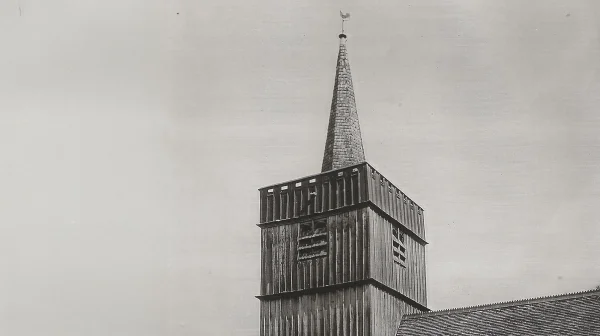
CHURCHES OF MARKS TEY
A spire and its stories
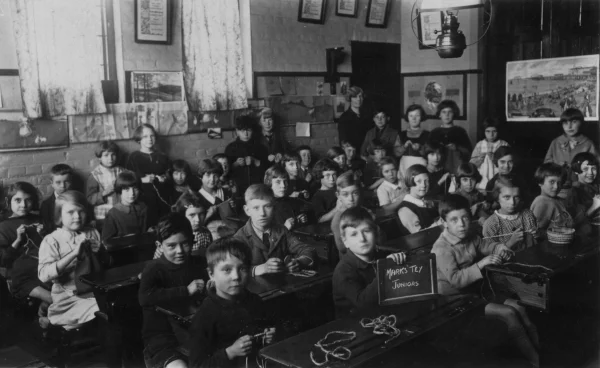
A SCHOOL FOR MARKS TEY
Marks Tey school days
BRENDA WILBY'S WALK
A walk around Marks Tey in the 1920s
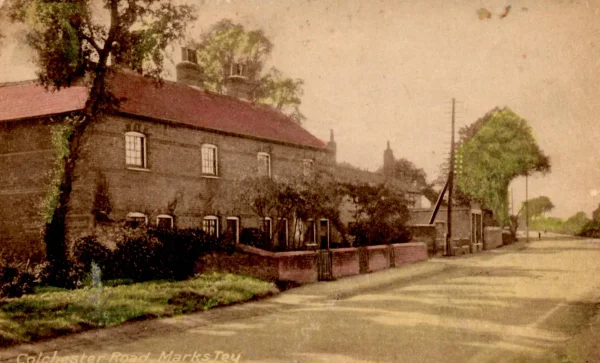
World War comes to Marks Tey
Wartime Marks Tey
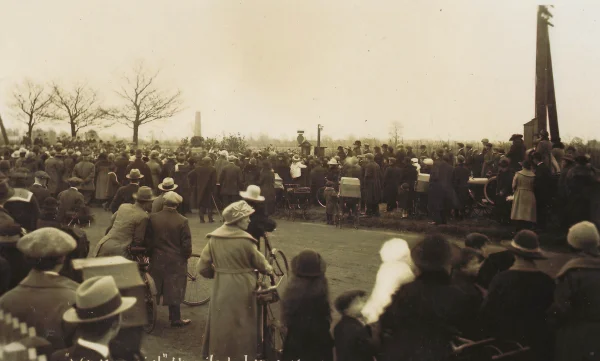
LIVING HISTORY TALKS
Origins

Places names in marks tey
Tey at Elms & other names
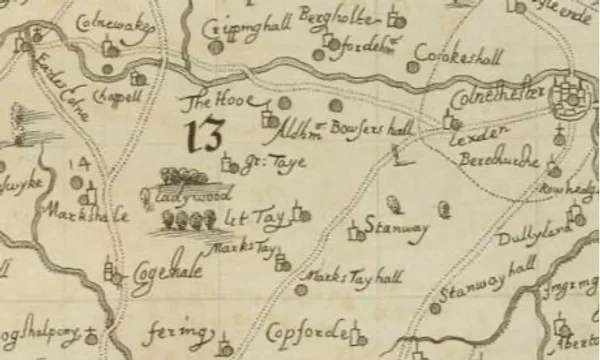
LIVING HISTORY TALKS
Building of the Church

LIVING HISTORY TALKS
Marks Tey Cricket Club
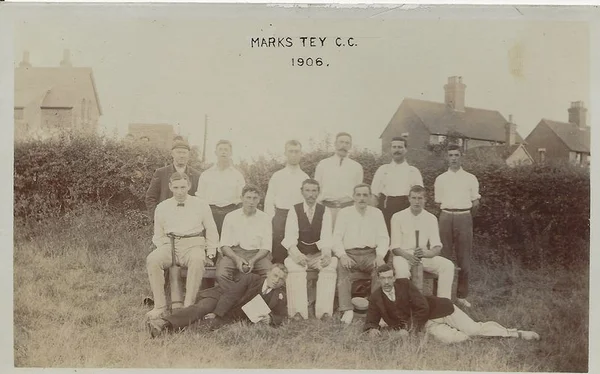
LIVING HISTORY TALKS
The Famous Case of William Steel
LIVING HISTORY TALKS
1944